

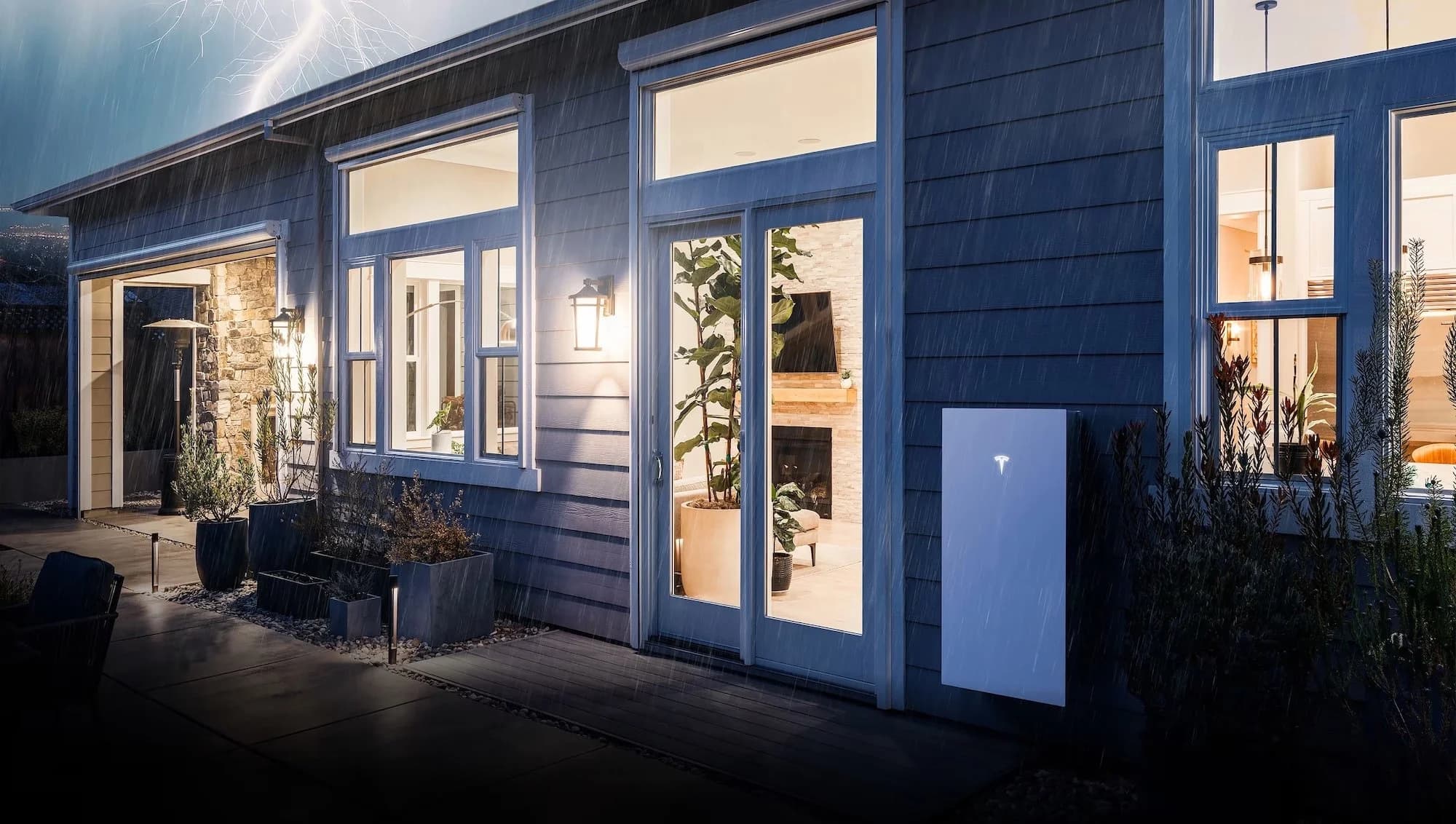
That’s one of the scenarios behind the government’s new Be Ready campaign (opens in a new tab), which asks households to prepare for three days of disruption to essential services.
The next morning, Storm Austen made it all very real. With an amber wind warning in place for Cornwall, Devon, the Isles of Scilly and Plymouth, more than 18,000 homes in the South West were without power (opens in a new tab) just before 10.30am, according to National Grid figures reported by ITV.
Most of the outages hit Penzance and central Cornwall. More than 6,000 of those households were on the Priority Services Register, which supports people who need extra help.
Tucked into the government’s advice is a line that is relevant for anyone with solar panels, or thinking about them. With the right set-up, solar and a home battery can keep your lights on when the grid goes down.
Here’s what Be Ready says, and how a Tesla Powerwall 3 and Backup Gateway 2 put it into practice.
The campaign
What Is the Be Ready Campaign?
Be Ready is run by the Cabinet Office and lives at GOV.UK/BeReady. It’s the first stage of a three-year campaign, and its message is simple: be ready to cope on your own for three days, so help can reach the people who need it most.
The Be Ready checklist
- 3 litres of water per person, per day
- Non-perishable food to last three days
- A torch with spare batteries, plus blankets
- An FM radio (wind-up or battery-powered) and a charged power bank
- Cash, copies of important documents and essential medication
The Be Ready checklist (opens in a new tab) suggests keeping these at home.
The government’s own figures suggest most of us aren’t there yet. In its 2026 survey of more than 10,000 adults (opens in a new tab), only 4% said they’d have three days’ worth of bottled water at home in an emergency.
A quarter thought they could meet their household’s basic needs for a day or less if a power cut also knocked out their gas and water. And 35% believed their area was likely to lose electricity for three days or more at some point in the next two years.
The government’s advice
What Does Be Ready Say About Power Cuts?
The campaign’s power cuts page (opens in a new tab) is refreshingly blunt. Most cuts are short and local, but some, it warns, “could potentially last several days”.
It also makes a point that catches many people out: “Gas ovens, boilers, heat pumps and your home internet won’t work without power.”
Your gas boiler needs electricity to run its controls, fan and pump. So in a power cut your heating stops too, and in winter a house can cool down fast.
Then comes the part that will interest anyone with solar panels on the roof. For solar and battery storage, the government says that “some installations can continue to provide power during a power cut if they are designed and configured to operate independently of the electricity grid. This may help you keep essential appliances running during an outage.”
The important words are ‘designed and configured’. Most solar systems aren’t.
Grid safety
Why Do Most Solar Panels Switch Off in a Power Cut?
It comes as a surprise to most people, but a standard solar system shuts down as soon as the grid drops out, even in bright sunshine.
That’s deliberate. Every grid-connected inverter must stop exporting the moment the network fails, so engineers repairing the lines aren’t put at risk.
Many home batteries do the same. Unless the system has equipment to safely separate the house from the grid, the battery switches off too, however much charge it’s holding.
To keep the lights on, your home has to become its own small power station, cut off from the network, but still running. That’s what the Tesla Backup Gateway 2 is for.
Whole-home backup
How Do Powerwall 3 and the Backup Gateway 2 Work Together?
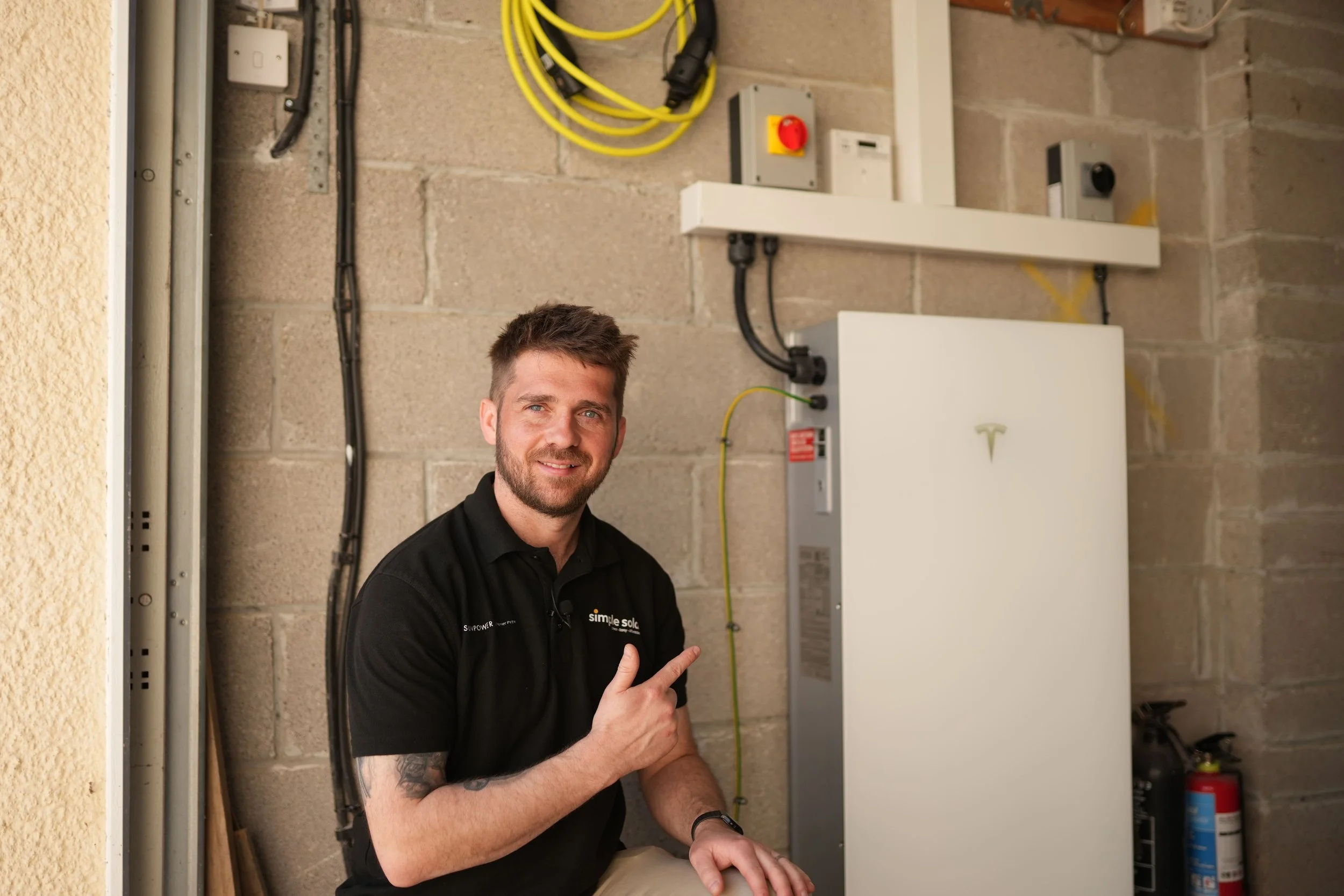
The Tesla Powerwall 3 is a 13.5 kWh home battery with a solar inverter built in. Day to day, it stores spare solar energy, or cheap off-peak electricity, so you can use it later and buy less from the grid.
Add the Backup Gateway 2, and the same battery can also run your home during a power cut.
What Happens When the Grid Goes Down?
The gateway sits between your house and the grid. When it detects an outage, it disconnects you from the network and lets the Powerwall take over.
With a whole-home backup installation, every circuit in your consumer unit stays live: lights, sockets, the fridge-freezer, the router and your boiler.
When mains power returns, the gateway reconnects you automatically and the Powerwall carries on as normal.
Your Solar Panels Keep Working

This is where solar and a battery really come into their own. Tesla confirms (opens in a new tab) that when an outage occurs, “Powerwall will help keep your solar system running”.
So if your panels are connected to the Powerwall 3’s built-in inverter, they can carry on generating during a power cut, supplying your home and topping up the battery whenever it’s light.
Please note: if your existing panels are on a separate inverter, how they’d behave in an outage depends on how the system is wired. We’ll check this when we survey your home.
The numbers
Could a Powerwall 3 Get You Through Three Days?
Let’s put some numbers on it.
Ofgem assumes a typical home uses 2,500 kWh of electricity a year (opens in a new tab). That’s about 6.8 kWh a day (2,500 kWh ÷ 365), or roughly 20.5 kWh over three days.
A fully charged Powerwall 3 holds 13.5 kWh, which is about two days of typical use (13.5 kWh ÷ 6.8 kWh).
Your panels add more. Even in December, the darkest month, a south-facing 4 kWp system makes just under 4 kWh a day, based on UK averages from the EU’s PVGIS solar model (opens in a new tab). Over three days, that’s about another 11 kWh. Our article on solar panels in winter explains why output drops at this time of year.
Put the two together and you have about 24.5 kWh (13.5 kWh + 11 kWh): on paper, enough for three days of typical use.
Three days without power
That’s why two things make the biggest difference: starting with a full battery, and using your electricity sensibly until mains power is back.
Before the storm
Storm Watch: Charging Up Before Bad Weather Hits
Be Ready’s advice on storms (opens in a new tab) includes this simple step: “Charge mobile phones, power banks and any back-up batteries for medical equipment in case there is a power cut.”
Powerwall does the same for your whole house. Tesla explains that “When severe weather is forecast, Storm Watch will automatically charge Powerwall to its maximum capacity to prepare for an outage.”
So if Cornwall and Devon are in for another battering like Austen, your battery can be full before the wind picks up, ready to take over the moment the lights go out.
Storm Watch is a feature of the Tesla app. The app also lets you set a ‘Backup Reserve’: a share of the battery that’s always held back for an outage, rather than being used to lower your bills.
Making it last
How to Use Electricity Sensibly in a Power Cut
Whole-home backup means appliances throughout your house can continue working during a power cut. However, it doesn’t mean you should use everything as normal.
A battery has two main limits: how much energy it stores, and how much power it can supply at any one moment. Run several big appliances at once and you’ll drain it fast, or ask for more than it can deliver.
A few sensible habits will make your stored energy go further:
- Stick to the essentials. Lights, the fridge-freezer, your gas boiler, the router and phone chargers use relatively little electricity.
- Leave the big loads for later. The oven, tumble dryer, dishwasher and electric shower can wait until the grid is back. If you really need to use a high-power appliance, avoid running it alongside others.
- Don’t charge your electric car. A 7.4 kW home charger could use the equivalent of a fully charged Powerwall 3’s 13.5 kWh capacity in less than two hours (13.5 kWh ÷ 7.4 kW), assuming it’s drawing all its power from the battery.
- Go easy on electric heating. A heat pump can run during a power cut if it’s connected to your backup system, but it can use considerable electricity in cold weather. Close doors to rooms you aren’t using, as the government suggests, and consider turning the thermostat down a degree or two.
- Watch the app. The Tesla app shows how much energy is left in the battery, how much your home is using and what your solar panels are producing (if you have them), so you can plan ahead.
And if the rest of the street is in the dark, you might be the one house that can charge a neighbour’s phone or make them a hot drink. Checking on neighbours, especially when the power goes out, is part of the government’s advice too.
Still be ready
A Battery Doesn’t Replace Your Emergency Supplies
Even with whole-home backup, it’s worth working through the rest of the Be Ready checklist.
A long outage can cause other problems. The government warns that mains water may be disrupted, and that mobile signal can drop if the local mast loses power.
So keep bottled water, food that needs no cooking, a torch and a radio, and write down 105 on paper. It’s the number to call to report a power cut in England, Scotland and Wales.
If anyone in your home relies on medical equipment, join the free Priority Services Register (opens in a new tab) and, as the government advises, make a plan with your care provider or clinical team. Lots of households qualify, including those with children under five and people of pensionable age.
A home battery is a useful extra, not a substitute.

“Storm Austen showed how quickly the power can go in Cornwall and Devon. A Powerwall 3 with the Backup Gateway won’t stop the wind, but it does mean your lights, fridge and heating keep going while the engineers get the network back up and running.”
Talk to us
Thinking About Backup Power for Your Home?
As a certified Tesla Powerwall installer covering Devon, Cornwall and Somerset, we can fit the battery with or without backup.
We’ll look at your property, how you use electricity and any panels you already have, then explain exactly how your home would cope in a power cut.
Find out more about Powerwall 3 installation and battery storage, or read about Britain’s emergency power cut rules.
Arrange a free home survey or call us on 01752 916 013.
Your questions answered
Power Cut and Powerwall FAQs
Do solar panels work in a power cut?
Not on their own. A standard solar system switches off when the grid goes down, for safety. To keep using the energy your panels make, you need a battery with backup, such as a Tesla Powerwall 3 with the Backup Gateway 2.
Does a gas boiler work in a power cut?
No. As the government’s Be Ready campaign points out, gas boilers won’t work without electricity. With whole-home battery backup, your boiler can keep running.
How long will a Powerwall 3 last in a power cut?
It depends on what you run. A full Powerwall 3 holds 13.5 kWh, roughly two days of typical household use, and solar panels can top it up whenever it’s light.
What is Tesla Storm Watch?
A Powerwall feature that charges the battery to full when severe weather is forecast, so it’s ready if the grid goes down.