
GREAT BRITAIN’S NEW EMERGENCY POWER CUT RULES: CAN A HOME BATTERY KEEP THE LIGHTS ON?
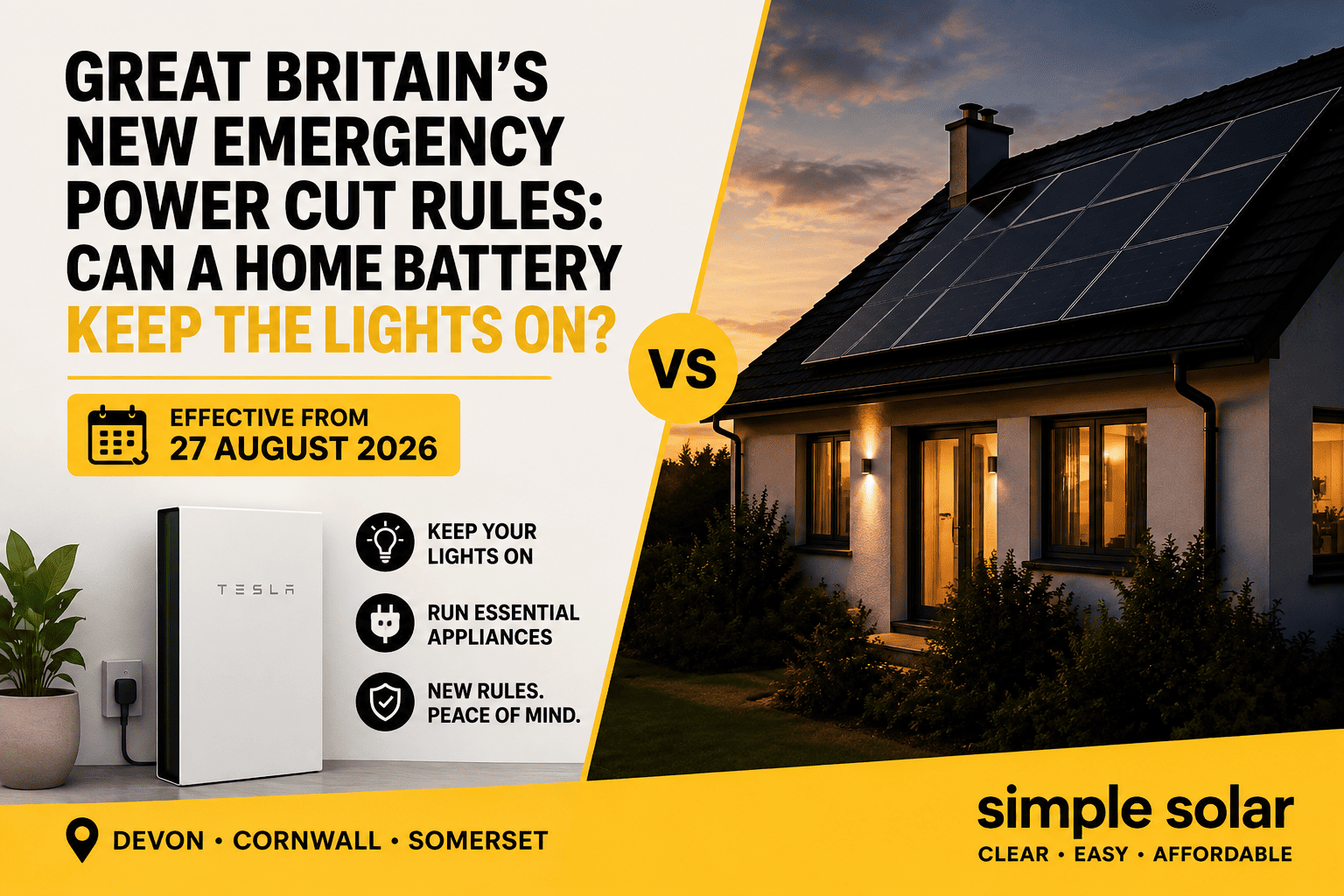
From Friday 14 August 2026, new emergency power cut rules come into effect across Great Britain. They give the National Energy System Operator (NESO) a quicker way to order rotating power cuts at short notice if electricity supplies run critically low – potentially leaving homes without grid power for up to three hours at a time, with around eight hours' warning.
That may sound alarming, but it is important to put the change in context. NESO says rotating power cuts would only be used in "the most extreme and unlikely circumstances", after every other available option had been exhausted.
The new rules do not mean a power cut has been scheduled. They do, however, raise a useful question for anyone considering solar panels or battery storage:
Would your home energy system actually keep working if the grid went down?What is changing on 14 August?
The change formally introduces the Demand Control Rotation Protocol into Great Britain's Grid Code. The formal timetable specified implementation 10 business days after Ofgem's 31 July decision, putting the change into effect on Friday 14 August 2026.
In simple terms, this gives NESO a faster, more flexible way to reduce national electricity demand during a serious short-term supply shortage. Rather than risk a larger and potentially uncontrolled failure of the electricity system, selected areas could be temporarily disconnected in rotation.
According to The Guardian's report, households and businesses in affected areas could experience power cuts lasting up to three hours. Different areas would be disconnected at different times, spreading the impact rather than repeatedly cutting power to the same customers.
Source Read The Guardian reportSelected areas are temporarily disconnected at different times rather than the same customers repeatedly losing power.
Why have the rules been introduced?
Great Britain's electricity system must remain balanced every second of the day. The amount of electricity being generated needs to match the amount being used.
Most of the time, NESO manages this using tools such as asking generators for more power, importing electricity, reducing industrial demand or encouraging households to use less at busy times.
The new protocol is intended for the rare situation where those measures are not enough. Controlled, rotating power cuts could then reduce demand and help prevent a much wider system collapse.
The change follows periods of unusually tight electricity supply during recent extreme weather. It also reflects the increasingly complex job of balancing electricity demand, changing weather conditions and different forms of generation in real time.
Would solar panels keep working during a power cut?
This surprises many homeowners: having solar panels does not automatically mean your home will have electricity during a blackout.
A conventional grid-connected solar system will normally stop supplying the home when the grid fails. This is an essential safety measure, preventing electricity from being sent back into power lines while engineers may be working to restore the network.
To continue using electricity during an outage, the home needs a compatible battery system and the correct backup equipment. That equipment must safely disconnect the property from the grid and create an independent supply for the home.
Not every home battery provides backup power
Home batteries are often installed primarily to reduce electricity bills. They store surplus solar electricity – or cheaper off-peak electricity from the grid – so it can be used later.
But a battery that works perfectly for everyday energy savings may still switch off during a power cut.
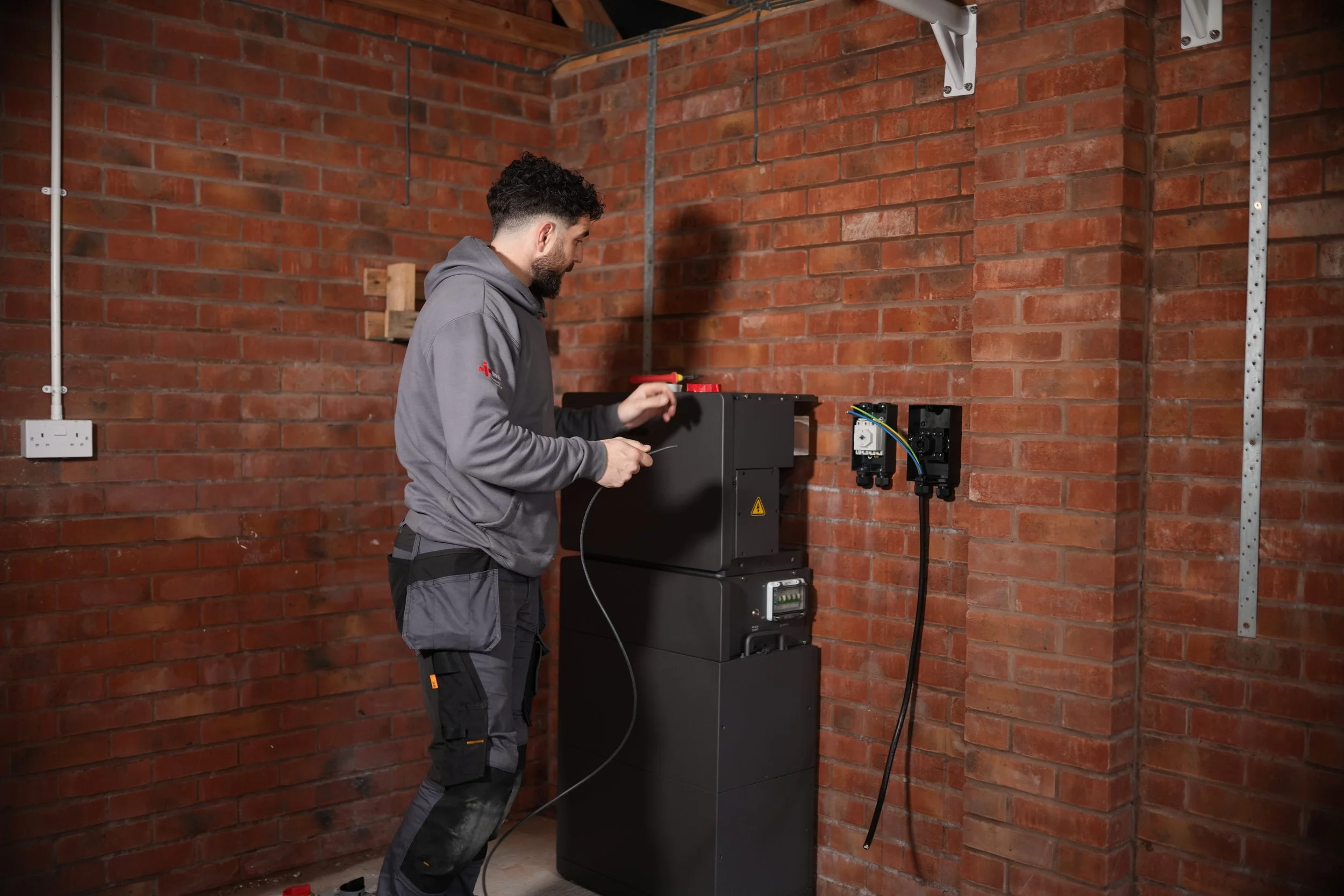 Battery installation
The battery model.
How the battery has been configured.
Whether the correct isolation and backup equipment has been installed.
Whether the entire home or only selected circuits are protected.
The battery's power output and available charge when the outage begins.
If backup power matters to you, it needs to be discussed and designed into the system before installation.
How Tesla Powerwall 3 whole-home backup works
Tesla Powerwall 3 can be installed with whole-home backup functionality.
In a backup installation, the Tesla Backup Gateway monitors the grid. If it detects an outage, it automatically disconnects the home from the electricity network and allows Powerwall to become the property's temporary power source.
Depending on the design of the installation, this can keep lights, sockets, refrigeration, internet equipment and other household appliances running without the homeowner needing to do anything.
If Powerwall 3 is connected directly to a suitable solar array, the panels can continue powering the home and recharging the battery while the grid is unavailable. This can significantly extend the time the home can operate during a longer outage, particularly when solar generation is strong.
Powerwall 3 stores 13.5 kWh of usable energy and can provide up to 11.04 kW of power, depending on the property and installation configuration. Its higher output means one Powerwall 3 can provide whole-home backup for many properties, although every home must be assessed individually.
Explore Tesla Powerwall 3
Powerwall 3 can also be installed without backup
There is another important distinction.
Tesla now offers a lower-cost, non-backup Powerwall 3 configuration. It still stores solar or off-peak electricity and can reduce the amount of energy you buy at expensive times. However, without the Backup Gateway, it will not power your home when the grid goes down.
Backup and non-backup Powerwall installations may look similar from the outside, but they behave very differently during an outage.
This is why homeowners should ask their installer a direct question:
"If the grid goes down, exactly which parts of my home will continue working?"
A reputable installer should be able to answer clearly.
Can you keep energy in reserve for an outage?
With a backup-enabled Powerwall system, the Tesla app allows you to set a Backup Reserve.
This determines how much stored electricity is kept available for a possible outage. A higher reserve gives you greater energy security, but leaves less battery capacity available for everyday bill savings.
For example, someone who prioritises protection during storms or grid disruptions may choose to keep a larger reserve. Someone focused primarily on maximising daily savings may set it lower.
The right balance depends on the household and can be adjusted in the app as circumstances change.
What if you already have solar panels?
Powerwall 3 can be added to many existing solar installations, so you do not necessarily need to replace your panels or current system.
However, compatibility and outage behaviour depend on how the existing solar inverter and new battery are connected. A proper survey should establish:
- ✓ Whether your existing solar panel system is compatible.
- ✓ Whether whole-home or partial backup is appropriate.
- ✓ Which appliances Powerwall would need to support.
- ✓ Whether solar generation can continue during an outage.
- ✓ Whether one Powerwall provides enough power and capacity.
- ✓ Where the Powerwall and Backup Gateway can be installed safely.
A practical form of energy independence
Emergency power cuts remain unlikely, and the new rules should not be treated as a reason to panic.
They do, however, highlight an often-overlooked benefit of battery storage. A properly designed solar and battery system does more than reduce electricity bills: it can give a household a meaningful degree of independence when the wider grid is unavailable.
For homes in Devon, Cornwall, and Somerset, that protection can also be valuable during more familiar local outages caused by storms, fallen trees or damage to overhead power lines.
Simple Solar is a Tesla Certified Installer. We can assess your electricity use, existing solar system and backup priorities before recommending whether Powerwall 3 – and whole-home backup – is appropriate for your property.

Arrange a free, no-obligation home survey and ask us exactly how your home would perform during a power cut.
Arrange a free surveyFrequently asked questions
No. The new protocol gives NESO an additional last-resort tool for managing a serious electricity supply shortage. NESO says it would only be used in extreme and unlikely circumstances after other options had been exhausted.
No. Some batteries are installed only for energy savings and must shut down when the grid fails. Backup requires a compatible battery, suitable isolation equipment and the correct system design.
Powerwall 3 can provide whole-home backup for many properties, but this depends on the home's maximum electrical demand and the appliances being used. A survey is needed to confirm the appropriate configuration.
No. Powerwall can charge from the grid and provide backup without solar. However, solar panels can recharge Powerwall during a daytime outage when the system has been designed and configured to operate that way.
A backup-enabled Powerwall installation uses the Tesla Backup Gateway to detect the outage and automatically switch the home to battery power. A non-backup Powerwall installation will not supply the home during an outage.
