
BRITAIN’S SOLAR BOOM: WHY INSTALLATIONS HAVE REACHED A 15-YEAR HIGH
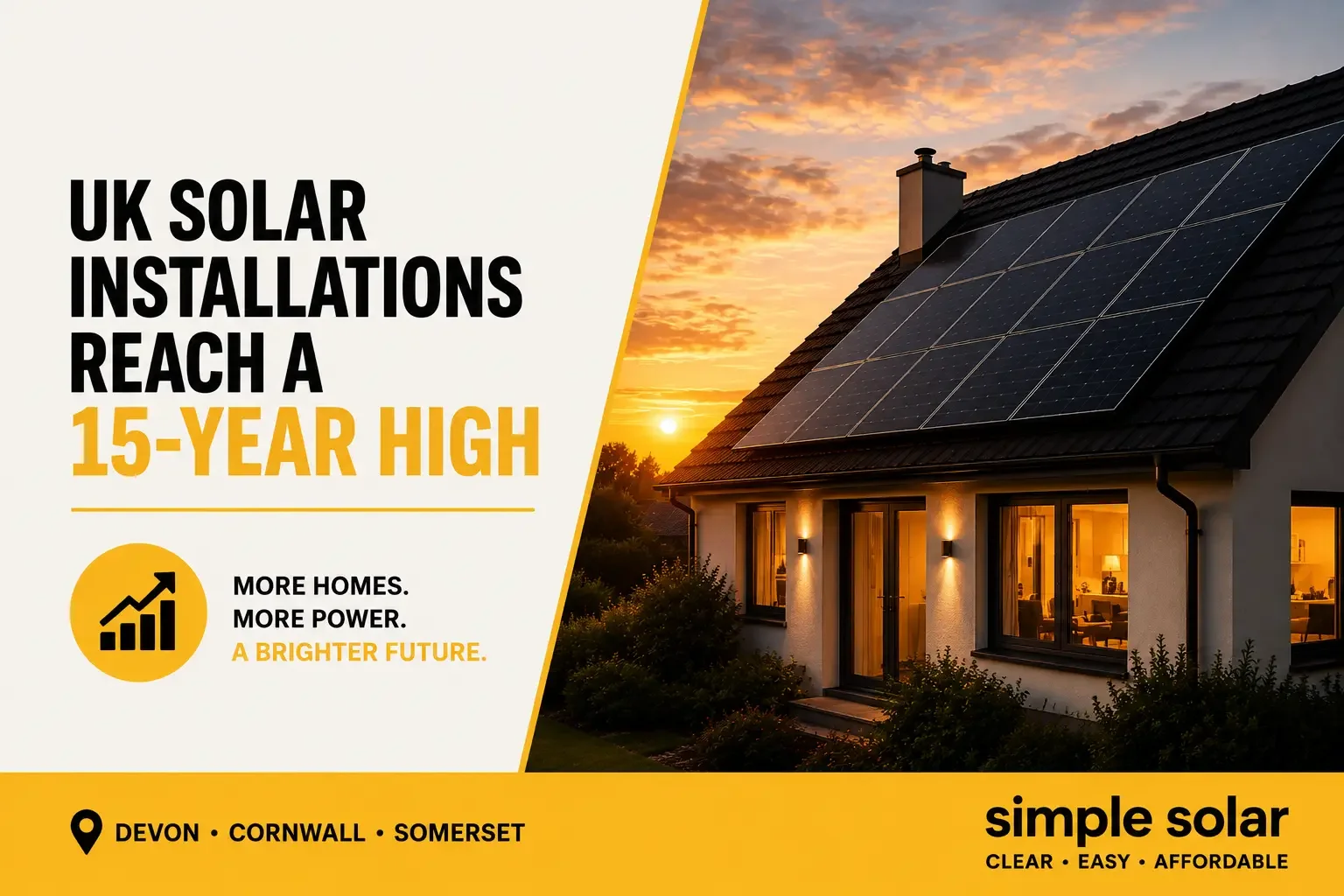
Solar installations across the UK have reached their highest six-month level since 2011. So why are so many households choosing solar now, and does the boom mean it’s time to take another look at your own roof?
The first six months of 2026 saw the strongest level of UK solar installations for the same period since 2011, marking a significant acceleration in the number of households and businesses turning to solar.
With more households investing in solar, falling technology costs and changing energy prices are putting rooftop generation back in the spotlight.
Does the solar boom mean it’s time to take another look at your own roof?The numbers are hard to ignore
Britain is having a solar boom.
According to the latest figures from the Department for Energy Security and Net Zero (DESNZ), 142,536 new solar installations were recorded across the UK during the first half of 2026.
That is the strongest six-month period for new installations since the second half of 2011. Back then, 167,316 systems were added during a rush to secure the original Feed-in Tariff before the rates changed.
This time feels different. There is no equivalent race for the old Feed-in Tariff. Instead, the current growth is being driven by thousands of households and businesses deciding that generating their own electricity simply makes sense.
A few figures put the scale of it into perspective:
new solar installations were recorded between January and June 2026.
June alone added 27,391 installations, the second-highest monthly figure on record.
The UK passed two million solar installations during the first half of the year.
By the end of June, the country had approximately 22.8 gigawatts (GW) of solar capacity.
Solar capacity had increased by around 10.9% in 12 months.
And this is not a one-off spike. During 2025, the UK added approximately 269,000 solar installations, the highest number recorded in a single calendar year.
The boom was already under way. It has now moved up another gear.
Most of the new installations are on homes
Large solar farms grab the headlines, but they do not tell the whole story.
The majority of solar installations in the UK are domestic systems. By the end of June 2026, the official figures included around 1.72 million domestic installations.
In June alone, approximately 18,000 of the 27,391 new systems were installed on residential buildings.
Domestic systems account for roughly 83% of the UK's solar installations by number. However, because each home system is relatively small, they provide around 30% of the country's total solar capacity.
That distinction matters. A 300 MW solar farm and a 4 kW home installation both count as one installation in the headline figures. The big solar farm contributes far more power, of course. But the installation count shows just how widely solar has spread into ordinary homes.
It’s no longer unusual technology for early adopters. Look along almost any street and there is a fair chance you will spot panels on at least one roof.
Why is solar growing
so quickly?
There is no single explanation. Several things have happened at roughly the same time, and together they have changed how homeowners view solar.
Bills have changed the calculation
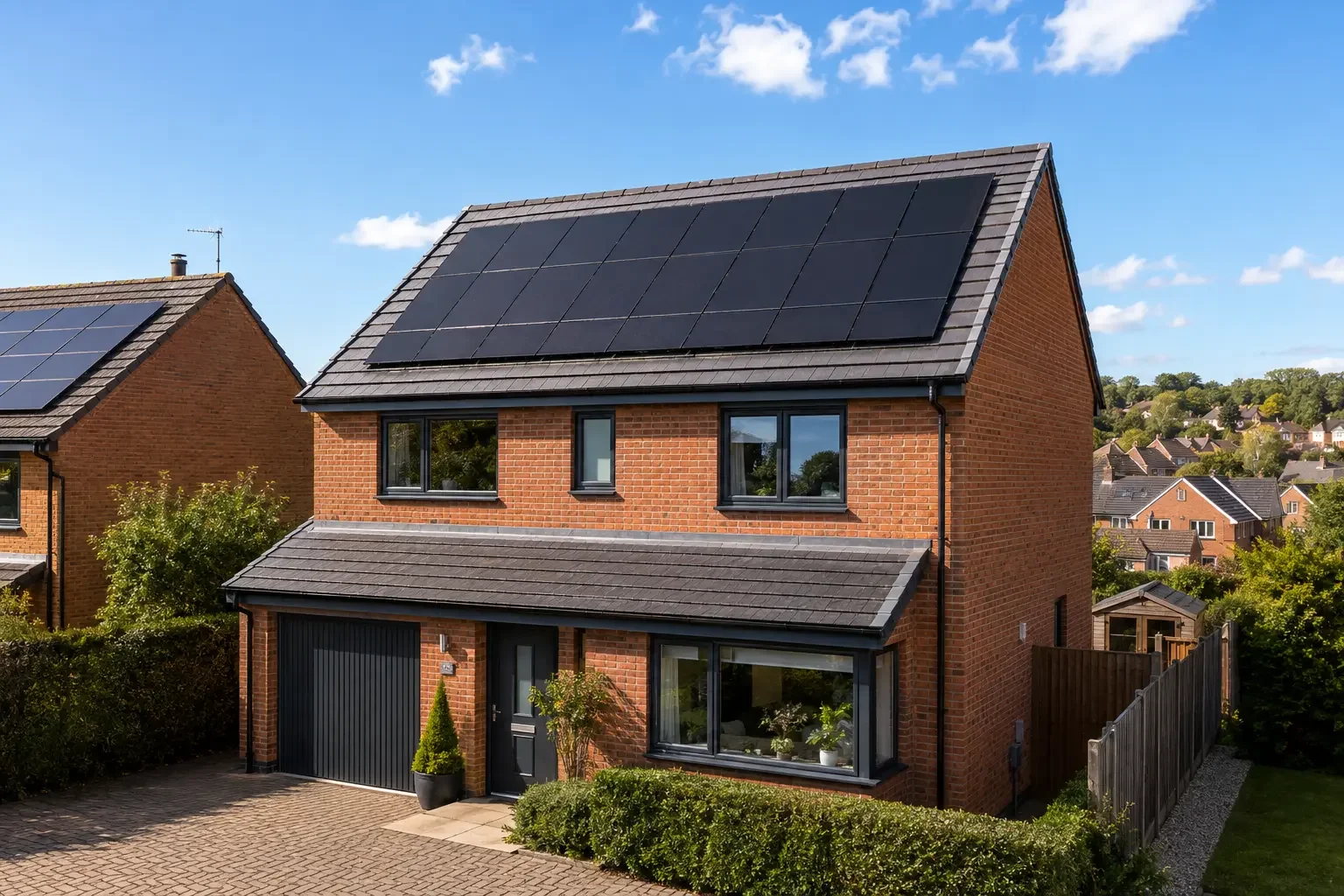
For years, solar was often sold primarily as an environmental choice. That remains important, but many households now start with a simpler question: how much electricity can I avoid buying from the grid?
Every unit of solar electricity you use at home is a unit you do not need to buy from your supplier. The exact saving depends on your electricity tariff, the size and position of your system, and how much of the solar power you use yourself.
That last point is important. Solar panels normally generate most strongly around the middle of the day. If someone is at home, an electric car is charging, the dishwasher is running or a heat pump is operating, more of that electricity can be used directly.
Good system design starts with your home and your routine. Not with squeezing the largest possible number of panels onto the quote.
Batteries made solar more useful
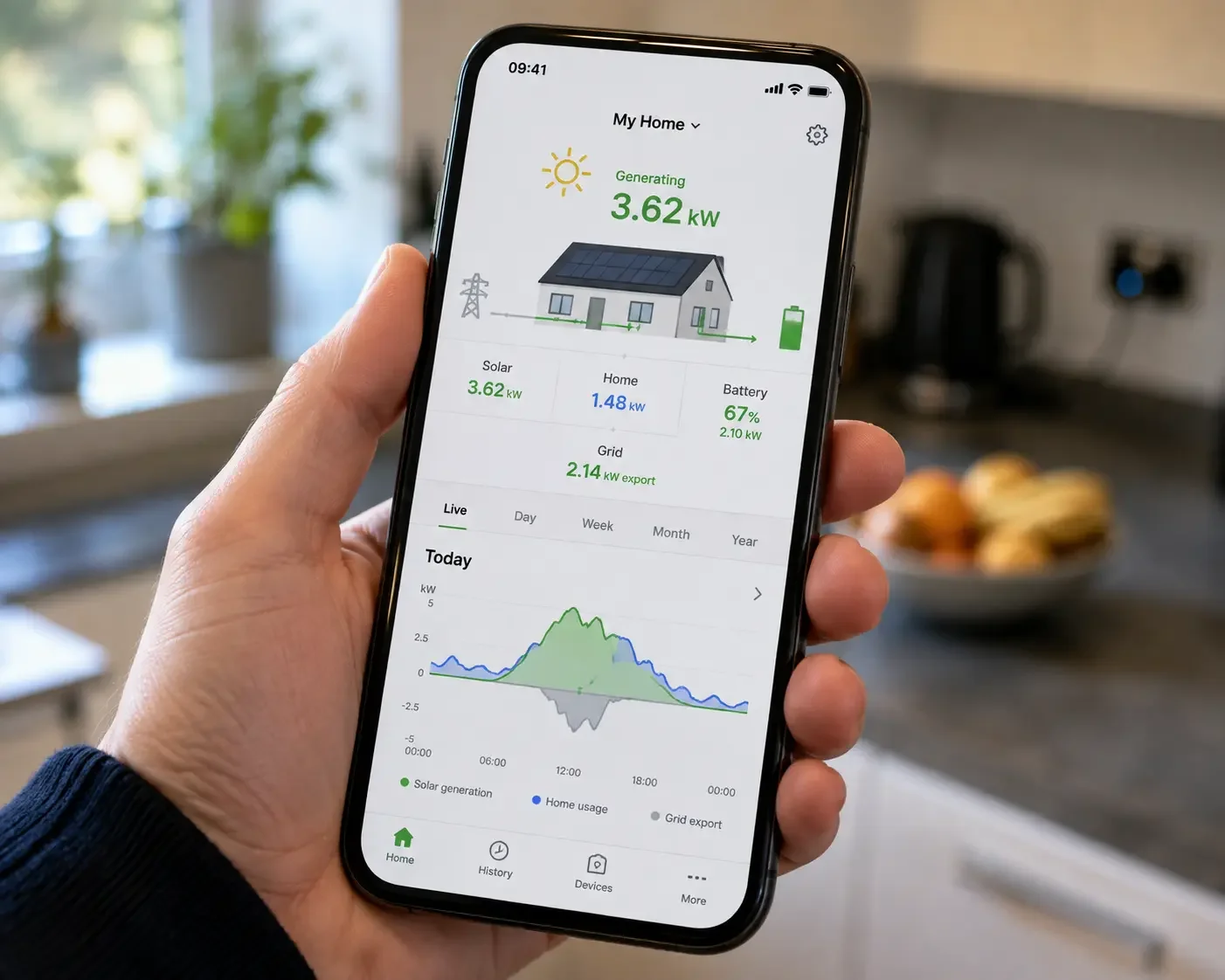
The basic solar problem is easy to understand: panels generate during daylight, while many households use most electricity in the morning and evening.
A home battery can bridge some of that gap. Instead of immediately exporting surplus solar electricity, the battery stores it for later. You can then use that electricity when the sun has gone down, rather than buying as much power from the grid.
Modern batteries can also work with time-of-use tariffs. Depending on the system and tariff, a battery may charge when grid electricity is cheaper and discharge when it's more expensive.
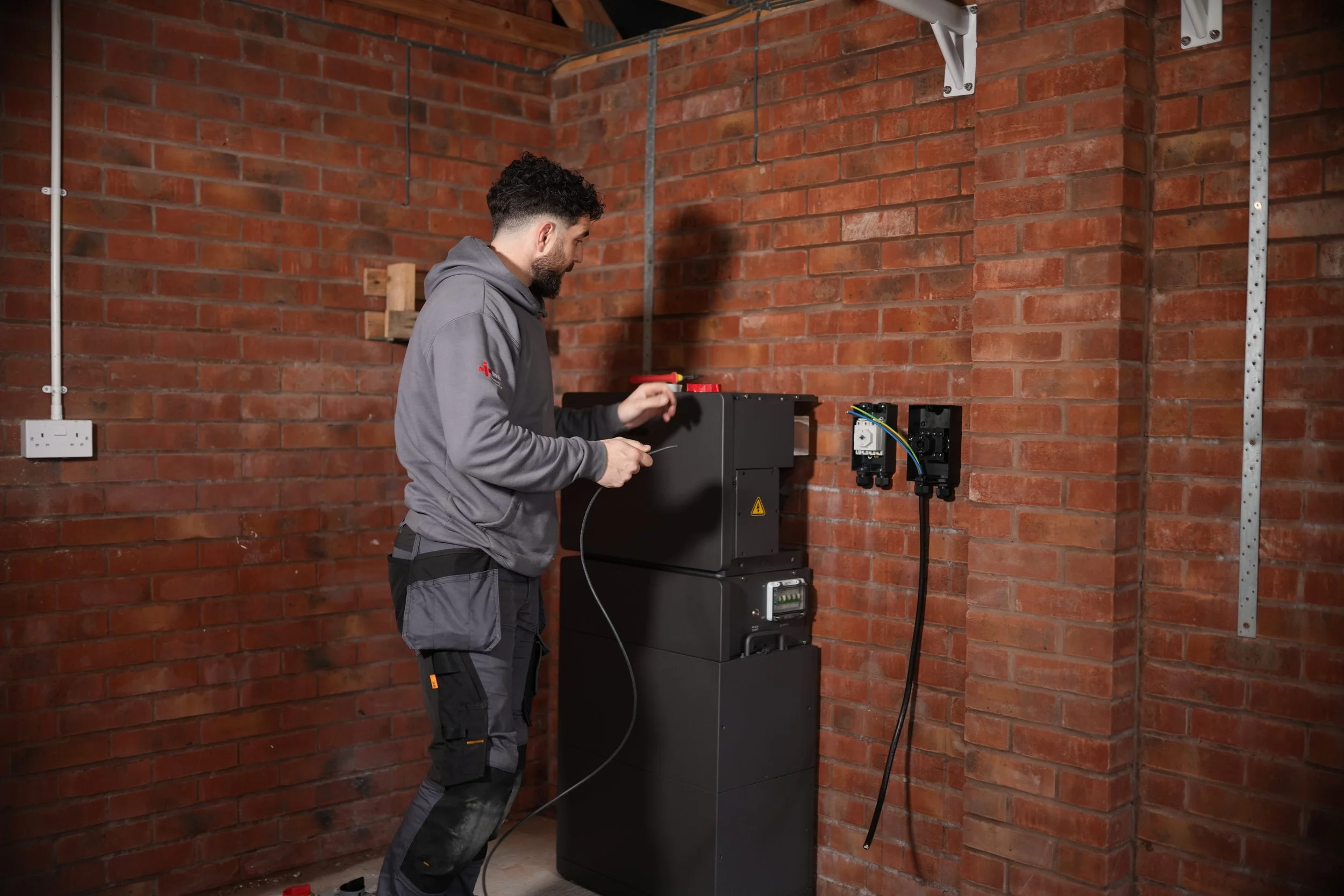
This has turned solar from a daytime-only generator into part of a wider home energy system. Panels, batteries, electric cars, heat pumps and smart tariffs can all work together. They still need to be sized properly — too small and it fills before lunchtime; much larger than needed and it sits half-empty. Bigger is not automatically better.
Export payments still play a role
The old Feed-in Tariff closed to new applicants in 2019, but homeowners can still be paid for eligible electricity exported to the grid through the Smart Export Guarantee (SEG).
SEG rates and conditions vary between suppliers. Some tariffs pay a simple fixed rate, while others offer higher or lower prices at different times. Certain deals may also require you to buy electricity from the same company.
Export income should not be treated as a guaranteed fixed amount for the life of a solar system. Tariffs change.
Even so, being paid for electricity you cannot use is clearly better than giving it away. For many households, export payments now sit alongside bill savings rather than being the main reason to install solar. That is another difference from 2011.
Solar has become familiar
Fifteen years is a long time in home energy. In 2011, solar panels still looked unfamiliar on a residential roof. Home batteries were rare, smart meters were at an early stage, and charging an electric car from your own panels sounded rather futuristic.
Today, homeowners can see real systems working on neighbouring properties. Friends and relatives have apps showing what their panels generated that day. Electric cars and smart tariffs are no longer oddities.
That familiarity matters because solar is a long-term purchase. People want proof that the technology works, but they also want confidence in the installer, the warranties, and the equipment fitted to their home.
More installations create more awareness. More awareness leads to more sensible questions. That is healthy for the industry.
The South West has been part of the solar story from the beginning
The South West has a particularly strong connection with Britain's solar growth.
One of the country's earliest large solar farms was built at Wheal Jane in Cornwall. Its capacity was 1.4 MW, impressive at the time. Britain's largest operational solar farm is now Cleve Hill in Kent, with a capacity of 373 MW.
That gives you some idea of how quickly the industry has changed.
For homeowners, though, the important point is much closer to home. Devon, Cornwall and Somerset can all provide very good conditions for residential solar, provided the roof is suitable and the system is designed around the property.
A south-facing roof is useful, but it is not compulsory. East- and west-facing arrays can also work well, particularly if they spread generation across the morning and afternoon.
Roof angle, shading, available area, and local electricity use all matter. Two neighbouring homes can need quite different systems.
This is why an estimate based on a postcode and a satellite image should only be the starting point. A proper survey can check the roof, the electrics, likely shading, and where the inverter and battery could be installed.
Is everyone installing solar purely to save money?
No. Some households want more control over unpredictable electricity costs. Others are preparing for an electric car or heat pump. Some want to cut their carbon emissions. Plenty want all three.
There is also a growing interest in resilience. A standard grid-connected solar system normally switches off during a power cut for safety, even when the sun is shining. However, some battery systems can provide backup power if the correct additional equipment has been specified and installed.
That does not turn a house into an off-grid fortress. Backup capacity is finite, and high-power appliances can drain a battery quickly. But it can keep selected essentials running, depending on the system design.
Battery backup depends on the equipment and how the system has been designed.
Toggle backup battery on to see what a well-specified system can keep running.
The reasons for buying solar have widened. That has helped widen the market too.
Does the 15-year high mean you should rush?
No. A record month is not a reason to sign the first quote put in front of you.
Solar is a major home improvement and should be treated like one. The right system can reduce electricity bills for many years. A poorly designed system can leave you wondering why the figures in the sales presentation never appeared in real life.
Check these seven things before agreeing to an installation
What the solar boom really tells us
The 2026 figures do not mean solar is automatically suitable for every home. Some roofs are too shaded, too small, or in need of repair. Some households may get better value by reducing energy use first.
But the figures do tell us that solar has moved firmly into the mainstream.
The first big installation wave depended heavily on generous Feed-in Tariff payments. The current one is broader. Households are looking at the electricity they use, the cost of buying it, and the technology now available to manage it.
Solar panels are no longer being considered in isolation. They are increasingly part of a practical home energy plan, often alongside battery storage, an electric car, a heat pump, or a smart tariff.
That is why the installation figures are climbing again.
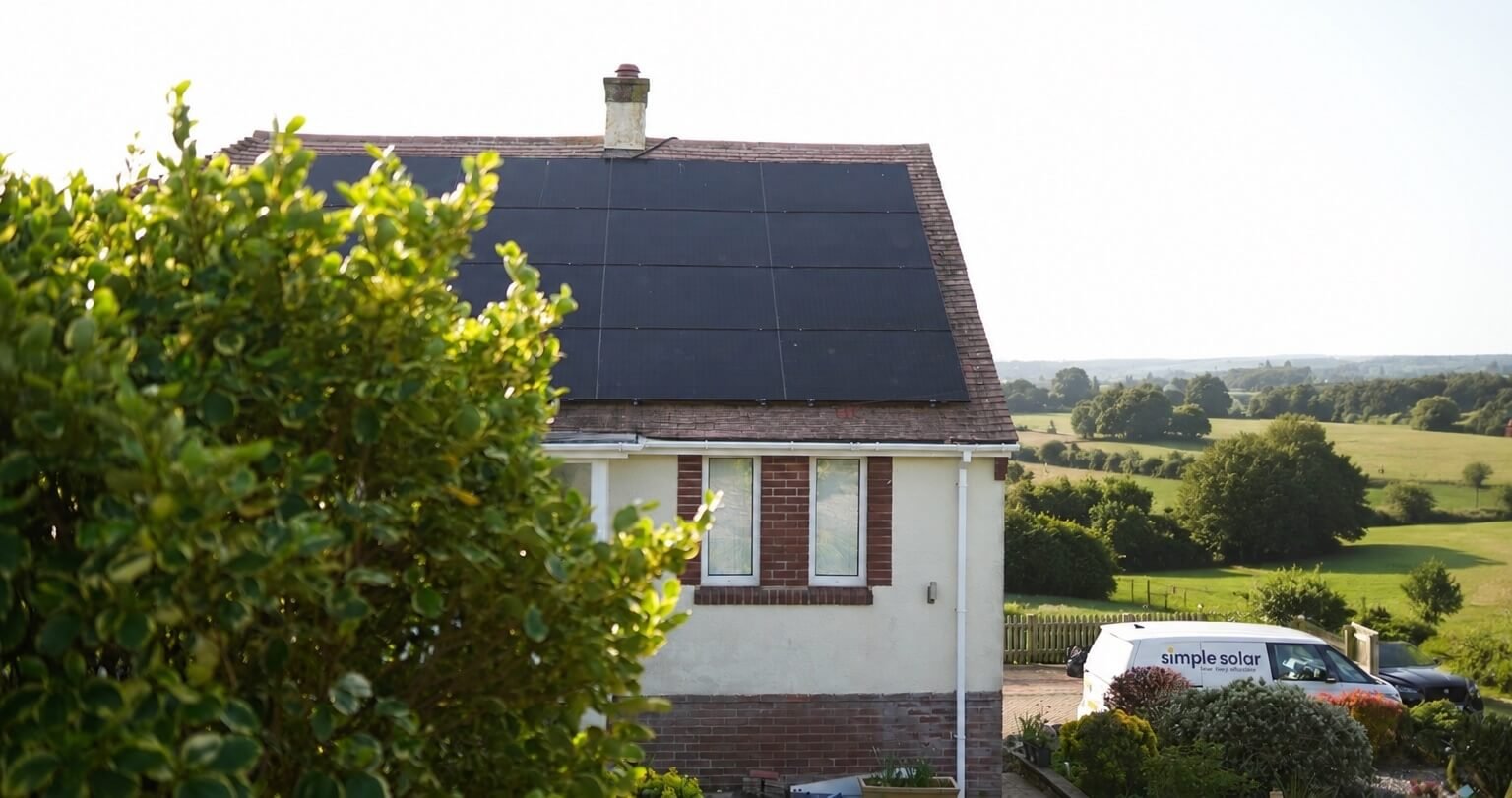
Thinking about solar for your home?
We install solar panels and battery storage across Devon, Cornwall and Somerset.
We will assess your roof, electricity use and future plans before recommending a system. You will then receive a clear, fixed quote, with no pushy sales.
