
UK INFLATION RISES TO 2.9%: FOUR WAYS TO GIVE YOUR HOME MORE CONTROL
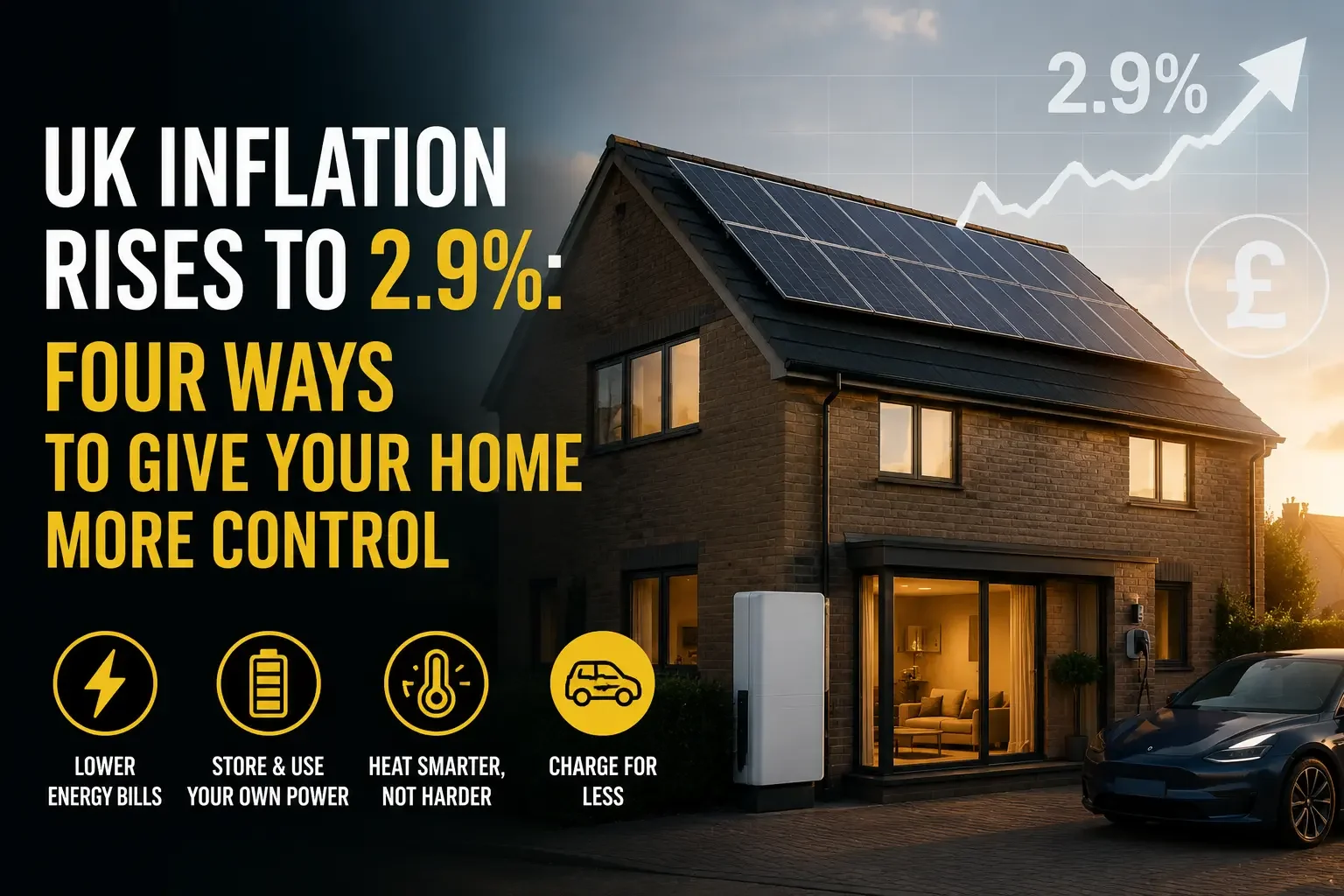
UK inflation rose to 2.9% in the 12 months to July 2026, with higher household energy bills doing much of the pushing.
The latest figures, published on 19 August, show inflation climbing from 2.6% in June to its highest level for four months. The BBC reports that gas prices increased at their fastest pace for almost four years after higher wholesale costs fed through to household bills.
Ofgem's energy price cap rose by 13% on 1 July. For a typical dual-fuel household paying by Direct Debit, the illustrative annual figure increased to £1,862. That is not a maximum bill: what you actually pay still depends on how much energy your home uses.
Headlines can explain why prices have risen. They cannot tell you what to do about it.
For homeowners, the more useful question is this: how much energy does your home have to buy, and how much control do you have over when it buys it?To answer that, let's take a short walk around an energy-enhanced home.
Start on the roof: generate electricity at home
A conventional home buys virtually all its electricity from an energy supplier. Every light, appliance and electronic device is therefore exposed to the unit rate of its tariff.
Solar panels change that relationship by generating electricity from daylight. Power produced and used at home replaces electricity that would otherwise have been bought from the grid.
That does not make a property completely independent, and solar generation naturally varies with the weather and seasons. However, it will reduce the number of chargeable units appearing on an electricity bill.
During brighter months, a well-designed system may also produce more electricity than the home needs at that moment. Eligible households can receive payments for exported electricity through the Smart Export Guarantee.
The important word is 'designed'. Roof size, orientation, shading and household consumption all affect the result. A useful solar proposal should show expected generation, household use, export and estimated savings for the individual property.
Explore residential solar panelsMove to the garage or utility room: keep electricity for later
Solar panels are busiest during daylight hours, but many homes use most of their electricity in the evening. That timing mismatch is where battery storage can help.
A home battery can store surplus solar electricity during the day and make it available after sunset. Instead of exporting all unused generation and buying electricity back later, the household can use more of the power produced on its own roof.
Some batteries can also charge from the grid during cheaper off-peak periods, provided the household has a suitable tariff. The stored electricity can then be used when grid rates are higher.
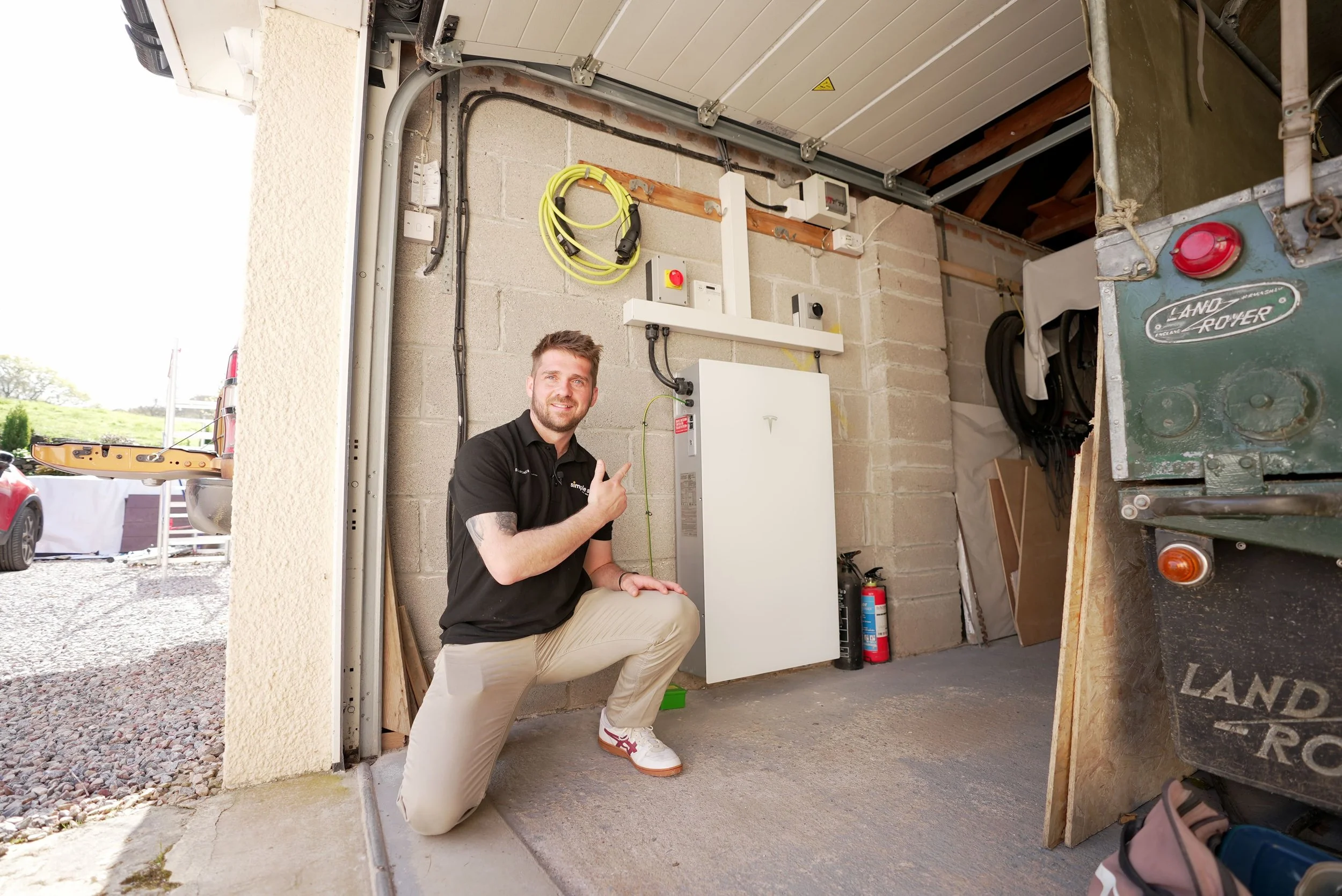
With a suitable tariff, some batteries can charge during cheaper off-peak periods and supply that stored electricity when grid rates are higher.
A battery is not automatically right for every home.
A battery does not generate energy, and it is not automatically right for every home. Tap each factor for why it matters.
01 How much electricity the household uses after sunset
02 How much surplus solar power is available
03 The difference between peak and off-peak tariff rates
04 The battery's capacity, controls and warranty
05 Whether the battery is being installed with solar or added to an existing system
Make every unit used for heating work harder
The latest inflation figures matter particularly to homes heated by fossil fuels. Yet replacing a boiler should never be treated as a quick product swap.
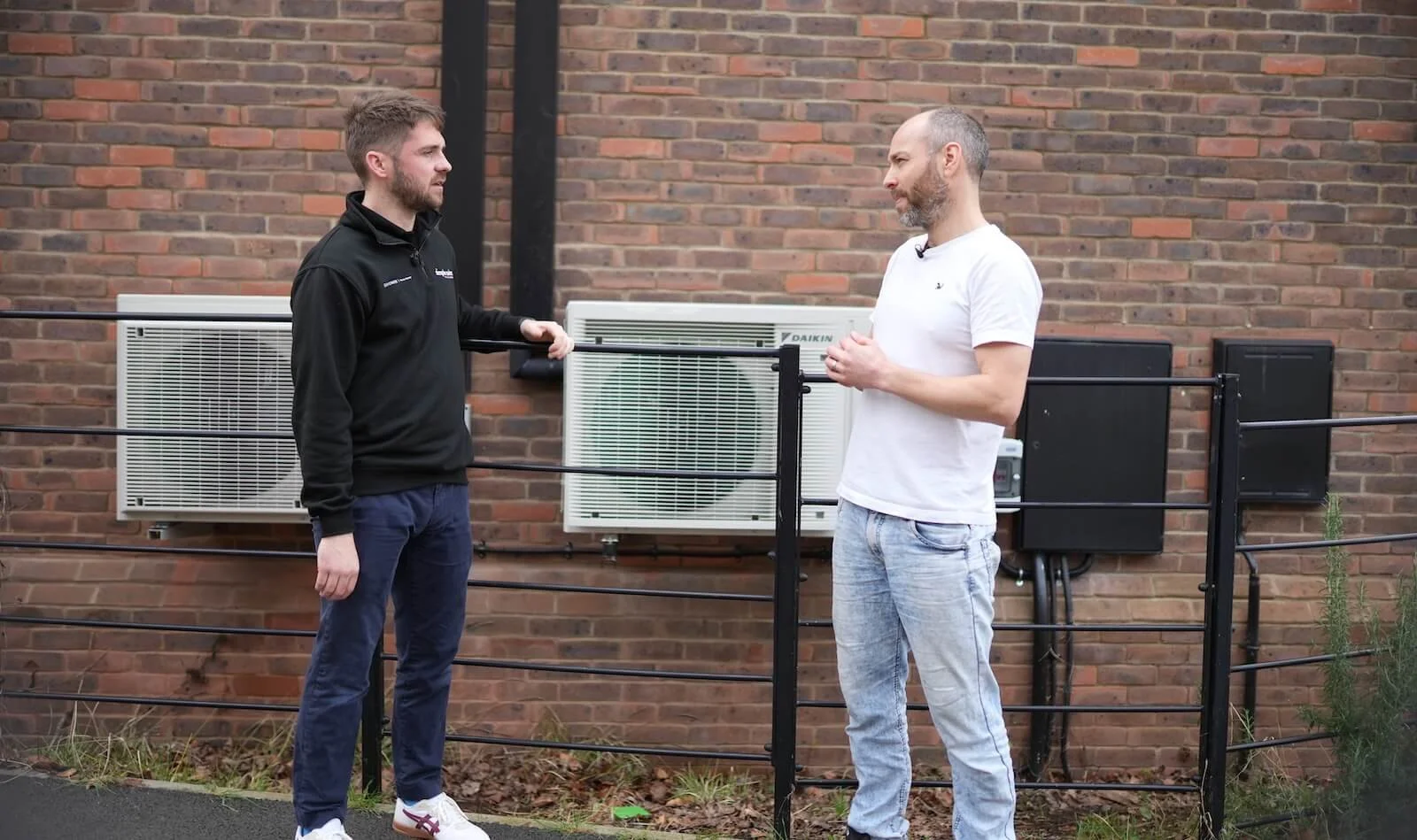
An air source heat pump works differently from a boiler. Instead of burning fuel to create heat, it collects heat from the outside air and moves it into the home. This allows a properly designed system to deliver more heat energy than the electrical energy it consumes.
Heat is collected from the outside air.
Electricity powers the process
Heat is moved into the property rather than created by burning fuel.
Performance depends on the property.
Insulation, radiator sizes, heat loss, controls, hot-water requirements and the positioning of the outdoor unit all need to be considered.
That is why the survey and system design matter just as much as the equipment itself.Support towards the cost of switching
The Boiler Upgrade Scheme currently provides £7,500 towards an eligible air-to-water heat pump in England and Wales.
Eligible homes without a mains gas connection that are replacing oil or LPG heating may qualify for £9,000 until 31 March 2027.
Until 31 March 2027Solar, storage and smarter electricity use can work alongside it.
Solar panels can complement a heat pump by supplying some of its electricity during daylight hours. A battery or smart tariff may provide further flexibility, but any projected running costs should be calculated from the home’s real heat demand rather than a generic national average.
Choose when the car charges
An electric vehicle moves part of a household’s transport spending onto its electricity bill. That makes charging time increasingly important.
A smart home EV charger can schedule charging for cheaper off-peak periods. Solar-compatible models may also direct surplus solar generation into the vehicle when it is available.
This does not mean every mile will be powered by free sunshine. The amount will depend on the solar system, the car, the time it is parked at home and the household’s other electricity use.
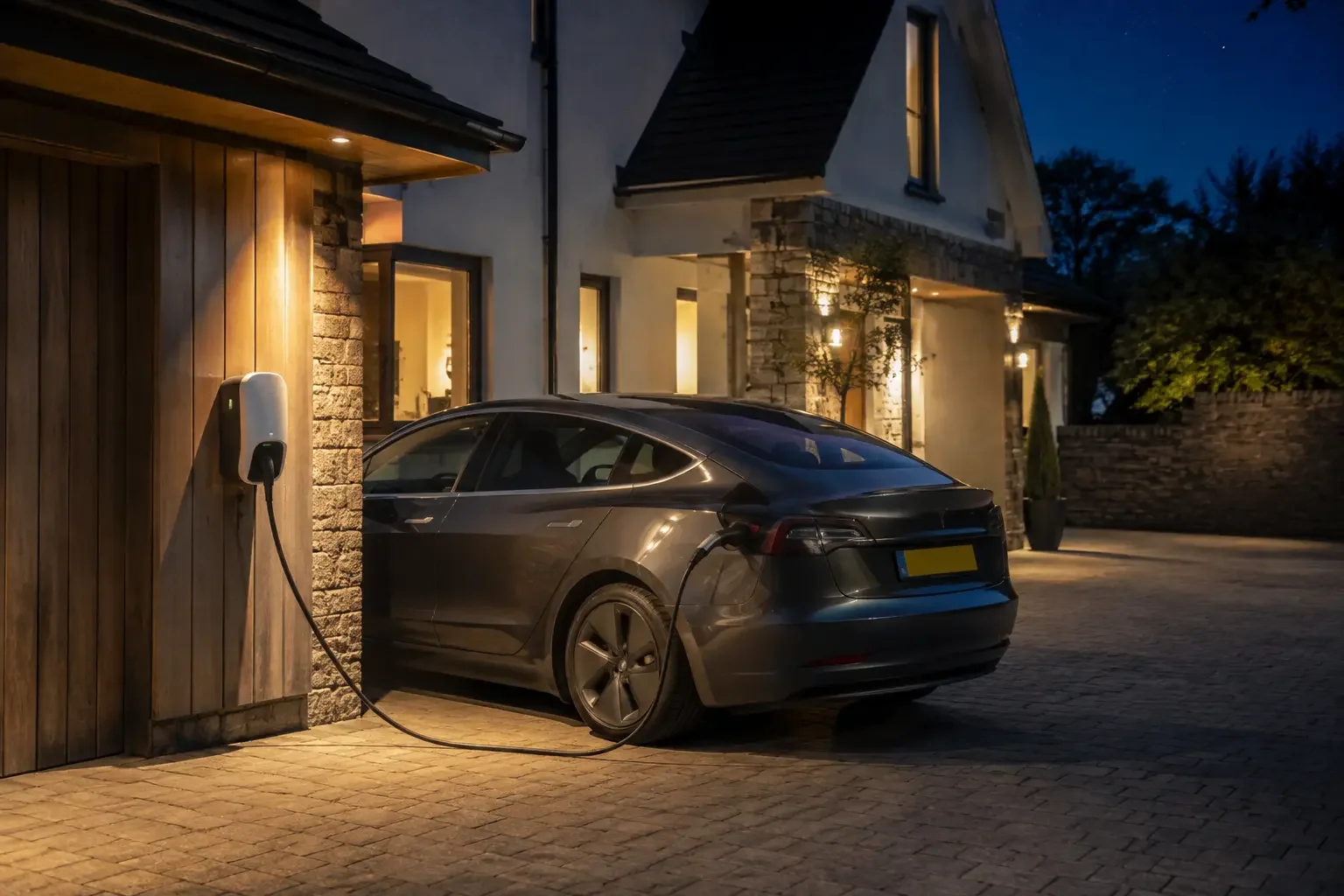
It does mean charging can become a planned part of the home’s energy system, rather than another appliance drawing electricity whenever it happens to be plugged in.
A purpose-built home charger is also faster and more suitable for routine EV charging than relying on a standard three-pin socket.
Choose when.
The real opportunity is how everything works together
Solar panels, batteries, heat pumps and EV chargers are often discussed as separate purchases. Inside the home, however, they all share the same electricity supply.
Generate electricity from the roof during the day
Use that power immediately for appliances or heating
Store surplus generation for the evening
Charge an electric car when solar or lower-cost electricity is available
Export genuinely unused electricity through an eligible tariff
This is what energy flexibility looks like. It is not about disconnecting from the grid or filling a house with technology. It is about reducing unnecessary energy purchases and choosing better times to buy the electricity that is still needed.
Not every home requires all four technologies. Some households may achieve their best result with solar alone. Others may already have panels and benefit from a battery retrofit. A rural property replacing oil heating may have a particularly strong reason to investigate a heat pump, while an EV owner may simply need safer and smarter charging.
not the product.
 Free survey
What should homeowners do now?
-
01
Before comparing equipment, gather 12 months of electricity and heating bills.
-
02
Note when the home is usually occupied, whether an electric vehicle is planned, and whether electricity use is concentrated during the day or evening.
-
03
Then ask for recommendations based on those patterns.
Simple Solar designs and installs solar panels, battery storage, air source heat pumps and EV chargers across Devon, Cornwall, and Somerset. Our surveys consider the property, its energy use and the homeowner's priorities before recommending a system.
Inflation may be a national statistic, but an energy bill is personal. The more electricity a home can generate, store and use intelligently, the less exposed it becomes to the next change in wholesale markets or regulated prices.Arrange a free survey to find out which improvements could make sense for your home.
- No obligation
- Usually replies within 1 working day
