

Typical Saltash Roof
4,400-4,800 kWh
Estimated annual generation from a well-positioned 10-panel system in south-east Cornwall.
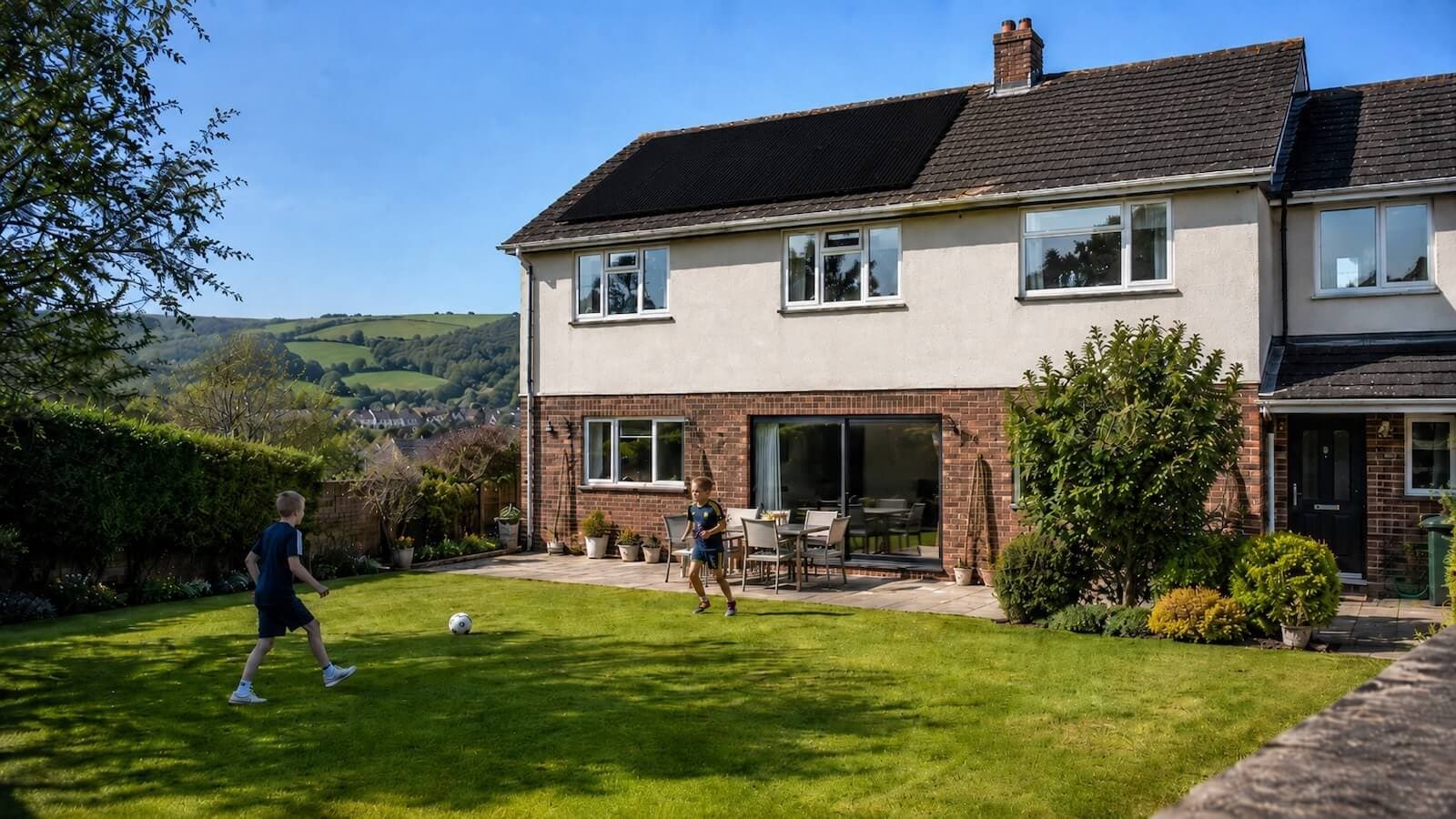
If you live in Saltash, Latchbrook, Pillmere, Burraton, Carkeel, St Stephens, Hatt, Landrake, Pillaton or one of the villages above the Tamar, our solar panel installers can help you cut the part of your electricity bill you actually control.
With the standard variable tariff sitting around 24.67p per kWh at the moment, every unit you generate from your own roof is a unit you don't buy from the grid.
Simple Solar is an MCS-certified solar panel installer based in Plymouth, a short drive across the Tamar Bridge from Saltash.
We design and install SUNPOWER solar panel systems and typically recommend Tesla Powerwall battery storage for homes right across south-east Cornwall.
And we issue fixed, written quotes – usually the same working day – with no pushy follow-up. If your roof isn't a sensible candidate for solar, we'll tell you plainly. If it is, you'll get a clear set of numbers and the freedom to decide in your own time.
Call us on 01752 916 013 or request a free quote to get started.

 Switch on to solar
Saltash Solar Guide
Cornwall receives roughly 19% more solar energy over the year than the UK average, making Saltash one of the stronger locations in Britain for residential solar generation.
4,400-4,800 kWh
Estimated annual generation from a well-positioned 10-panel system in south-east Cornwall.
Cooler coastal temperatures help panels operate closer to peak efficiency during the summer months.
Cornwall receives roughly 19% more solar energy over the year than the UK average, with the county benchmark sitting at around 1,298 kilowatt-hours per square metre per year (source: European Commission Photovoltaic Geographical Information System).
Saltash sits on the eastern edge of Cornwall, but shares the same southern-UK irradiance profile, which puts it comfortably ahead of most of the country for solar generation potential.
In plain English, a well-designed 10-panel system on a south-facing Saltash roof can generate in the region of 4,400 to 4,800 kWh of electricity per year. That is enough to cover a very large share of a typical three to four-bedroom household's electricity use, with surplus exported to the grid on a Smart Export Guarantee tariff.
There is also a less-obvious advantage to the Cornish climate. Solar panels are rated in laboratory conditions at 25°C, and their output actually drops slightly as the panels heat up. Cooler coastal temperatures mean panels tend to run closer to their rated efficiency than they do in a stifling inland July. Cornwall's weather is not a handicap for solar; in several respects, it is a help.
The honest caveat is winter. December generation can be five to seven times lower than June, which is why battery storage and a sensible export tariff matter. Together, they let a solar home make the most of long summer days and soften the shorter winter ones.
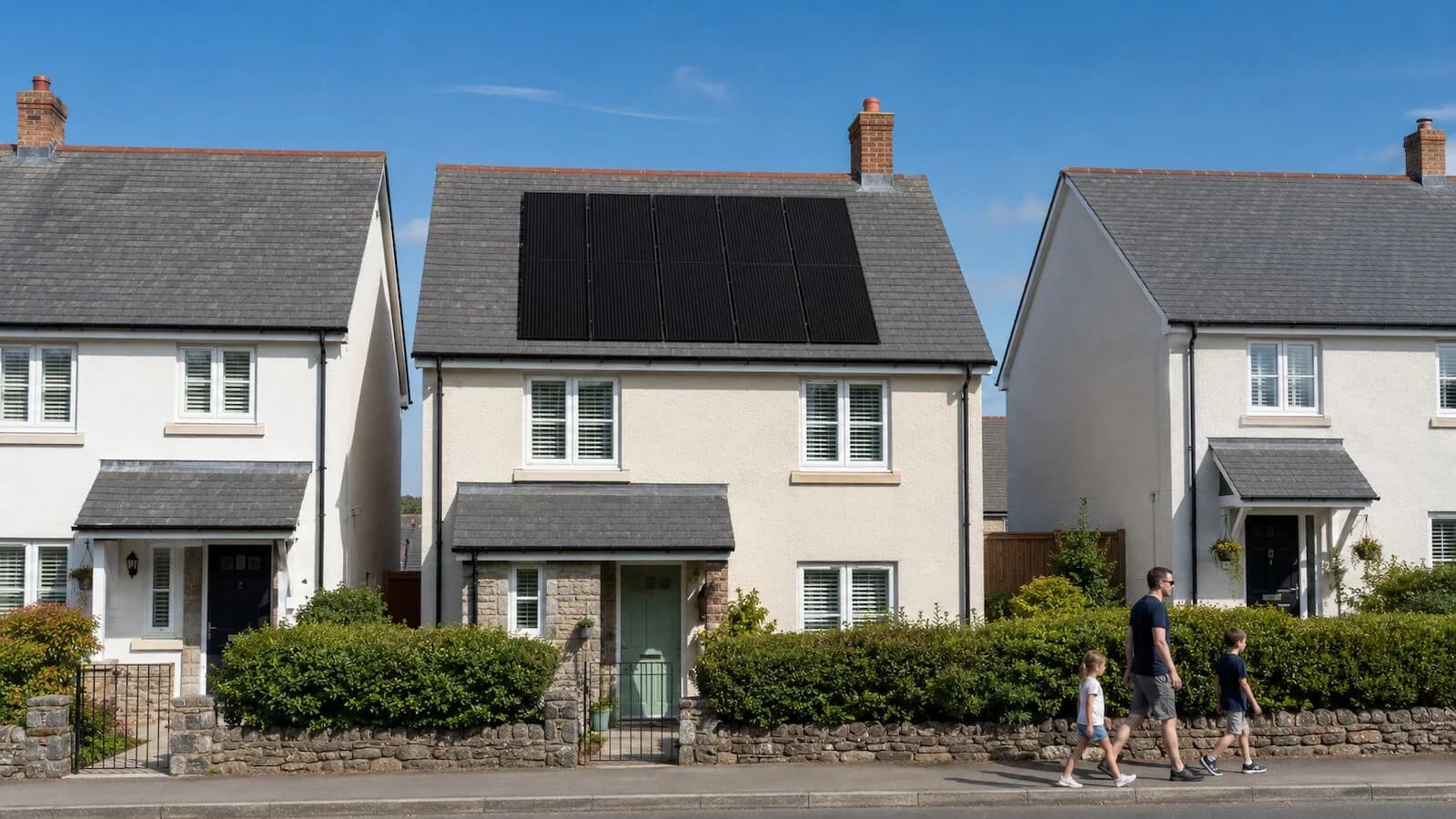
Saltash rises steeply from the Tamar, and roof orientation varies dramatically from one street to the next. Homes in the modern Latchbrook, Pillmere and Carkeel estates tend to have clean, unshaded south or south-west-facing roofs and convert easily.
Victorian terraces on the slopes above Fore Street and around St Stephens can be more variable: pitch, chimney-stack shading and the occasional conservation-area listing all come into the conversation.
East or west-facing roofs still work; they just generate differently across the day, which often suits households who use more electricity in the morning or evening. North-facing roofs rarely make economic sense on their own.
If you’re in the Saltash conservation area or your property is listed, planning permission may be required. We'll flag this during the free survey and talk you through what it means in practice.
We install across Saltash town, Latchbrook, Pillmere, Burraton, Burraton Coombe, Carkeel, St Stephens, Wearde, Forder and Trematon, as well as the villages that ring the town: Hatt, Landrake, Pillaton, Botus Fleming, St Mellion and St Dominic.
We also serve the adjoining Plymouth catchment across the Tamar Bridge.
Pricing
Our typical residential solar prices for Saltash customers are shown below. These figures are for the solar panels, inverter and full installation, fully fitted and commissioned. Battery storage is priced separately and covered further down.
| System Size | Panels | Approximate Annual Generation | Typical Installed Price (Solar Only) |
|---|---|---|---|
| 3 kWp | 6 panels | 2,600-2,900 kWh | £4,500 |
| 4 kWp | 8 panels | 3,500-3,900 kWh | £5,500 |
| 5 kWp | 10 panels | 4,400-4,800 kWh | £6,000 |
| 6 kWp | 12 panels | 5,200-5,700 kWh | £6,500 |
Prices correct as of April 2026. Generation figures are indicative, based on a well-oriented south-facing Saltash roof with minimal shading. Actual output depends on roof aspect, pitch and site-specific conditions.
Simple Solar currently recommends 510W SUNPOWER Performance 7 panels, so 8 panels equal roughly 4 kWp, 10 panels roughly 5 kWp, and so on. The price ladder above reflects our standard installation. We don't upsell kit you don't need.
If your household uses a lot of electricity, or you’re planning to add a heat pump or drive an electric car, a larger system may earn its place. For the average three-bedroom home, 8 to 10 panels is the sweet spot.
Fixed, written quote, no pressure
The installed cost of a solar system depends on a handful of straightforward variables:
We’d rather win your business on value, warranty and aftercare than on headline price.
Three factors matter especially when you’re weighing up the money case for solar.
Our equipment
We design most of our systems around two anchor products: SUNPOWER Performance solar panels and the Tesla Powerwall 3 battery. Both are premium choices, and both earn their place on a Saltash roof.
SUNPOWER is a long-established American manufacturer with a strong engineering reputation. The Performance 7 panels we install are rated at around 510W each, with high efficiency, strong performance in low-light conditions (which matters a great deal in a Cornish winter), and a 30-year product, performance and service warranties – the longest in the industry.
As a SUNPOWER Premier Partner, we install these panels routinely and our quotes reflect direct manufacturer pricing.
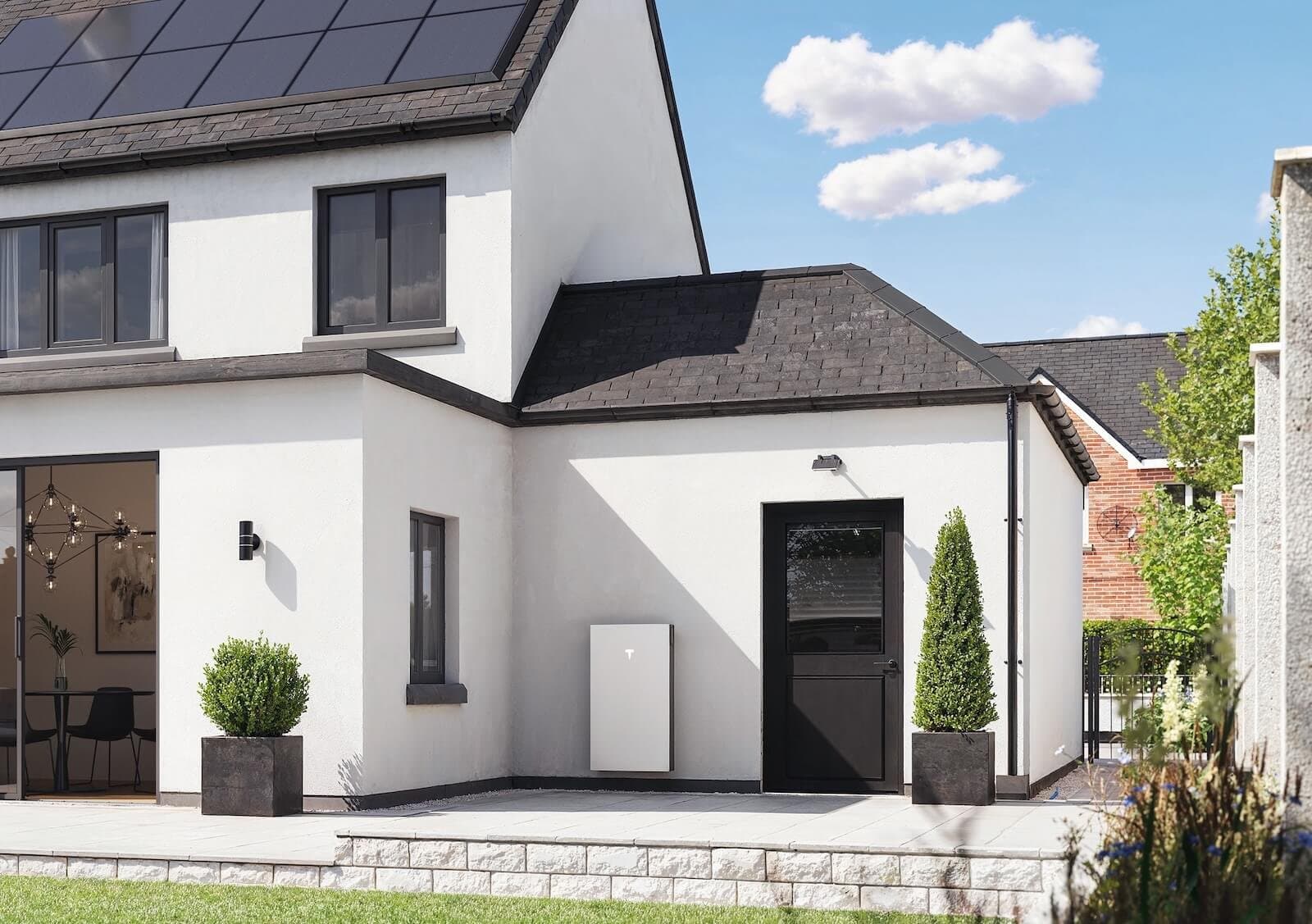
Simple Solar is a Tesla Powerwall Certified Installer. The Tesla Powerwall 3 is a wall or floor-mounted home battery with 13.5 kWh of usable capacity and a built-in hybrid inverter, which means fewer components on the wall and a cleaner install.
What does battery storage actually do? It lets you use far more of the electricity your own panels generate. Without a battery, a typical solar home uses around 30-50% of its own generation directly (what the industry calls self-consumption) and exports the rest.
With a Powerwall, that figure usually rises to 60-80%. Every extra kilowatt-hour you self-consume is one you don’t have to buy at the full import rate of around 24.67p per kWh, which is why batteries make such a difference to the overall economics.
There is a secondary benefit in coastal Cornwall. Saltash sees its share of storm-related grid interruptions every winter. A Powerwall 3 can keep essential circuits running during a short outage if the optional Gateway is installed, which can be genuinely useful on a windy February evening.
Simple Solar is a Tesla Powerwall Certified Installer.
The journey
We understand that having work done on your home can feel daunting. That is why we have developed a clear, structured process that keeps you informed at every stage. From first contact to switched-on system, here is exactly what to expect:
Phase one
Everything starts with a free, no-obligation home survey. One of our experienced surveyors will visit your property to assess its suitability for solar panels. This typically takes around an hour and covers:
There is no hard sell. We will give you an honest assessment of whether solar is right for your property and, if so, what size system would best suit your needs.
Phase two
Following the survey, we prepare a detailed written quotation including:
We will talk you through the quote and answer any questions. Take your time to consider – we never pressure customers into quick decisions.
Phase three
Once you decide to proceed, we handle all the paperwork. Most residential solar installations fall under permitted development and do not require planning permission (see below), but we will confirm this for your property.
We submit the necessary notification or application to your Distribution Network Operator. For Saltash and the surrounding south-east Cornwall area, this is normally National Grid Electricity Distribution (South West), but we confirm this by postcode before submitting paperwork. Smaller systems under 16A per phase are usually handled under the G98 fit-and-notify process, while larger systems may need G99 approval before connection.
Phase four
Installation day is when the real work happens. For a typical residential system, installation takes one to two days. Here is what to expect:
Our installers are respectful of your home. We keep disruption to a minimum, protect your floors and furnishings, and leave the site clean and tidy.
Final handover
Before we leave, we thoroughly test your system to ensure everything is working correctly. We will then walk you through:
You will receive a comprehensive documentation pack including your MCS certificate, warranty information, electrical certificates, and all the paperwork needed to register for the Smart Export Guarantee.
Timeline
Typical timeline: From initial enquiry to completed installation usually takes 3 to 6 weeks, depending on survey availability and DNO approval times.
Consumer guidance
Cold-calls and doorstep offers promising ‘free solar panels’ are almost always misleading. It’s worth knowing where you actually stand in 2026.
Direct incentives
There is no general grant available to an average-income Cornish homeowner in 2026. The old Feed-in Tariff closed to new applicants in April 2019 and has not been replaced with a direct capital grant for solar.
Tax incentives
Until 31 March 2027, solar panels and battery storage attract 0% VAT on residential installations. For a typical household this is worth around £1,000-£2,000 in itself.
Export earnings
It is not a capital grant. It is an ongoing payment, currently around 12p per kWh on leading fixed-rate tariffs.
Heat incentives
If you are replacing a gas, oil or LPG boiler with an air source heat pump, Ofgem administers a grant deducted upfront from your installation invoice (source: Ofgem, Boiler Upgrade Scheme property-owner guidance, 2026). The standard grant is £7,500, rising to £9,000 from July 2026 for homes currently heated by oil or LPG – relevant to many of the villages around Saltash that sit off the gas grid. We cover this in more detail below.
Advice
The narrow route to fully-funded solar sits under the ECO4 scheme and applies only to low-income households with electric heating. Most homeowners won't qualify, and the firms that cold-call promising free solar are usually routing buyers into long finance agreements or misrepresenting scheme eligibility.
If in doubt, check whether an installer is MCS-certified at mcscertified.com before you engage.
If you'd rather spread the cost than pay upfront, we can introduce you to Phoenix Financial Consultants, an FCA-authorised credit broker (FRN 539195) whose panel includes regulated solar finance options. We're an Introducer Appointed Representative of Phoenix; we introduce, we don't lend, and finance is subject to status and credit checks.
Saltash Energy Systems
Solar and an air source heat pump make an exceptionally strong combination for Saltash homes that are either already all-electric or looking to move off gas or oil.
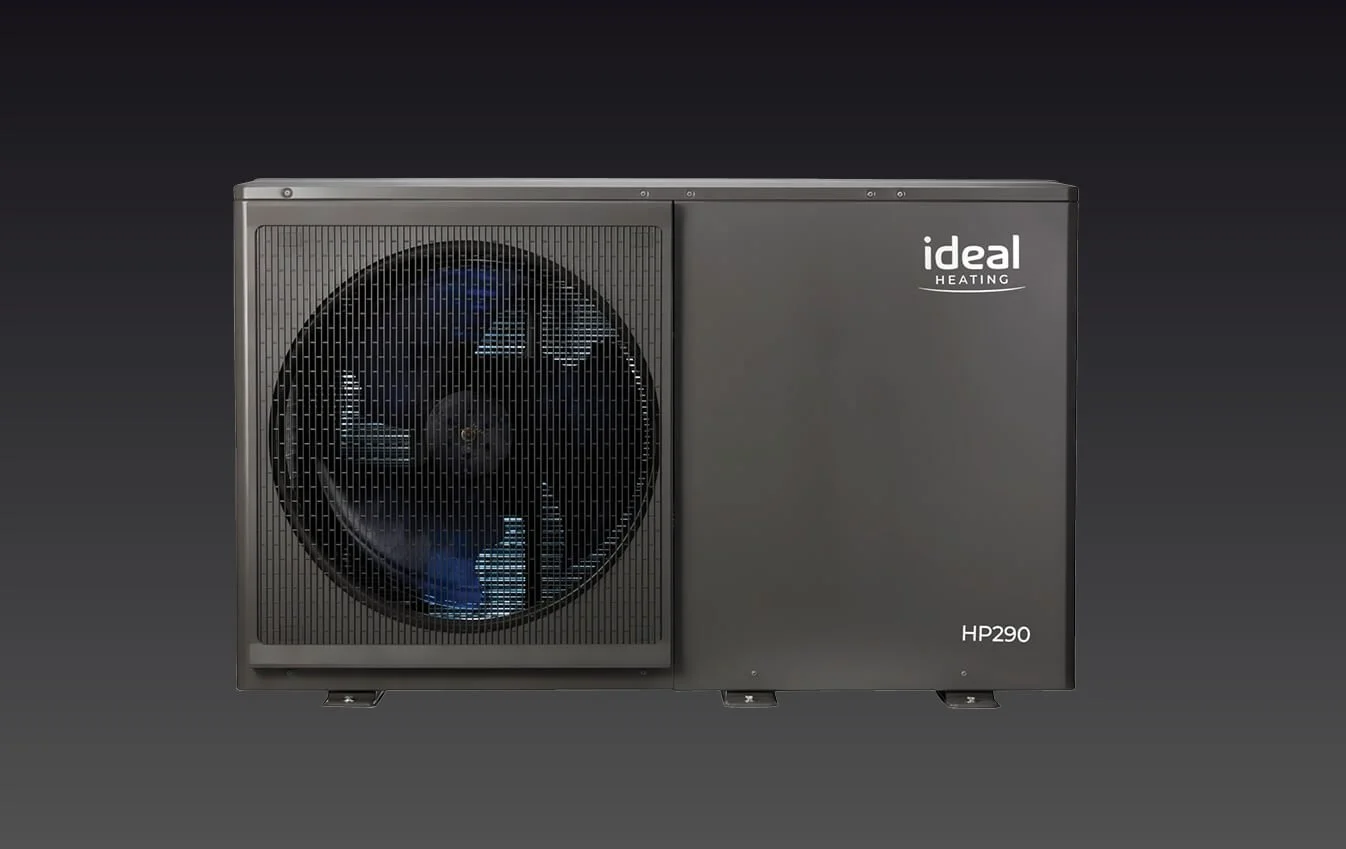
The logic is simple. A modern air source heat pump (we generally install the Ideal Heating HP290) typically runs at a Seasonal Coefficient of Performance of around 3.0–4.0. That means every kilowatt-hour of electricity you put into the heat pump gives you three to four kilowatt-hours of heat in your home. When that electricity comes from your own solar panels, the running cost of the heat pump collapses.
The UK government, through Ofgem, pays £7,500 towards a qualifying air source heat pump installation in England and Wales – rising to £9,000 from July 2026 for homes currently heated by oil or LPG.
The grant is deducted upfront from your installation invoice by the MCS-certified installer. You don't have to pay out and claim back.
Take a three-bedroom Saltash home using 3,400 kWh of electricity a year at 24.67p per kWh. That works out at roughly £839 annually on electricity alone, before the standing charge. Add gas at 5.74p per kWh for heating and hot water, and the total energy bill climbs substantially.
A 10-panel Simple Solar system (around 5 kWp) is likely to generate 4,400–4,800 kWh a year on a well-oriented Saltash roof. With a Tesla Powerwall 3, the household could self-consume 65–70% of that generation, slashing grid import.
Exchange the gas boiler for an Ideal HP290 heat pump, claiming the £7,500 Boiler Upgrade Scheme grant: you've moved from two separate fossil-fuel bills to one largely self-generated electricity bill, with a sensibly-sized export tariff picking up the surplus.
If your Saltash home is currently heated by oil or LPG rather than gas, the BUS grant rises to £9,000 from July 2026.
This is illustrative. Final savings depend on your roof, your actual usage pattern, and the specific system specification we quote for your property.
Local reputation
These aren't just logos. MCS certification is what lets you register for the Smart Export Guarantee. SUNPOWER Premier Partner status gives you access to the 30-year product warranty. Tesla Powerwall Certified Installer status means we’re trained and approved to install, commission and support Powerwall batteries directly.
You get a clear, jargon-free quote, almost always on the same working day. No cold-call follow-up, no pressure sales, no limited-time tactics. You decide in your own time.
Every install comes with an app that shows you generation, self-consumption and export in real time. We monitor systems remotely, so we often spot problems before you do. Optional service packages are available for customers who want a hands-off relationship.
SUNPOWER panels are warranted for up to 40 years (for the new M Class range); Tesla Powerwall for 10 years; our installation is covered by a 5-year insurance-backed guarantee. When you call us, you're talking to a Plymouth-based team that has been installing solar across Devon, Cornwall, Somerset and Dorset since 2015.
Clear Answers
Everything you need to know about switching to solar panels and battery storage installations across Saltash and Cornwall.
Available until 31 March 2027 on residential installations and matching household storage battery retrofits.
Yes. Panels generate from daylight, not just direct sun, and cooler coastal temperatures actually improve panel efficiency. Cornwall receives roughly 19% more solar irradiance than the UK average, which is why around 10% of Cornish households have already installed solar (source: Microgeneration Certification Scheme, February 2024).
Quality panels routinely last 25-40 years. SUNPOWER Performance panels carry a 30-year product warranty and a performance warranty. Batteries typically last 10-15 years depending on chemistry and usage.
The evidence points to a neutral-to-positive effect. Buyers increasingly view low running costs as a feature rather than a deterrent, particularly in Cornwall where solar is already visible on roughly one in ten homes.
In most cases, no – residential solar installations are classed as permitted development. Exceptions apply to listed buildings, properties in the Saltash conservation area, and certain unusual mounting arrangements. We confirm the planning position during the free survey.
There is no universal grant available to an average-income English homeowner in 2026. 0% VAT on solar and battery storage applies until 31 March 2027, which saves roughly £1,000-£2,000 on a typical installation. Means-tested grants exist via ECO4 for eligible low-income households with electric heating, but they don’t apply to most buyers. Be cautious of cold-callers claiming ‘free solar’ outside these narrow routes.
Yes. Most existing systems can be retrofitted with a compatible battery, and 0% VAT currently applies to battery storage whether it’s installed with solar panels or added later. We’ll assess compatibility during the survey.
A typical residential install is one to two days on site once the system design and Distribution Network Operator paperwork are complete. End-to-end, from first enquiry to commissioning, most projects complete inside 3-6 weeks.
Yes. SEG tariffs require a smart meter capable of half-hourly export readings. If you don’t have one, your electricity supplier will usually upgrade it free of charge.
Yes, and the two technologies pair very effectively. The Boiler Upgrade Scheme currently pays £7,500 towards a qualifying air source heat pump in England and Wales – rising to £9,000 from July 2026 for homes heated by oil or LPG – deducted upfront from your installation invoice. Combining solar and a heat pump gives you the best possible ratio of self-generated electricity to low-carbon heat.
Check three things before signing anything. First, MCS certification: you can verify any installer at mcscertified.com, and it’s the accreditation required to register for the Smart Export Guarantee. Second, membership of a consumer code such as RECC or HIES. Third, an insurance-backed guarantee that survives the installer. Never pay upfront in full, and be wary of unsolicited doorstep or cold-call offers.
Get started
If you're in Saltash, Latchbrook, Pillmere, Burraton, Carkeel, St Stephens or one of the surrounding villages, we'd be glad to quote for your roof.
Request a free quote – online form, same-day reply.
Or call to speak with an expert:
Thinking about a heat pump too? Let us know when you enquire. We can quote for both together and walk you through the Boiler Upgrade Scheme (£7,500 or £9,000) at the same time.