DIESEL HITS £2 A LITRE AS ELECTRIC CAR SALES BREAK RECORDS: WHAT 100 MILES REALLY COSTS IN THE SOUTH WEST
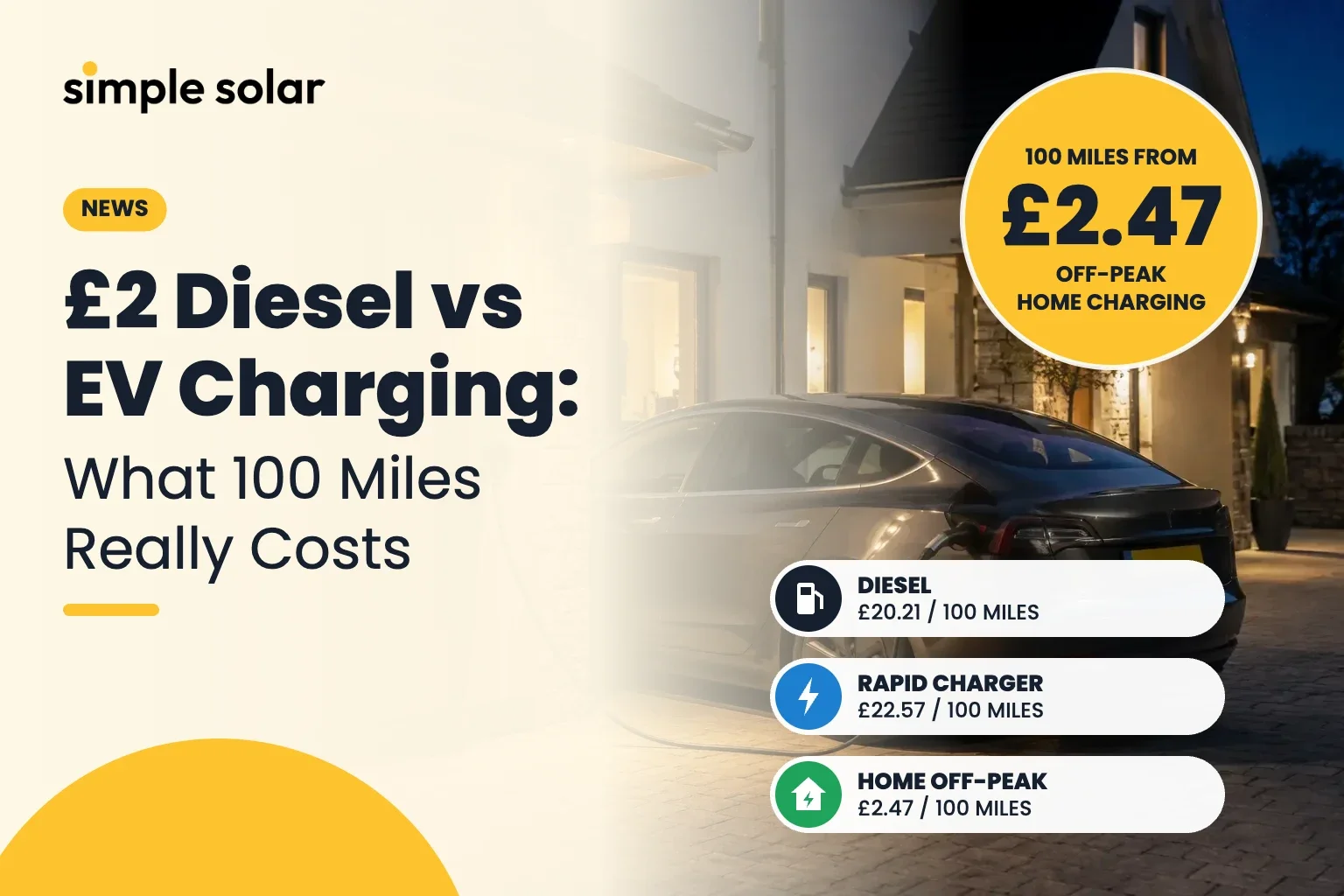
Diesel has hit £2 a litre, and electric car sales have just set a record. But what does 100 miles really cost? It depends on how you fuel or charge.
If you drive a diesel, you will have noticed. Filling up a family car now costs around £110.
At the same time, more people than ever are switching to electric. September 2026 was the biggest month on record for new electric car registrations in the UK.
Is that a coincidence? The industry doesn’t think so. But the headline figures only tell half the story. What matters for your wallet is how you charge: an electric car can cost under £3 per 100 miles, or more than a diesel.
Here’s what the numbers really look like, and where home solar and battery storage fit in.
A record September for electric cars
According to the Society of Motor Manufacturers and Traders (SMMT), 99,199 new battery electric cars were registered in September 2026. That’s up 36.3% on September 2025 and the highest monthly total ever recorded.
Electric cars took a 28.3% share of the new car market, up 5% on a year ago. The SMMT says that works out at almost five new electric cars registered every minute.
September is always a big month, thanks to the new number plate. Even so, the SMMT credits greater model choice, manufacturer discounts and the government’s Electric Car Grant for the jump.
Diesel crosses £2 a litre
On 2 October 2026, RAC Fuel Watch reported that the average price of a litre of diesel had reached a record 200.01p. Unleaded petrol averaged 174.71p.
The RAC puts the cost of filling a 55-litre tank at £110.01 for diesel and £96.09 for petrol, with the conflict in the Middle East driving prices up since the end of February.
For an average 45 mpg diesel car, the RAC calculates that this works out at around 20p a mile. Cover 10,000 miles a year and you’re spending about £2,020 on fuel.
What does 100 miles cost? Diesel, petrol and electric compared
To make a fair comparison, we’ve worked out the cost of driving 100 miles using the latest published prices.
How we worked it out: we assume an electric car covers 3.5 miles per kWh, so 100 miles uses about 28.6 kWh of electricity (100 ÷ 3.5). For petrol and diesel, we assume 45 mpg, which is about 9.9 miles per litre. Your own car and driving style will give different results.
Diesel (RAC Fuel Watch UK average, 2 October 2026)
Petrol (RAC Fuel Watch UK average, 2 October 2026)
Public rapid or ultra-rapid charger, pay as you go (Zapmap average, September 2026)
Public standard charger, pay as you go (Zapmap average, September 2026)
Home charging on the standard capped tariff, South West (Ofgem, October-December 2026)
Home charging on an off-peak EV tariff, South West (Octopus Go off-peak rate)
Home charging from surplus solar you would otherwise export
Note: the off-peak figure is the Octopus Go overnight rate for the South West, as published on 6 September 2026. Other suppliers offer similar EV tariffs, and rates change. The solar figure is not a bill: it’s the export income you give up by using your own electricity instead of selling it.
The surprise: rapid chargers can cost more than diesel
Look at the public rapid charging row again. At Zapmap’s September 2026 pay-as-you-go average of 79p per kWh, 100 miles costs about £22.57. That’s slightly more than diesel.
So an electric car isn’t automatically cheap to run. Rapid chargers are brilliant for long journeys, but if you rely on them for everyday driving, you lose most of the running-cost advantage.
Charge at home, and it’s a different story. On the standard capped tariff in the South West, 100 miles costs about £7.59. On an off-peak EV tariff, it’s around £2.47. Over 10,000 miles, that’s about £247 against about £2,020 for diesel.
Where home solar fits in
If you have solar panels, or you’re thinking about them, you can charge your car with electricity from your own roof. But it’s worth being clear about how and when that works best.
Charging straight from your panels
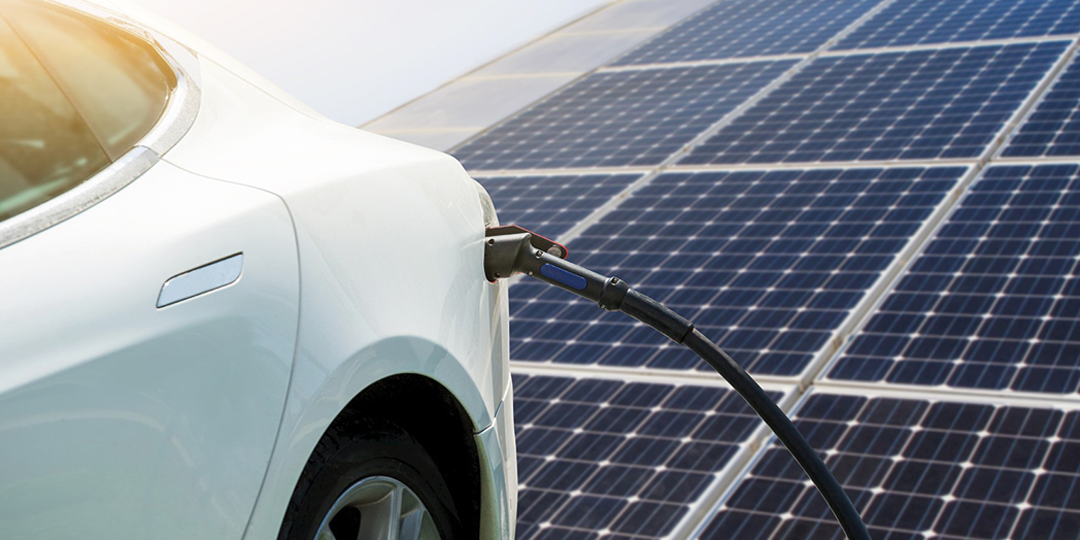
A solar-aware home charger watches how much electricity your panels are making and how much your home is using. When there’s a surplus, it sends that spare power to the car instead of exporting it to the grid.
The myenergi zappi GLO is one example. It’s a 7.4 kW charger that adjusts its charging power based on what your home is importing and exporting, so it can make the most of spare solar. It’s also compatible with smart and off-peak tariffs and is controlled through the myenergi app. Other major manufacturers make solar-compatible chargers, too.
- 01
Your panels generate. The charger monitors solar output and household use.
- 02
A surplus appears. Spare power that would be exported is spotted.
- 03
The car charges. That surplus goes to the car instead of the grid.
Please note: an electric car on a standard single-phase supply typically needs at least around 1.4 kW of power before it will start charging. On a cloudy day, or once your home’s own use is taken into account, the spare solar may not reach that level.
The winter reality
Solar charging works best for people who are at home during the day, with the car plugged in. If you commute, your car is usually parked somewhere else when your panels are producing the most.
Summer bonus. More spare solar, and more chance of topping up the car when it’s at home.
Off-peak does the heavy lifting. Most winter solar is used by the house before the car sees any of it.
It’s also seasonal. In the short, dull days between November and February, a typical home solar system produces a fraction of its summer output, and most of that will be used by the house before the car sees any of it.
That’s why, for most households, solar charging is a summer bonus on top of an off-peak tariff, rather than a replacement for one.
Charge the car or export the power?
Here’s a point that often gets missed. If you sell surplus solar through the Smart Export Guarantee (SEG), a typical SEG-licensed supplier pays around 12p per kWh. That’s the value of each unit you use in the car instead.
If you’re on an off-peak EV tariff at around 8-9p per kWh, it can actually pay to export your solar during the day and charge the car cheaply overnight. If you’re on a standard tariff at 26.58p, putting surplus solar into the car makes much more sense.
The right answer depends on your tariff, your export rate and when your car is at home. A good smart charger lets you set it up either way.
Where a home battery helps
A home battery such as the Tesla Powerwall 3 stores 13.5 kWh. That’s enough for roughly 47 miles in a car that covers 3.5 miles per kWh, so it isn’t really designed to fill up a car.
Where a battery earns its place is the rest of your home. You can charge it with surplus solar, or cheaply overnight on an off-peak tariff, then run your house from it during the day when electricity costs more. Meanwhile, the car charges directly overnight at the off-peak rate.

Why it matters in Devon, Cornwall and Somerset
Drivers in rural parts of the South West often cover longer distances than city drivers, with fewer public transport alternatives. That makes the cost per mile very relevant.
Many homes outside the main towns also have driveways, which makes home charging practical. And home charging, as the table shows, is where the real savings are.
Whether you’re in Plymouth, Truro, Exeter or Taunton, the principle is the same: the more of your charging you can do at home, at a low rate or from your own solar, the less fuel prices matter.
Frequently asked questions
Is it cheaper to charge an electric car at home?
Yes, by a long way. On the standard capped tariff in the South West (26.58p per kWh from October to December 2026), 100 miles costs about £7.59. On an off-peak EV tariff, it can be around £2.47. The same 100 miles in a 45 mpg diesel costs about £20.21 at current prices.
Can I charge my electric car with solar panels?
Yes. A solar-aware charger, such as the myenergi zappi GLO, can send surplus solar power to your car. It works best if the car is at home during daylight hours, and output is much lower in winter.
Can a home battery charge an electric car?
It can, but it’s rarely the best use of it. A Tesla Powerwall 3 holds 13.5 kWh, which is roughly 47 miles of driving. Most households get better value by charging the car directly on an off-peak tariff and using the battery to power the home.
How much does it cost to fully charge an electric car at home?
It depends on the size of the battery. Charging a 60 kWh battery from empty costs about £15.95 at the South West capped rate (60 x 26.58p), or about £5.18 on an off-peak rate of 8.63p (60 x 8.63p). Most drivers top up rather than charge from empty.
Thinking about solar, a battery or an EV charger?
None of us can control what happens at the pumps, but you can control how you charge an electric car. The cheapest miles come from charging at home: overnight on an off-peak tariff for most of the year, with solar topping it up in the summer months. If you’re considering an EV, work out how you’ll charge it before you choose the car. Then plan the solar, battery and charger as one system rather than three separate purchases.
Ben Quick, Director, Simple Solar
Simple Solar designs and installs solar panels, battery storage, heat pumps, and smart EV chargers across Devon, Cornwall and Somerset. We can show you what your own home could generate, how much of your driving it could cover, and which tariff makes the most sense alongside it. Finance is available through Phoenix Financial Consultants.
- →Get a free, no-obligation quote
- Explore smart EV charging
- £See how to spread the cost with finance through Phoenix Financial Consultants