

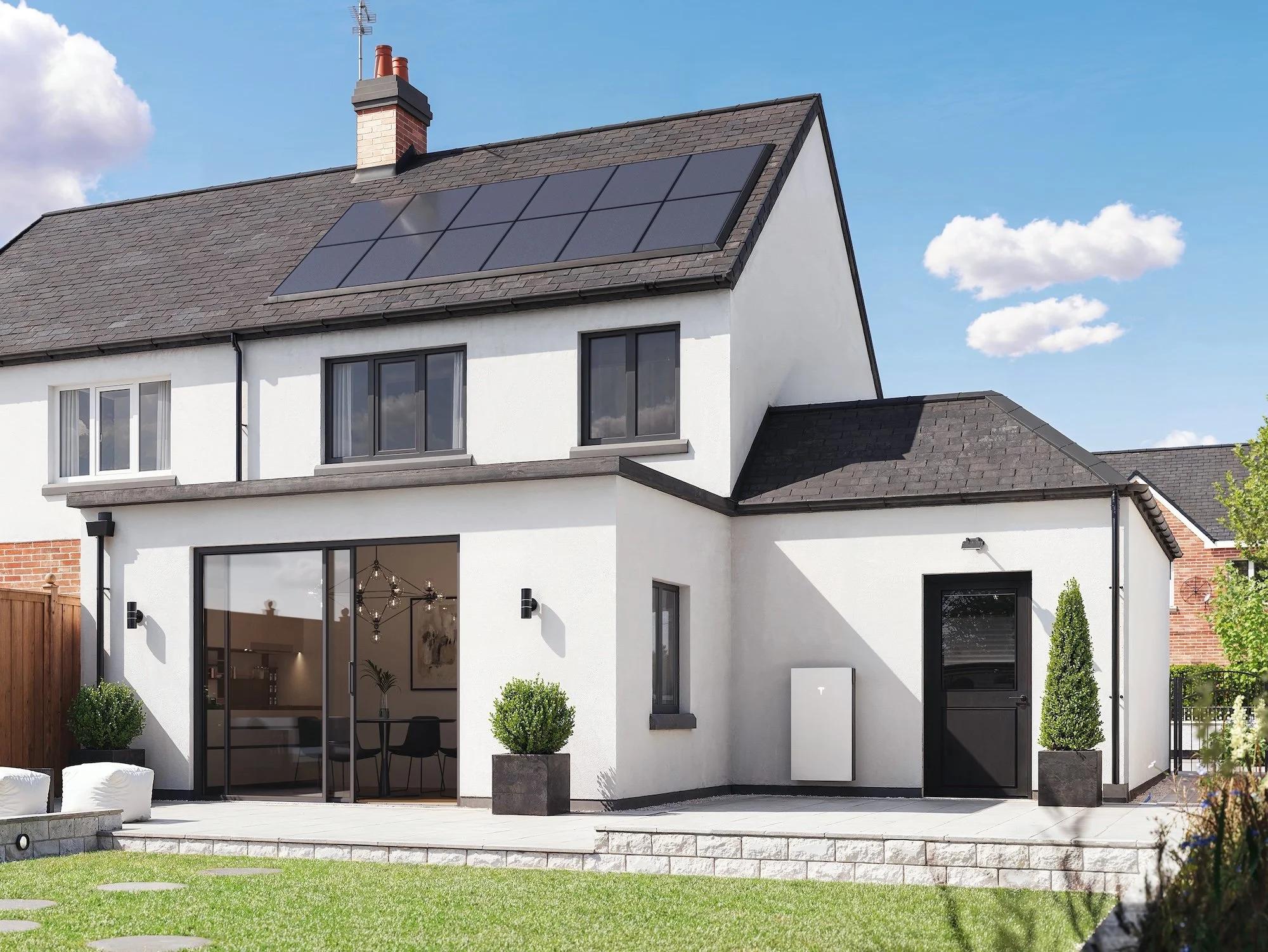
When Storm Austen hit the South West on 23 October 2026, more than 18,000 homes were left without electricity (opens in a new tab), according to National Grid. Most were around Penzance and central Cornwall.
Plenty of those roofs had solar panels on them. So, did the panels keep the lights on?
In most cases, no. Here’s why, and what it takes to stay powered when the grid goes down.
The short answer
Do Solar Panels Work in a Power Cut?
A standard solar panel system does not work in a power cut. It shuts down automatically when the mains fails, even in bright sunshine, and stays off until the supply returns.
To keep your home running, you need three things:
- A battery
- Backup equipment that disconnects your property from the grid, and
- A system designed to operate independently
The government’s Be Ready campaign makes the same point in its power cuts advice (opens in a new tab): solar and battery installations can carry on providing electricity during an outage only if they were built to run without the network.
Grid safety
Why Do Solar Panels Switch Off in a Power Cut?
The reason is safety.
Your solar inverter is the box that turns the panels’ output into electricity your home can use. It watches the grid constantly. If the mains disappears, the inverter stops.
Why? Picture engineers repairing a storm-damaged line in your road. They need to know that cable is no longer carrying electricity. If every solar roof nearby kept pushing power back out, it would create a dangerous situation for the repair engineers.
Batteries
Does a Solar Battery Work in a Power Cut?
Not automatically. This catches a lot of people out.
Many home batteries are installed to cut bills, not to provide backup. They store spare solar energy for the evening, then switch off with the inverter when the grid fails.
For a battery to help in an outage, it needs equipment that isolates your home from the network first. Only then can it safely supply your circuits.
| Your system | Does it work in a power cut? |
|---|---|
| Solar panels only | No |
| Solar panels and a battery, without backup equipment | No |
| Solar panels and a battery with backup for selected circuits | Yes, for the chosen circuits |
| Solar panels and a battery with whole-home backup | Yes, for the whole house, within the battery’s limits |
Three checks
How to Check Whether Your Solar System Has Backup
Already have solar panels or a battery? Don’t wait for the next storm to find out. Try these three checks:
- Read your handover paperwork. Look for the words ‘backup’, ‘gateway’ or ‘EPS’ (emergency power supply).
- Open your battery’s app. A backup or reserve setting is a good sign, though not proof.
- Ask your installer. The question to put to them: can my system run independently of the grid?
Whole-home backup
How Do You Keep the Lights On in a Power Cut?
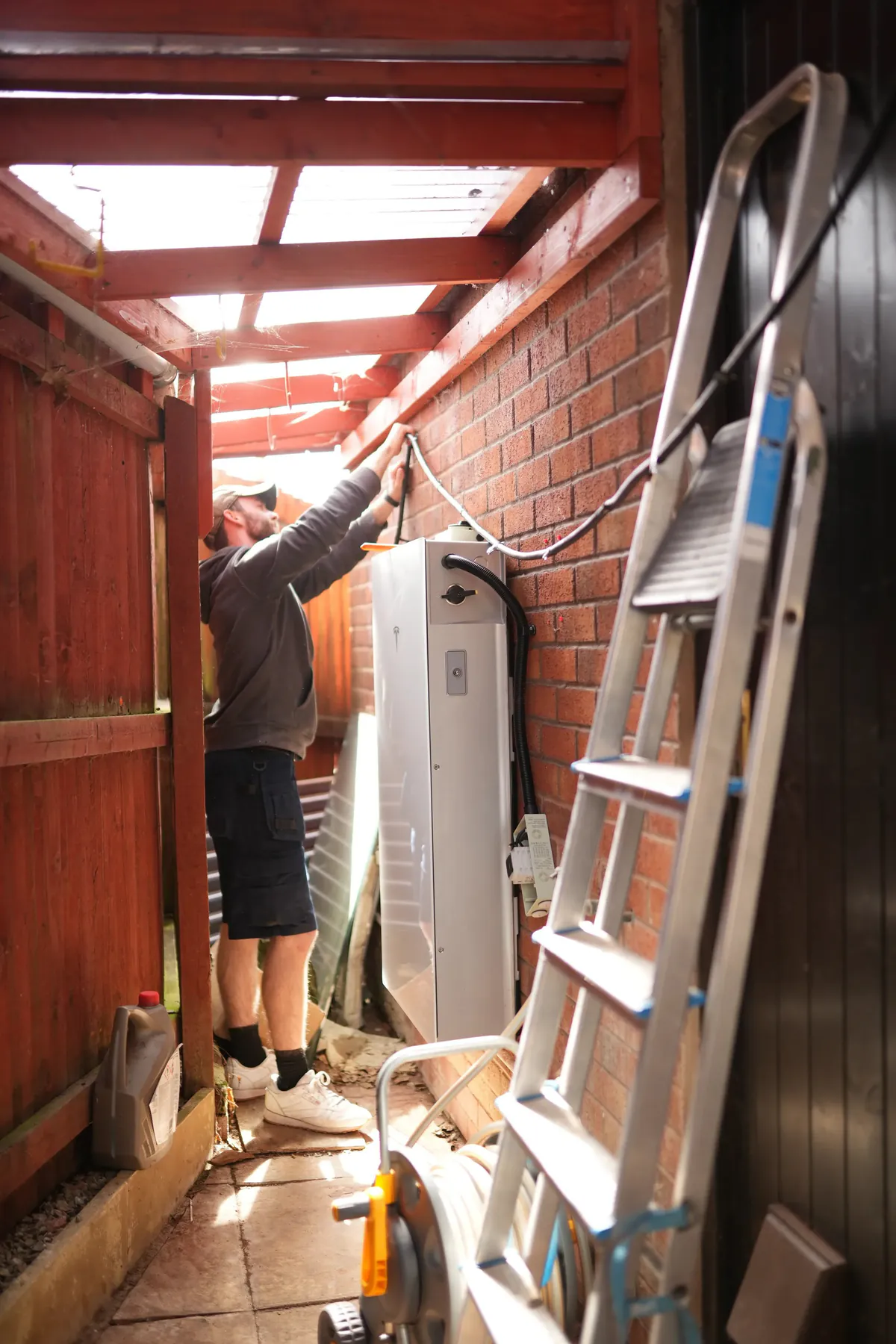
Simple Solar is a Tesla Powerwall Certified Installer, and the Powerwall 3 is our choice for whole-home backup.
Paired with a Tesla Backup Gateway, it works like this:
- The gateway monitors the grid. When it detects an outage, it isolates your home and the Powerwall takes over.
- Every circuit stays live: lights, sockets, fridge-freezer, broadband router and boiler.
- Panels connected to the Powerwall’s built-in inverter keep generating in daylight, running the house and recharging the battery.
- When mains power returns, the system reconnects automatically.
The Powerwall 3 stores 13.5 kWh and can deliver up to 11.04 kW to your home, depending on your property and configuration.
Tesla Powerwall 3
How far does that go? Ofgem assumes a typical household uses 2,500 kWh of electricity a year, which is about 6.8 kWh a day (2,500 kWh ÷ 365). On that basis, a full battery holds roughly two days of normal use before any solar top-up. That’s an illustration, not a guarantee; heavy loads will drain it faster.
Tesla’s Storm Watch (opens in a new tab) feature helps too. When severe weather is forecast, it charges the Powerwall to maximum ahead of a possible outage.

“After every big storm we hear from customers who assumed their solar panels would keep the lights on. It’s an easy assumption to make. The good news is that backup can usually be designed in from the start or added later, once we’ve surveyed the property.”
For more detail, read our earlier articles on home battery backup and whether a Powerwall could get you through three days without power.
Existing systems
Can You Add Backup to Solar Panels You Already Have?
In most cases, yes. Battery storage can usually be added to an existing solar panel system, and we check compatibility at a free survey before quoting.
Whether your current panels can keep generating during an outage depends on how they are wired. That’s something the survey confirms.
There’s a deadline worth knowing about as well. Batteries, including those retrofitted to older solar arrays, are currently installed at 0% VAT. That relief ends on 31 March 2027, when the rate rises to 5%.
Want to see what a finished installation looks like? Browse our solar and battery case studies from Plymouth, Wembury, Kingswear and beyond.
In a power cut
What to Do in a Power Cut in Devon, Cornwall or Somerset
- Call 105. It’s free, and it puts you through to your local network operator to report a fault or get an update.
- Join the Priority Services Register (opens in a new tab) if anyone in your home is older, has young children or depends on medical equipment. More than 6,000 of the properties cut off during Storm Austen were on the register, which is free to sign up to.
- Expect more than the lights to go out. Gas boilers, heat pumps and home broadband all stop without electricity.
- Keep the basics to hand: a torch, a charged power bank and a battery radio.
Talk to us
Get Backup Power in Place Before the Next Storm
Winter storms are a fact of life in the South West. If you’d like your home to stay powered through the next one, we can help.
Simple Solar is an MCS-certified installer based in Plymouth. We fit solar panels, battery storage and Tesla Powerwall 3 across Devon, Cornwall and Somerset. The survey is free, there’s no obligation, and you receive a fixed price in writing.
Get a free quote online in about 60 seconds, or call us on 01752 916 013.
Starting from scratch? See what we offer for solar panels in Devon, or read our guide to what a system costs.
Your questions answered
Solar Panels and Power Cuts: FAQs
Do solar panels work in a power cut in the UK?
Not by themselves. A standard grid-connected solar system shuts down automatically when the mains fails, even in daylight, to protect engineers working on the network. Your panels can only keep supplying your home if the system includes a battery and backup equipment that isolates the property from the grid.
Can I use my solar battery during a power cut?
Only if it was installed with backup. Many home batteries are fitted purely to lower bills and switch off with the inverter when the grid goes down. Check your handover paperwork for a backup gateway or emergency power supply, or ask your installer.
How do I use solar panels during a power outage?
You need a battery with backup equipment, such as a Tesla Powerwall 3 paired with a Backup Gateway. The gateway disconnects your home from the grid during an outage, the battery supplies your circuits, and suitably connected panels carry on generating in daylight.
How long will a home battery last in a power cut?
It depends on what you run. A Tesla Powerwall 3 stores 13.5 kWh. Ofgem assumes a typical home uses about 6.8 kWh of electricity a day, so a full charge covers roughly two days of normal use before any solar top-up. Heavy loads such as electric heating, ovens and car charging shorten that considerably.
Will my boiler or heat pump work in a power cut?
Not without electricity. Gas boilers, heat pumps and home broadband all stop when the mains fails. With whole-home battery backup those circuits stay live, although heating is a heavy load and will drain the stored energy faster.