
OFGEM’S ENERGY PRICE CAP RISES 13% FROM 1 JULY 2026: WHAT IT MEANS FOR YOUR BILLS, AND HOW TO PROTECT YOUR HOME

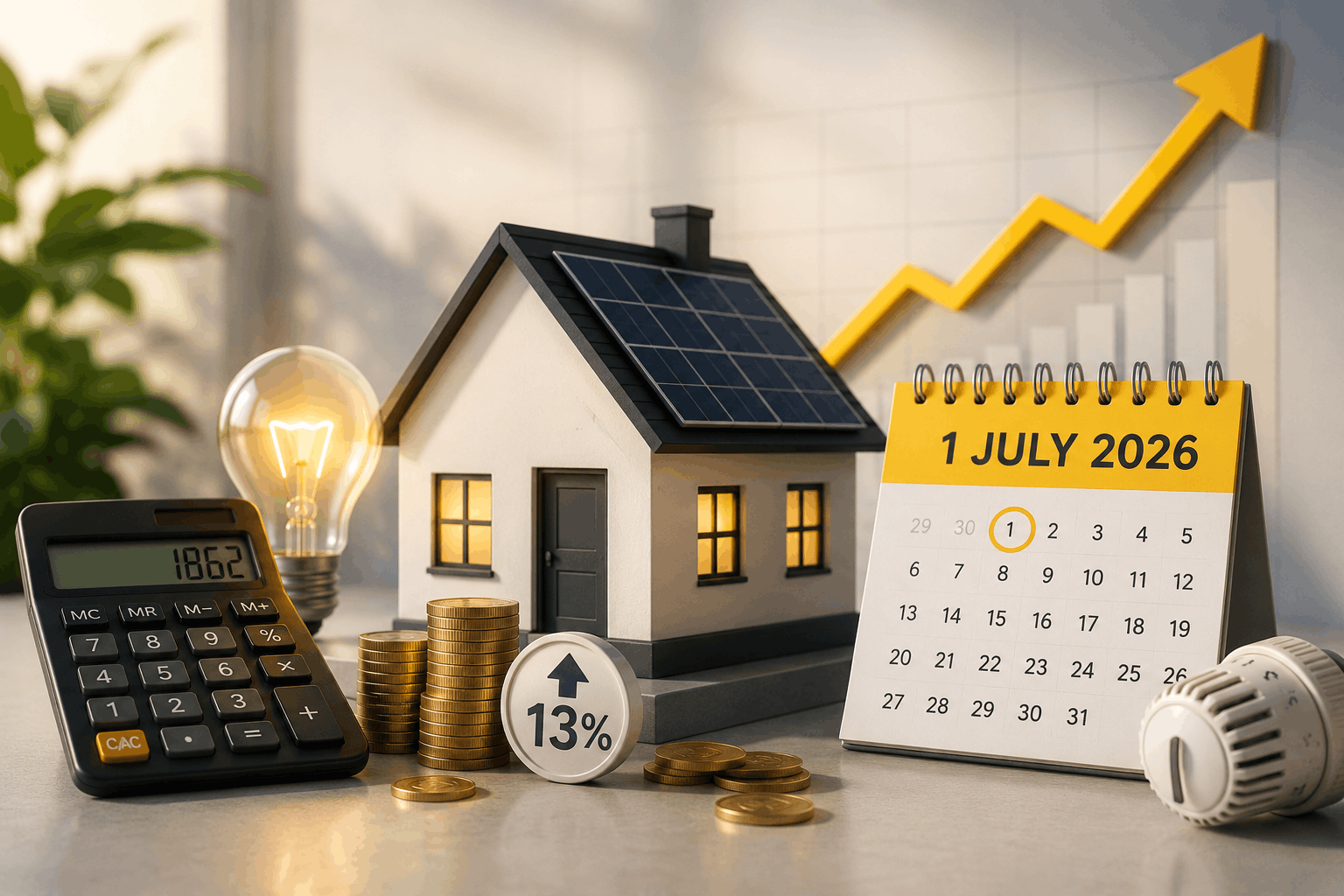
Graphic showing the Ofgem price cap rising 13% from July 2026, with a home using solar panels, battery storage and a heat pump to help protect against higher energy bills.
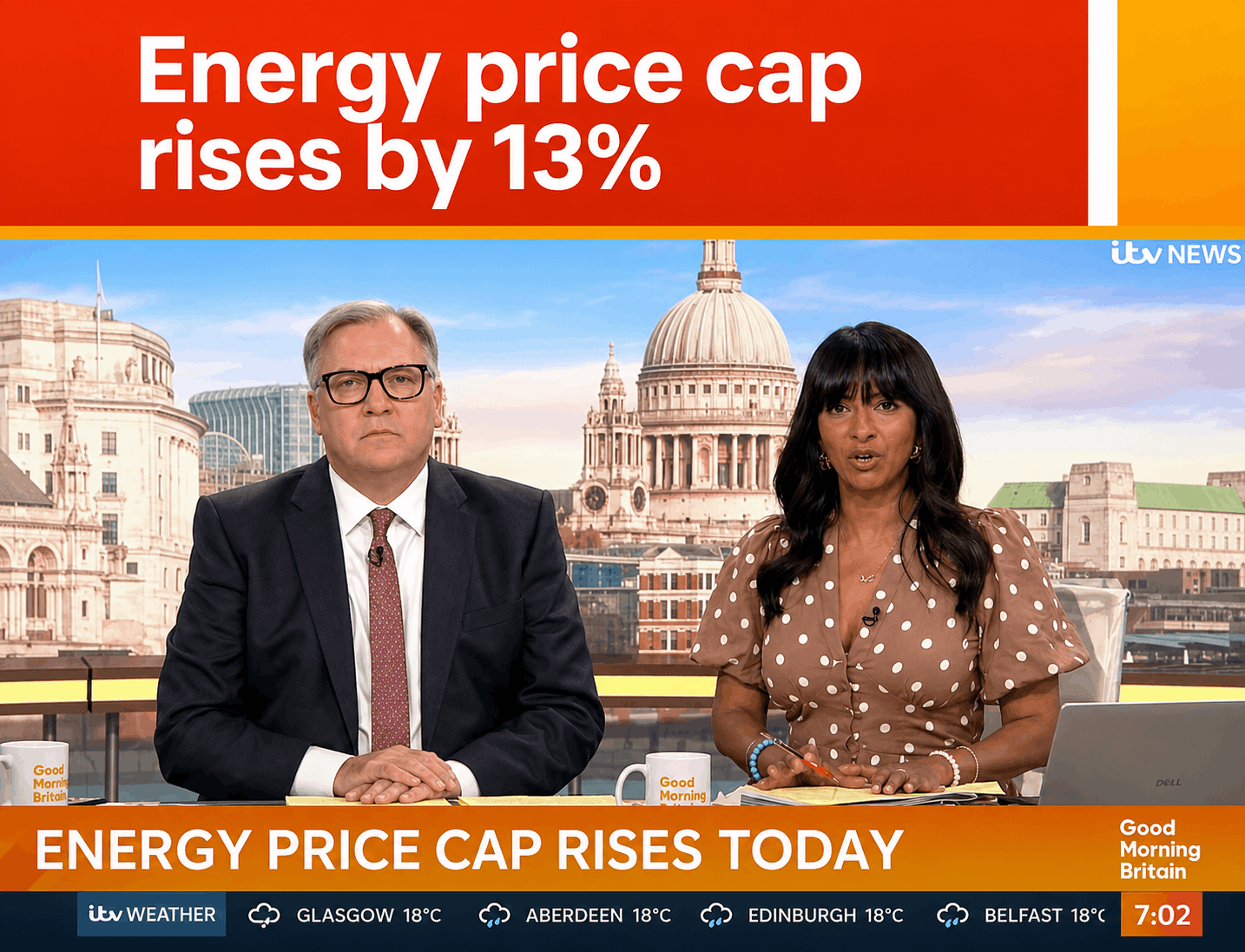
Ofgem has confirmed that its energy price cap rises by 13% for the period 1 July to 30 September 2026, adding to the pressure on household budgets across Devon, Cornwall and Somerset.
Below, we explain what the cap is, exactly what has changed, and the practical steps you can take to protect yourself.
Some steps cost little or nothing and you can do them today; others are longer-term measures that give you far more control over what you pay.
What is the Ofgem energy price cap?
The energy price cap is a limit, set by the regulator Ofgem, on the amount your supplier can charge you for each unit of gas and electricity you use, plus the daily standing charge that keeps your home connected to the network.
It's worth being clear on one point that is widely misunderstood: the cap does not limit your total bill. What you pay still depends on how much energy you actually use.
The cap applies to standard variable (default) tariffs, which is what most households are on, and Ofgem reviews it every three months, in January, April, July and October. If you've signed up to a fixed-rate tariff, the cap doesn't affect you for the length of your contract.
Ofgem Price Cap Rise July 2026 Energy Bills
What has changed from
1 July 2026?
From 1 July to 30 September 2026, the cap rises by 13% for a typical household paying by direct debit for both gas and electricity.
The increase is driven mainly by higher wholesale gas prices, linked to conflict in the Middle East. The rise isn't evenly split: gas unit rates are going up by around 24%, while electricity is rising by around 5%. Even so, prices remain well below the peak reached during the energy crisis in 2022.
On Ofgem's long-standing measure of typical usage, the annual bill for a typical dual-fuel direct-debit household moves from £1,641 to £1,862.
At the same time, Ofgem has lowered its assumption of how much energy a typical home uses, and on that new basis it quotes a headline figure of £1,663. That lower figure reflects lower assumed consumption, not lower prices: the underlying rates you pay are still up by 13%.
The unit rates that actually matter
Because the cap is about rates rather than totals, the unit prices are the numbers to watch.
From 1 July 2026, the average direct-debit rates across England, Scotland and Wales (including VAT) are 26.11 p/kWh for electricity, with a standing charge of 57.19 p/day, and 7.33 p/kWh for gas, with a standing charge of 29.04 p/day.
Households that pay on receipt of a bill (standard credit) or by prepayment will pay more than these direct-debit figures, and rates also vary a little by region.
What this means for your bills
In practice, the higher your usage, the more this increase will cost you.
For most homes the electricity unit rate is the figure that bites hardest, and it's the one a growing number of households are choosing to tackle directly.
It's also worth remembering that the cap can rise as well as fall – Ofgem currently forecasts a further increase of around 2% for the October to December 2026 period.
Prices beyond that are harder to predict, so the most reliable way to manage your costs is to reduce how much you need to buy from the grid in the first place.
Steps you can take right now
You don't need to spend a penny to start protecting yourself. A few straightforward checks can make a real difference.
Check whether you're on a fixed or variable tariff
If you're on a standard variable tariff, you're exposed to every cap change.
It's worth comparing the fixed deals your supplier and others are currently offering, as a competitive fix can work out cheaper than the cap and gives you price certainty.
You can check which tariff you're on by logging into your energy account or looking at a recent bill.
Review how you pay
Paying by monthly direct debit is generally cheaper than paying on receipt of a bill. If you currently pay by standard credit, switching your payment method could reduce your rates.
Make the most of a smart meter
A smart meter lets you see your usage clearly and unlocks time-of-use offers, where some suppliers charge less for electricity at off-peak times or at weekends. If you tend to use appliances outside peak hours, that can add up over a year.
Take a meter reading around each price change
Submitting a meter reading close to each cap change means your usage before the change is billed at the older rate. The next change is due on 1 October 2026, so it's a useful habit to get into.
Tighten up your home
Simple efficiency measures still pay off: draught-proofing doors and windows, topping up loft and cavity insulation, bleeding radiators, and setting your heating controls sensibly. The less energy you waste, the less the cap can cost you.
Protecting your home from future rises
The steps above soften the impact, but the cap will keep moving every three months.
Generating and storing your own electricity, and moving away from volatile fuels, puts far more of the outcome in your hands.
This is where Simple Solar can help, with solar panels, battery storage and heat pumps for homes across Devon, Cornwall and Somerset.
Solar panels
Solar PV lets you generate your own electricity during daylight hours.
Every unit you generate and use at home is a unit you're not buying from the grid at 26.11 p/kWh, so as cap rates rise, the value of your own generation rises with them.
Simple Solar recommends SunPower solar panels, chosen for their efficiency and long-term warranties. The right system size depends on your roof and how you use energy, which is something a survey will confirm.
SunPower solar panelsBattery storage
A home battery stores the electricity your panels generate during the day so you can use it in the evening, when demand and grid prices are typically highest.
A battery can also store cheaper off-peak electricity from the grid for use at peak times. You may need to switch tariff to access off-peak rates.
Together, this means you draw far less energy at capped rates. Simple Solar is a certified Tesla Powerwall installer and recommends the Tesla Powerwall 3.
Earning from what you export
When your panels generate more than you need, you can be paid for the surplus you export to the grid through the Smart Export Guarantee (SEG).
These payments come from your chosen SEG-licensed electricity supplier, not from Simple Solar.
A market-typical rate is around 12 p/kWh, though rates vary between suppliers, so it's worth comparing what's on offer.
Smart Export GuaranteeAir source heat pumps
If you heat your home with gas, oil or LPG, a heat pump installation is another way to reduce your exposure to fuel-price swings.
Heat pumps are highly efficient, producing around three to four units of heat for every unit of electricity they use. They're particularly worth considering for homes off the mains gas grid, which is especially common in rural parts of Devon, Cornwall and Somerset, where heating with oil or LPG can be expensive and unpredictable.
There's strong grant support available:
In England and Wales, the Boiler Upgrade Scheme offers £7,500 towards an air source heat pump.
From 21 July 2026, eligible off-gas-grid homes currently heated by oil or LPG can claim an increased grant of £9,000, a temporary uplift that is currently confirmed until 31 March 2027.
Because a heat pump runs on electricity, pairing it with solar panels and a battery can reduce running costs further. Simple Solar recommends the Ideal Heating Logic HP290.
Air source heat pumpsFREQUENTLY ASKED QUESTIONS
Clear, transparent insights regarding energy pricing structures, integrated solar options, and current heat pump funding grants.
Does the price cap limit my total bill?
No. The cap limits the unit rates and daily standing charges your supplier can charge. Your actual bill depends on how much energy you use, so reducing your usage is the most direct way to lower it.
Should I switch to a fixed tariff?
It depends on the deals available when you look. A competitive fixed tariff can cost less than the cap and protects you from future increases, but it locks you in if the cap later falls. Comparing current fixed offers against the cap is the best way to decide.
Will the price cap come down again?
It might. The cap is reviewed every three months and can rise or fall with wholesale energy costs. Ofgem currently forecasts a further increase of around 2% for October to December 2026, but figures beyond that are uncertain.
Can solar panels really protect me from price rises?
Yes, to a meaningful degree. Every unit of electricity you generate and use yourself is a unit you don't buy at the capped rate, so the more rates rise, the more your own generation is worth. Adding a battery increases how much of your own power you can use.
Is there still a grant for heat pumps?
Yes. The Boiler Upgrade Scheme offers £7,500 towards an air source heat pump in England and Wales, rising to £9,000 for eligible off-gas-grid homes heated by oil or LPG from 21 July 2026 until 31 March 2027.
Take control of your energy costs
The July 2026 price cap is a clear reminder that relying entirely on the grid leaves you exposed to forces well beyond your control.
Whether you're ready to install solar panels and storage now or simply want to understand your options, Simple Solar offers free, no-obligation quotes for homes across Devon, Cornwall and Somerset.
As an MCS-certified installer of solar panels, battery storage and heat pumps, we can help you work out the right approach for your home and budget.
Get in touch today to arrange your free assessment.
