

LAST UPDATED
16th February 2026
Expert Heat Pump Installers Across Devon
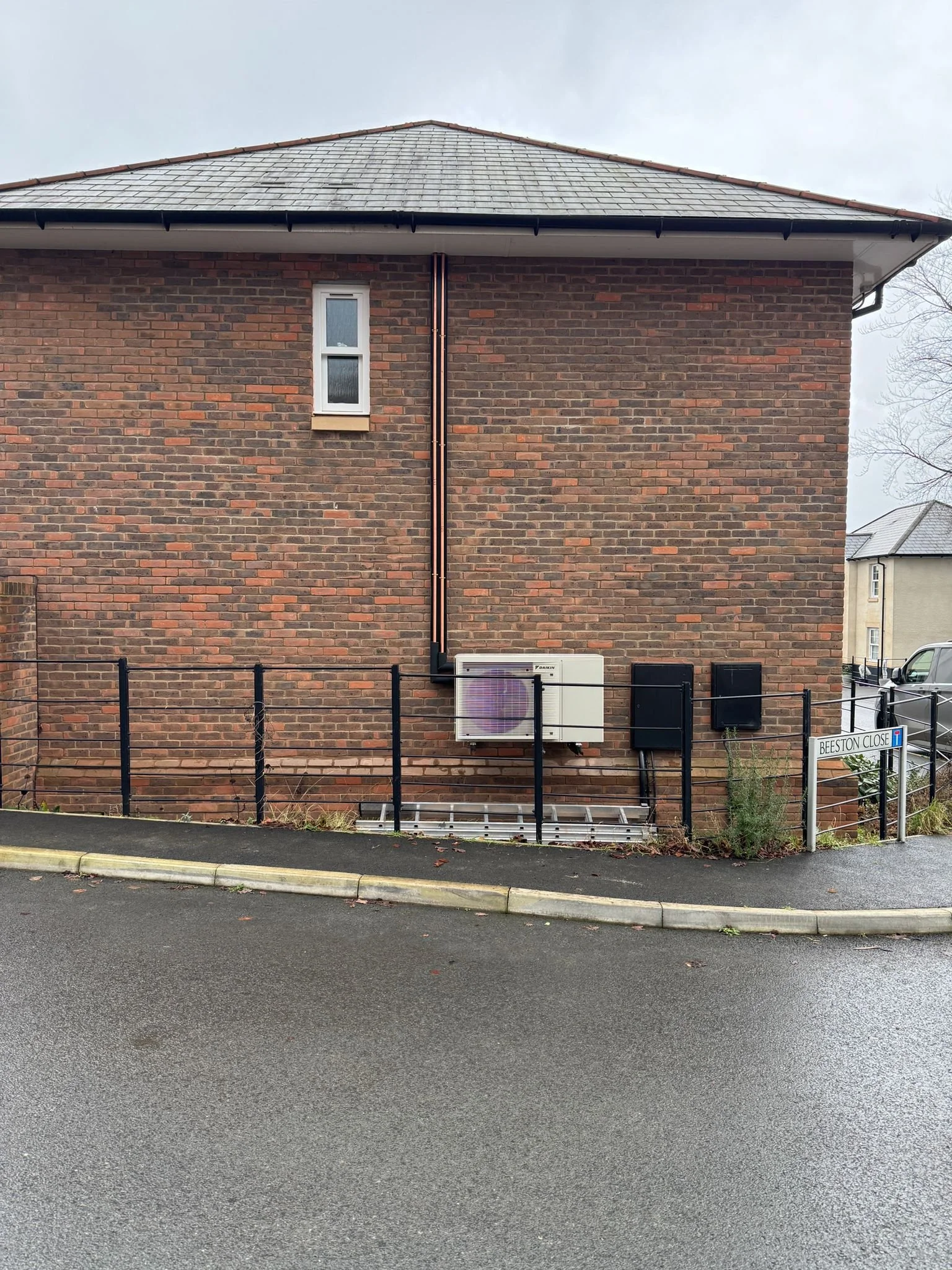
Simple Solar are your trusted heat pump installers serving homeowners across Devon. Our directors Dan and Ben have combined experience in renewable heating of over 40 years, and our MCS-certified team has helped hundreds of Devon families reduce heating costs and carbon emissions by installing efficient heat pump systems.
Whether you’re replacing an oil, LPG, or gas boiler in a rural farmhouse, coastal property, or town house in Exeter or Plymouth, we provide expert guidance, professional installation, and full support with the £7,500 Boiler Upgrade Scheme (BUS) grant application.
From free surveys to ongoing aftercare, we handle every step of your heat pump installation journey.



Why Choose Simple Solar for Your Heat Pump Installation in Devon?
MCS-Certified and Fully Accredited
Simple Solar is MCS (Microgeneration Certification Scheme) certified, meeting the highest industry standards for heat pump installation. This accreditation is essential for accessing the £7,500 Boiler Upgrade Scheme grant and provides assurance that your installation will be completed to exacting standards.
MCS certification isn’t just a badge – it means our installers have undergone rigorous training, our installations are inspected to strict standards, and we’re held accountable for the quality of our work. We’re also Gas Safe registered, RECC members, and Trustmark approved, providing comprehensive protection and peace of mind throughout your installation journey.
Trusted and Experienced
We’ve been helping Devon homeowners transition to renewable energy for over two decades. Our team has installed solar panels, battery storage, EV chargers, air conditioning and heat pumps across hundreds of Devon properties. This breadth of experience means we understand how heat pumps integrate with other technologies and can design systems that maximise your home’s energy efficiency.
We’ve witnessed the renewable energy industry evolve dramatically over the past 15 years. The heat pumps we install today are quieter, more efficient, and more reliable than ever before. We’ve learned from hundreds of installations what works best in different property types, and we use this knowledge to ensure your system is designed and installed perfectly first time.
Local Devon-Based Team
Unlike national installers who might send contractors from anywhere in the UK, our team is based right here in Devon. We understand local housing stock – from Victorian terraces in Exeter to thatched cottages in rural villages. We’re familiar with older buildings, listed structures needing sensitive approaches, and coastal properties where salt air requires careful equipment selection and protective measures.
Our local presence also means we’re available for rapid response on surveys, installations, and any ongoing support you might need. When you call us, you speak to people who know Devon properties inside and out, not a call centre hundreds of miles away. We're part of the Devon community, and your neighbours are our customers.
Transparent Pricing
We provide clear, written quotes with no hidden costs. Our pricing includes everything from heat loss surveys to commissioning and training. We'll never pressure you into decisions – we provide expert advice and fair quotes, then give you time to decide what’s right for your home.
Full Grant Support
We handle the entire Boiler Upgrade Scheme application. From checking eligibility to submitting applications and ensuring the £7,500 grant is deducted from your invoice, we make accessing the grant straightforward. We’re fully registered with Ofgem and manage all paperwork on your behalf.
How Much Does a Heat Pump Installation Cost in Devon?
Typical Installation Costs
Before the £7,500 BUS grant:
After the £7,500 grant:
These are the prices you will actually pay, assuming you are eligible for the grant, which most people are:
What’s Included
Our installation prices include a property assessment and heat loss survey, all equipment (heat pump, hot water cylinder, controls), full installation labour (2-5 days), all pipework and electrical work, system commissioning, customer training, BUS grant application, a 5-year manufacturer's warranty, and a 2-year workmanship warranty.
What Might Cost Extra
Additional work may be required, and is clearly identified during surveys and quoted separately. This includes radiator upgrades if existing ones are undersized, electrical work if consumer units need upgrading, or scaffolding for difficult-to-access locations. We always explain what’s needed and provide detailed quotes before work begins.
Running Cost Savings
Devon homeowners switching from oil, LPG, or electric heating typically see significant savings. Replacing oil heating generally provides a 30-50% reduction in annual heating costs. A property currently spending £2,000 per year on oil could reduce this to £1,000 to £1,400 annually with a heat pump.
Replacing LPG heating usually offers a 40-60% reduction. A property currently spending £2,500 per year on LPG could reduce this to £1,000 to £1,500 annually. Replacing electric storage heaters typically achieves a 50-70% reduction. A property spending £3,000 per year on electric heating could reduce this to roughly £900 to £1,500 annually.
Gas replacement offers similar costs initially, but provides significant carbon reduction and future-proofing against rising gas prices. Your actual savings depend on your property’s insulation, heating usage patterns, and energy tariff. We provide estimated running costs in your quote based on your specific circumstances.

The £7,500 Boiler Upgrade Scheme Grant (BUS Grant)

Eligibility Requirements
You can claim the grant if you own the property (homeowners, landlords or self-builders), the property is in England or Wales, and it has a valid EPC (issued within the last 10 years).
You must be replacing a fossil fuel heating system (oil, gas, LPG or coal) or electric heating, and the installation must be carried out by an MCS-certified installer like Simple Solar.
There is no longer a requirement for the EPC to have no outstanding loft or cavity wall insulation recommendations, although improving insulation may still be advised for performance and efficiency.
New self-build properties are eligible, but new-build homes installed by developers are not.
Application Process
- 01 We manage everything.
- 02 We check eligibility during your survey, submit applications to Ofgem once you accept our quote, Ofgem issues a £7,500 voucher (typically 1-2 weeks), we complete installation and redeem the voucher, then the £7,500 is deducted from your invoice. You pay only the reduced amount.
The Boiler Upgrade Scheme is currently open, with the published closing date for applications shown as 31 December 2027 (subject to change).
Areas of Devon We Cover
Major Towns and Cities
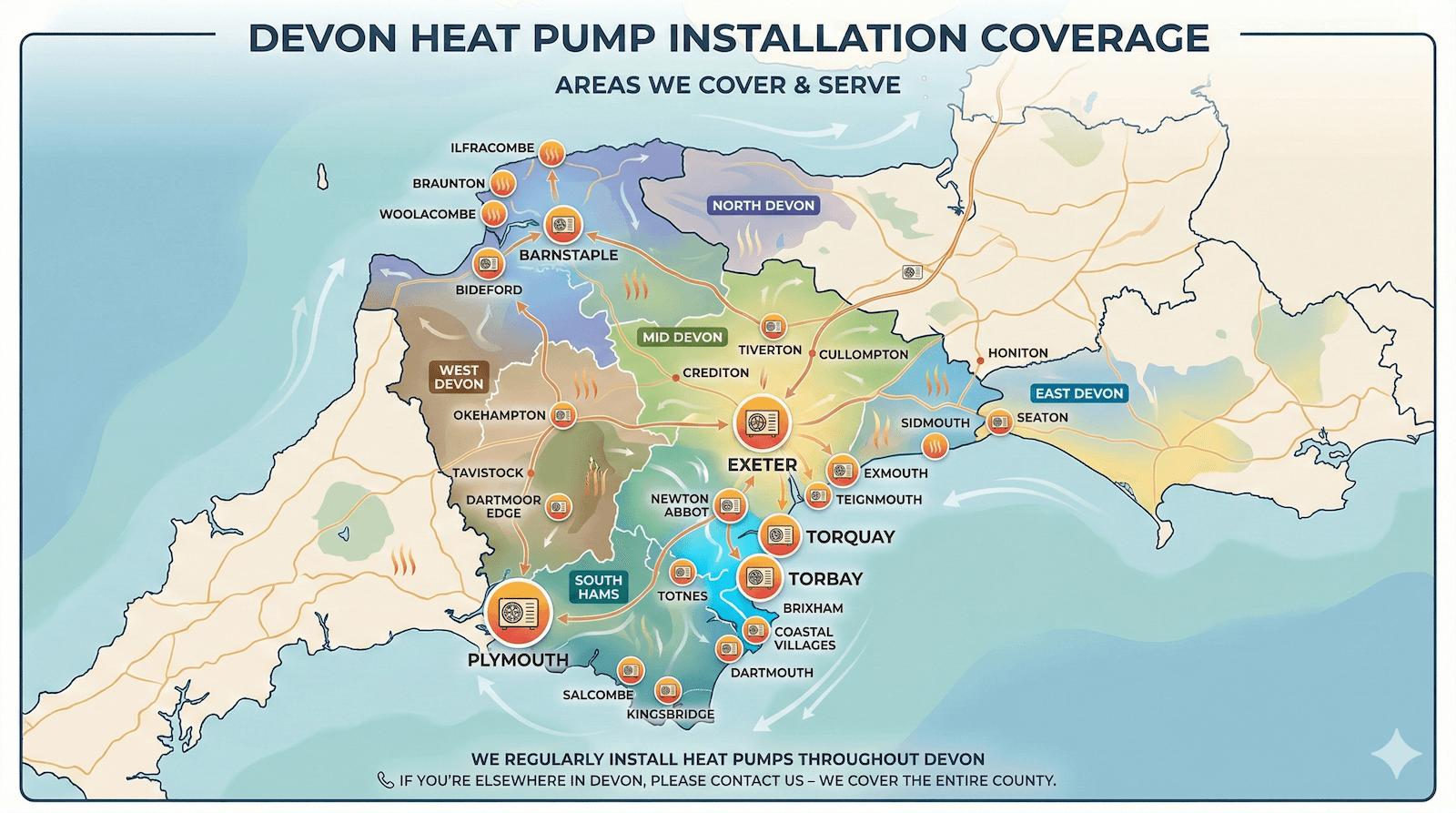
We regularly install heat pumps throughout Devon including Plymouth, Exeter, Torquay, Paignton, Barnstaple, Exmouth, Newton Abbot, Tiverton, Teignmouth, and Bideford.
Rural Devon
We serve South Hams (Ivybridge, Totnes, Kingsbridge, Salcombe, Dartmouth), Mid Devon (Crediton, Cullompton), East Devon (Sidmouth, Honiton, Seaton), North Devon (Ilfracombe, Braunton, Woolacombe), West Devon (Okehampton, Tavistock, Dartmoor edge), and Torbay (Brixham, coastal villages). If you’re elsewhere in Devon, please contact us – we cover the entire county.
Our Heat Pump Installation Process
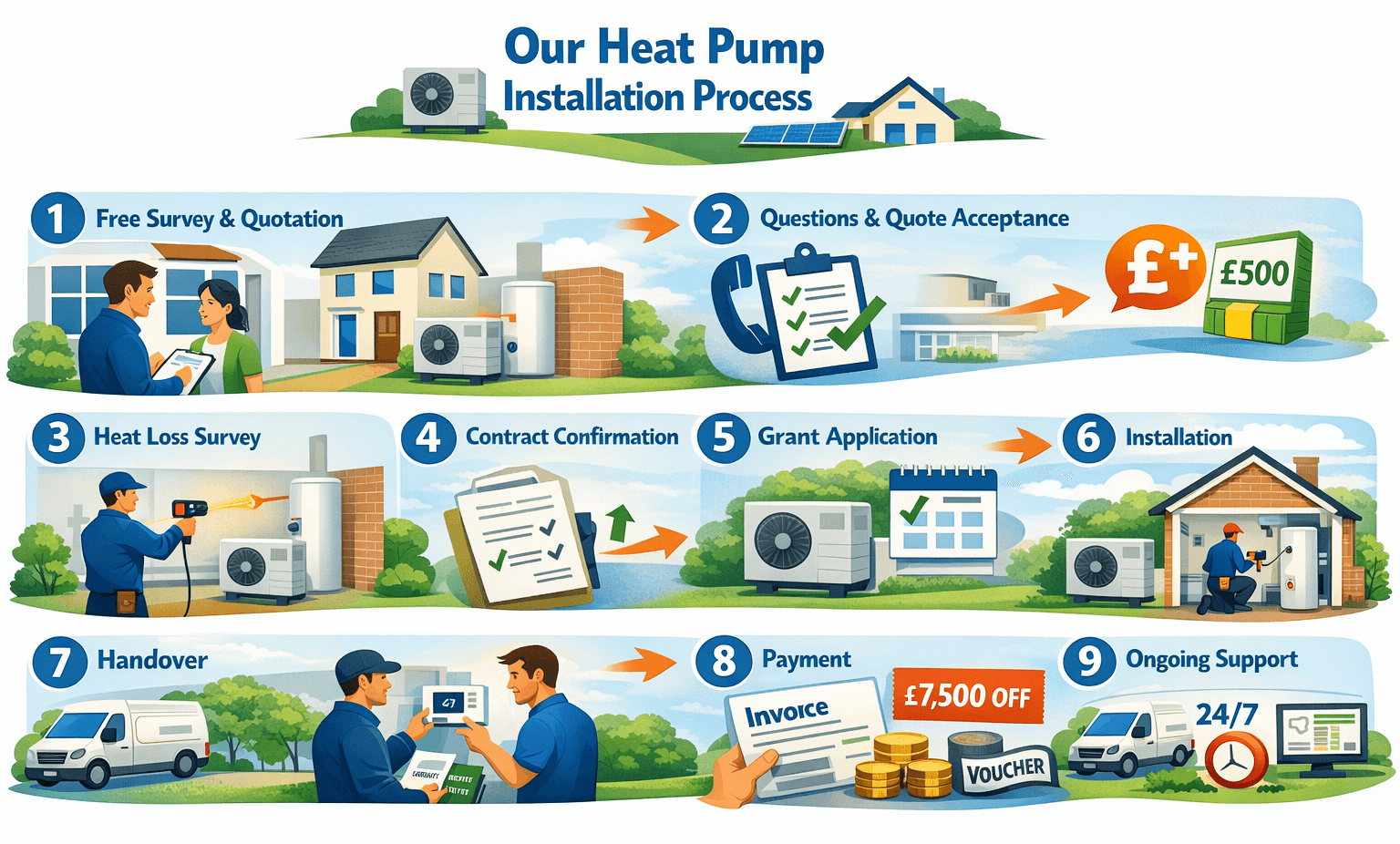
You want the right system, clear numbers, and a team you can trust. That’s exactly how we work.-
Step 1: Free Survey & Quotation
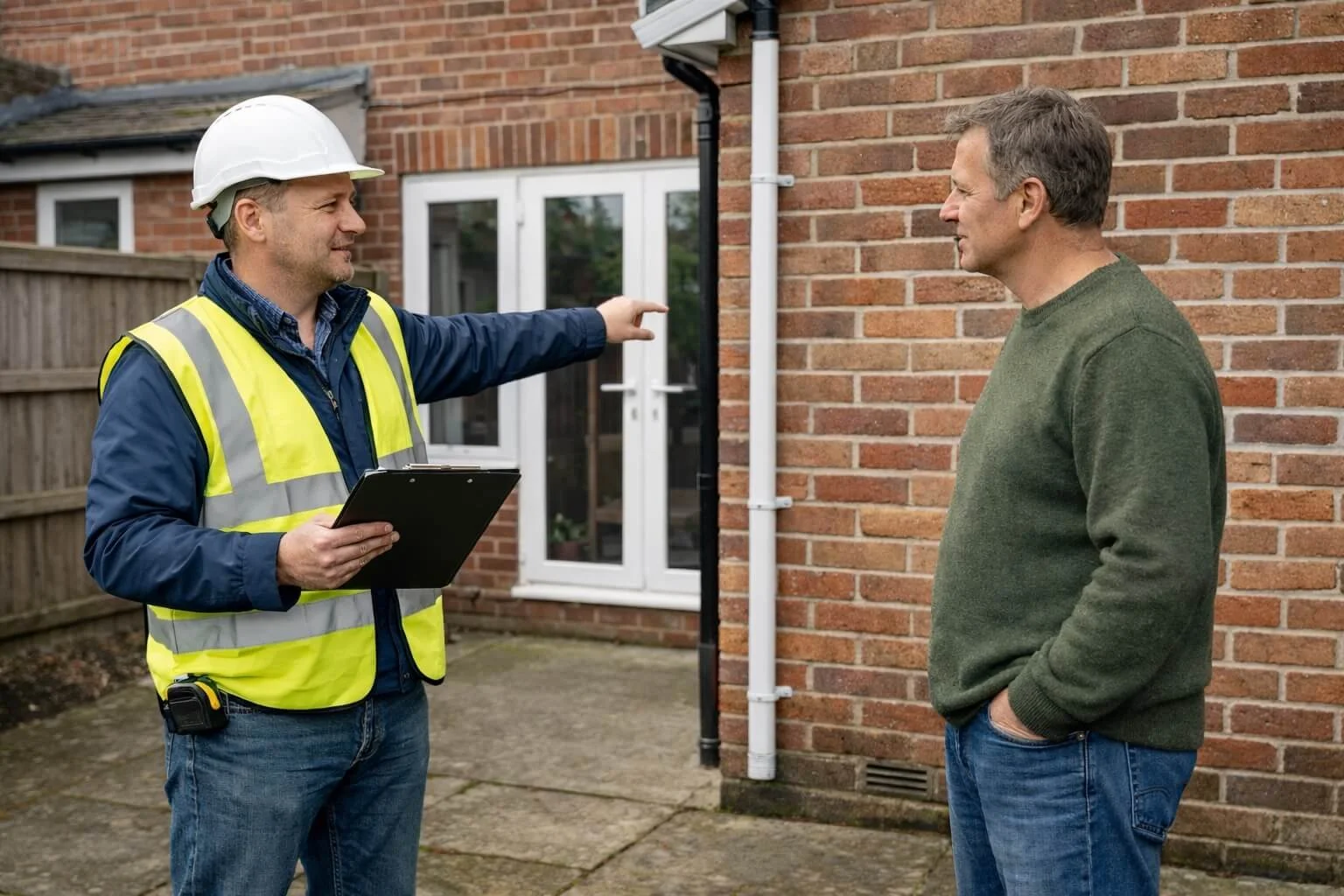
Your journey begins with a free survey at your property. We analyse your current heating arrangement, size of property, etc., and work out with you where the heat pump unit and cylinder would be located. Our surveyor will then give you a total price to install a suitably-sized heat pump system. It won’t just be a verbal quote, you’ll get a formal quotation in writing, including all of the equipment to be installed, the price, and our terms and conditions.
-
Step 2: Any Questions & Quote Acceptance
Once you’ve had a chance to read through the quotation, please do call us any time if you have any follow-up questions. If you are happy with everything, you then pay a £500 deposit (deducted from the overall price if you go ahead) which triggers the all-important heat loss survey.
-
Step 3: Heat Loss Survey
The next step is for our technical surveyor to carry out a full heat loss survey at your property. This is a crucial step that guarantees the heat pump will heat each room and your water properly. The technical surveyor measures the size of each room, analyses the insulation in your walls and roof, looks at the suitability of your radiators, and so on.
-
Step 4: Contract Confirmation or Variation
After the heat loss survey, we either confirm the original design and heat pump rating from Step 1 was just right, or we recommend an adjustment: a higher-rated or lower-rated heat pump. If the heat pump rating in Kilowatts (kW) changes, the overall price will also change and we will reflect this in a contract variation. Please note: normally contract variations are to the down-side, in other words your system ends up costing less. However, it is possible your price could go up.
-
Step 5: Grant Application
Once you accept the final contract, we submit your BUS application, confirm installation dates (typically 4-8 weeks ahead), provide pre-installation guidance, and order the equipment.
-
Step 6: Installation
Installation takes 2-5 days and includes: remove old equipment, install outdoor unit, pipework and radiators, install cylinder, electrical work, install controls, test system, commission, fine-tune, and clean up.
-
Step 7: Handover
We train you on operating the system, understanding the controls, setting schedules, basic troubleshooting, and when to call us. You receive manuals, warranties, and our contact details.
-
Step 8: Payment
We redeem your voucher with Ofgem and issue your invoice with the £7,500 deducted. You pay only the balance.
-
Step 9: Ongoing Support
We offer annual service plans, 24/7 emergency callout, remote monitoring (on selected systems), and ongoing optimisation advice. Heat pumps typically last 15-20 years with proper maintenance.
How Do Heat Pumps Work?
The Basic Principle
Heat pumps work like a refrigerator in reverse, extracting heat from outside air and transferring it into your home. Even cold air contains heat energy that can be extracted and upgraded to warm your property.
This might seem counterintuitive – how can you extract heat from cold air? The answer lies in thermodynamics. Air contains heat energy at any temperature above absolute zero (minus 273°C). What we perceive as ‘cold’ air at 0°C still contains enormous amounts of thermal energy. Heat pumps use this principle to extract energy and concentrate it to useful temperatures for heating your home.
The Four-Stage Process
This is how a heat pump works in more detail:
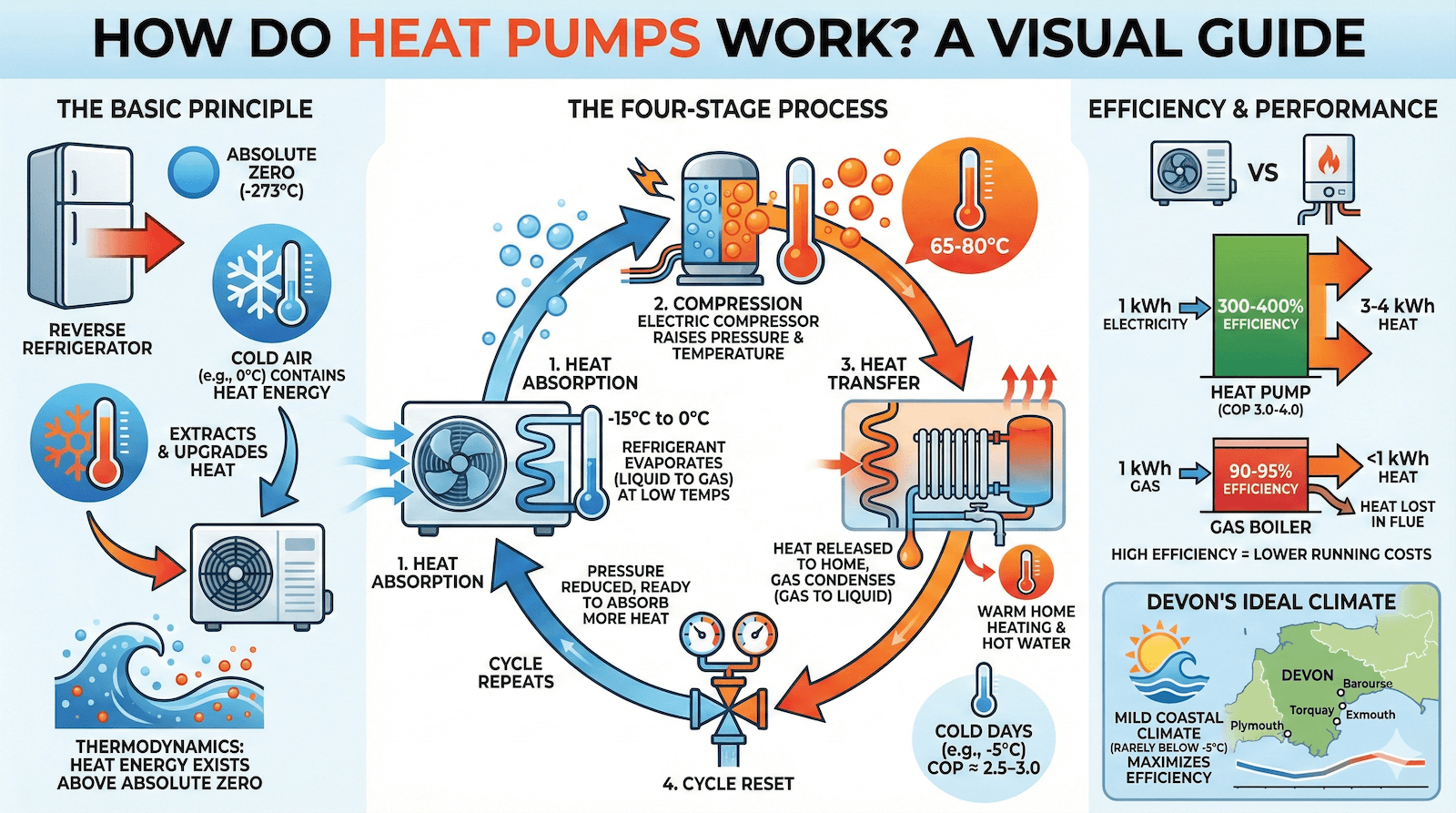
Heat absorption: An outdoor fan draws air across a heat exchanger containing refrigerant fluid. This refrigerant has a very low boiling point, so even cold air causes it to evaporate. As the refrigerant absorbs heat from the air, it turns from liquid into gas, even at temperatures as low as minus 15°C.
Compression: The refrigerant gas is compressed using an electrically powered compressor. When you compress a gas, its temperature rises significantly – the same principle that makes a bicycle pump feel warm. This compression raises the refrigerant temperature to around 65-80°C.
Heat transfer: The hot refrigerant gas passes through a heat exchanger inside your home, transferring heat to water in your central heating system and hot water cylinder. As it releases heat, the refrigerant cools and condenses back into a liquid.
Cycle reset: The cooled refrigerant flows back to the outdoor unit through an expansion valve, which reduces its pressure and prepares it to absorb more heat. The cycle then repeats continuously while your heating is on.
Efficiency and Performance
Heat pumps can achieve efficiencies of around 300-400%, often described as a ‘Coefficient of Performance’ (COP) of 3.0-4.0. Coefficient of Performance
This means that for every 1 kWh of electricity used, a heat pump produces 3-4 kWh of heat.
By comparison, even very efficient gas boilers typically achieve only 90-95% efficiency, because some heat is always lost through the flue.
This remarkable efficiency is why heat pumps dramatically reduce running costs, especially when replacing oil, LPG, or electric heating. The COP varies with outside temperature – heat pumps are slightly more efficient when air is warmer, but even on the coldest Devon winter days (typically 0°C to minus 5°C), a well-designed system achieves a COP of around 2.5 to 3.0.
Devon’s mild coastal climate is ideal for heat pumps. Average winter temperatures rarely drop below minus 5°C, allowing heat pumps to operate at high efficiency throughout winter. Coastal areas benefit from the sea’s moderating effect, making heat pumps particularly effective in places like Plymouth, Torquay, and Exmouth.
Are Heat Pumps Suitable for My Property?
Property Types
Heat pumps work in virtually any property. Modern homes (post-2000) are usually ideal due to good insulation and properly sized radiators. Victorian and Edwardian properties are suitable with careful system design – we've successfully installed heat pumps in Plymouth and Exeter in many period and terraced houses.
Listed buildings can also be good candidates. We have experience installing heat pumps in Grade I and Grade II listed properties, working closely with conservation officers to ensure installations are sympathetic to the buildings’ character. Thatched cottages and period farmhouses can also be suitable, particularly if upgrading from oil or LPG, as these rural properties often have good thermal mass in their thick stone walls.
Coastal properties require salt-air resistant models. We select equipment with protective coatings specifically designed for properties close to the sea. We’ve installed many heat pumps in seafront properties across Torbay, Exmouth, and North Devon’s coastline. The key factor is insulation and heat retention, not property age or type.
Insulation Requirements
Heat pumps work best in well-insulated properties. This doesn’t mean your home needs to be perfectly insulated, but significant gaps should be addressed.
Minimum recommendations include loft insulation of at least 270mm depth (current building regulations standard). If you have less, topping up is one of the most cost-effective improvements.
Cavity wall insulation is recommended if you have cavities (most properties built between 1920 and 1990). This makes a significant difference to heat retention. Double glazing should replace single glazing where possible – it dramatically reduces heat loss through windows.
Many Devon properties, particularly stone cottages with solid walls, can't have cavity wall insulation. This is generally fine, though, as we design systems to account for your property’s actual insulation levels. Solid wall properties can still achieve excellent results.
Space Requirements
The outdoor unit measures approximately 1m × 0.5m × 1m, and generally needs about 1 metre clearance, positioned away from bedroom windows.
The indoor cylinder replacement (if needed) is typically 1.2m to 1.8m tall, 0.6m in diameter, and usually fits in airing cupboards, utility rooms, or garages. We assess all options during surveys.
Heating Distribution
Heat pumps produce lower water temperatures (45-55°C vs 65-80°C for boilers), but don’t worry, your water will still be hot and your home nice and cosy!
You may need larger radiators, but many well-insulated properties use existing ones. Underfloor heating is ideal. We calculate exact requirements during heat loss surveys.
Planning Permission
In most cases, an air source heat pump can be installed on a house in England under permitted development, so you won’t need a full planning application.
Permitted development still has conditions, for example, limits on the size/number of units and a requirement to comply with the Microgeneration Certification Scheme (MCS) Planning Standard (MCS 020). MCS 020
If your property is listed, in a conservation area, or you have unusual site constraints, it’s worth getting in touch with us so we can assess further.
Heat Pump Manufacturers We Install
Our Preferred Brands
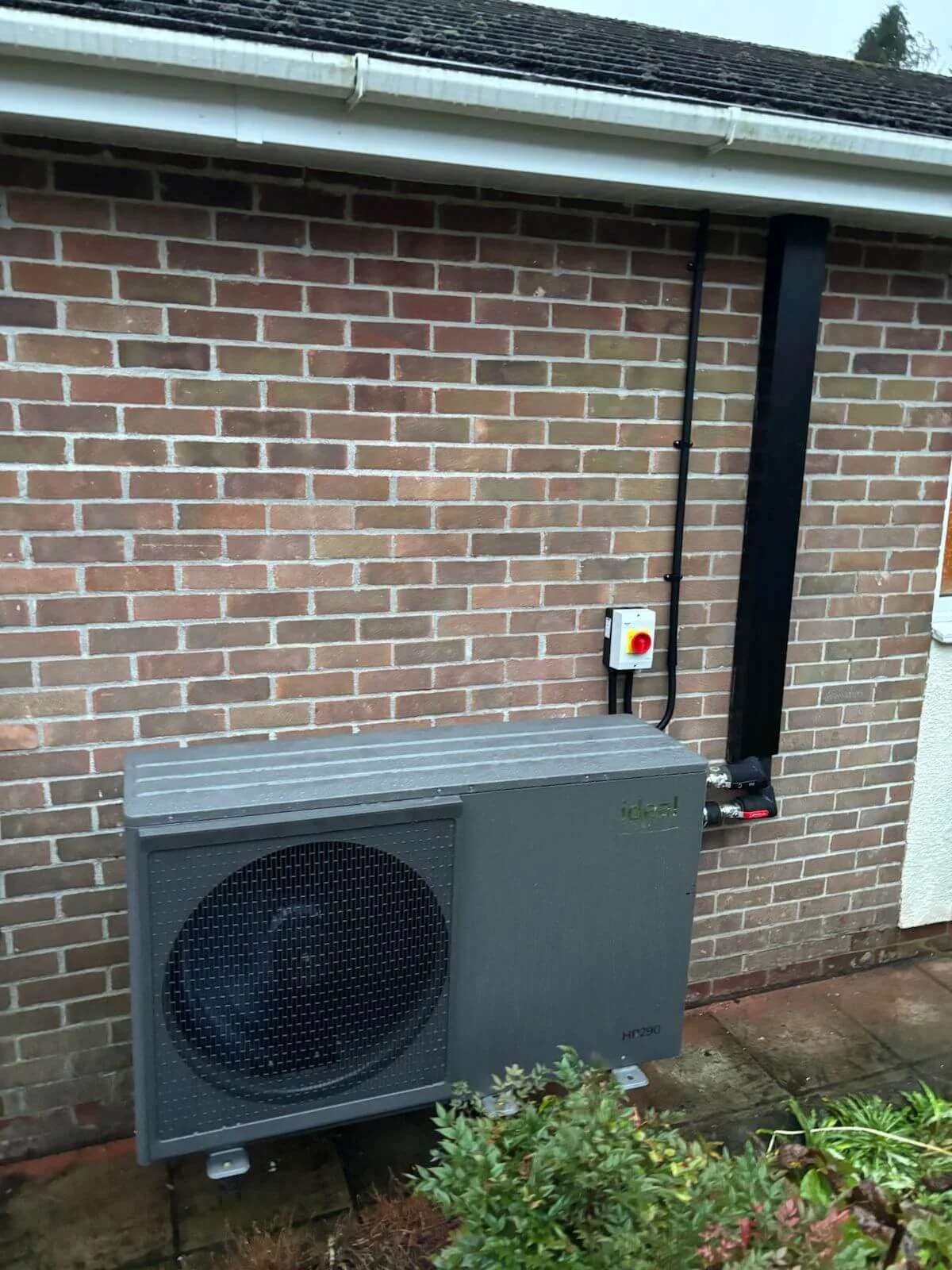
We primarily install Ideal Heating’s advanced air source heat pumps, including the HP290 high-temperature unit and the Logic Air low-temperature unit, paired with the Halo Air thermostat and their specialised cylinders.
HP290
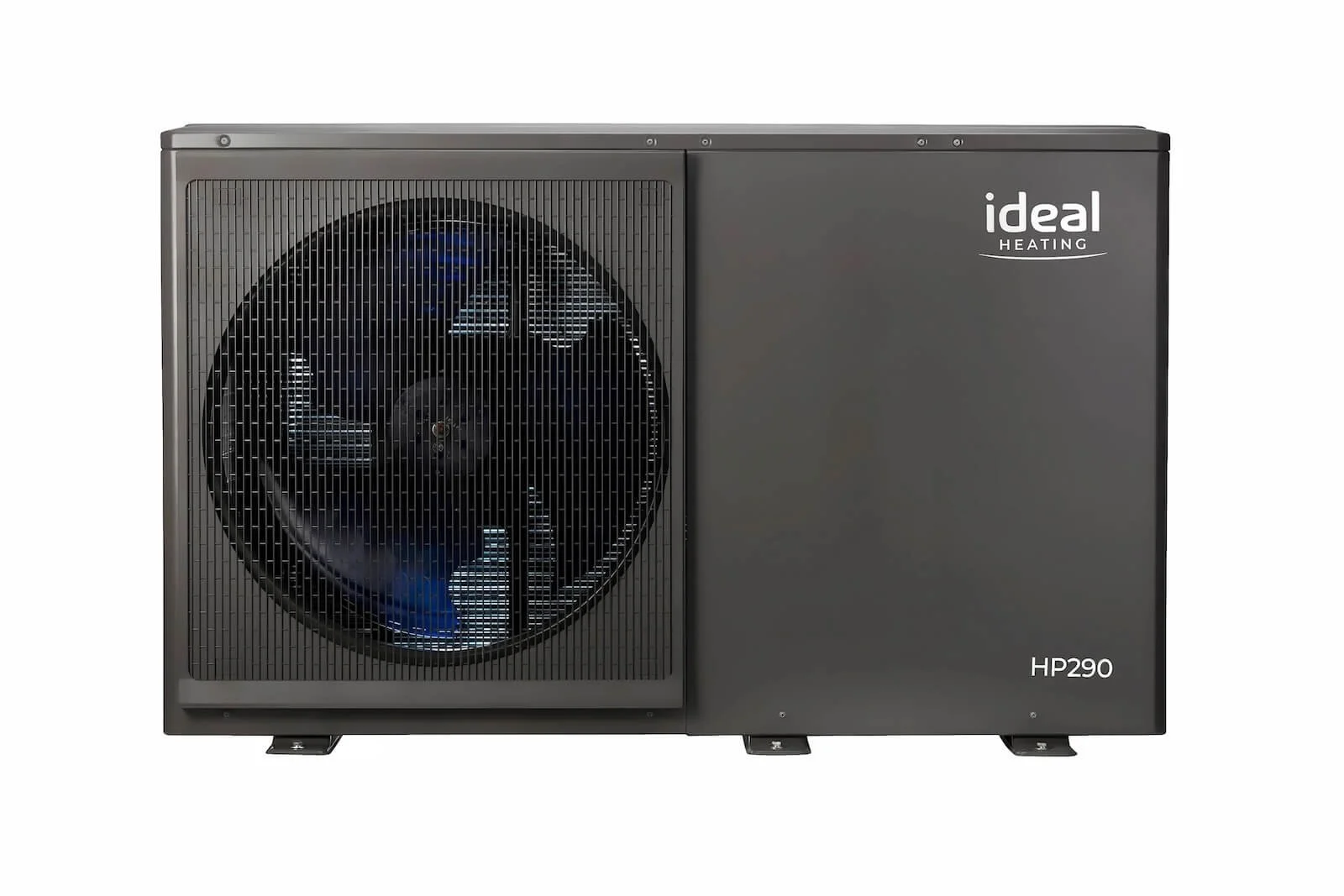
The HP290, using eco-friendly R290 refrigerant, delivers flow temperatures up to 75°C, making it ideal for older Devon properties with higher heat loss or existing radiators that require hotter water for efficient heating. It boasts SCOP ratings over 500%, ensuring exceptional efficiency and low running costs, even in cold weather.
Logic Air
In contrast, the Logic Air, with R32 refrigerant and flow temperatures up to 60°C, suits well-insulated modern homes or those with underfloor heating, optimising energy use in milder conditions for maximum savings and minimal environmental impact.
Halo Air Thermostat
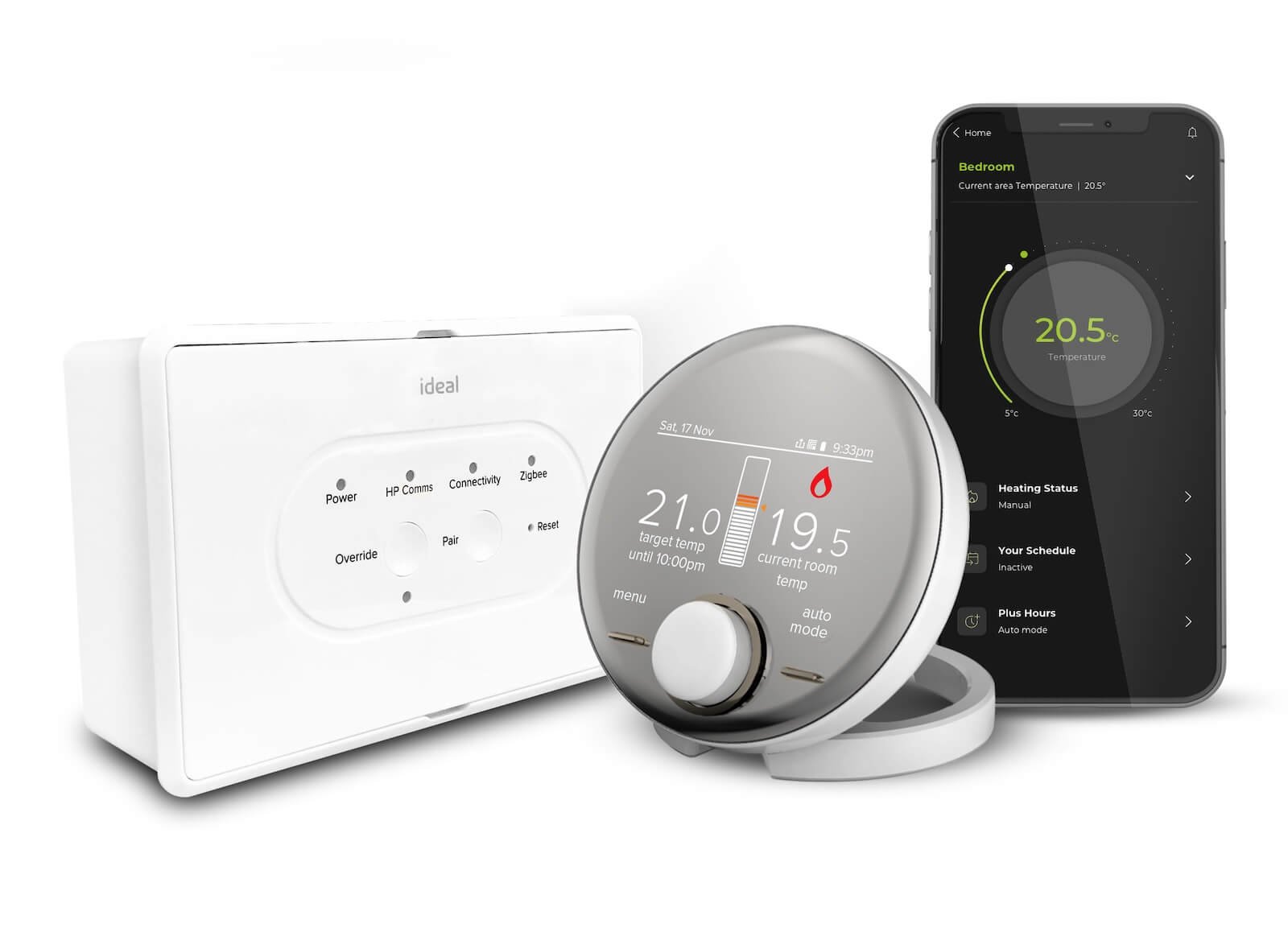
The Halo Air thermostat integrates seamlessly, offering wireless control, weather compensation, and app connectivity for precise zoning and scheduling, enhancing comfort while boosting system efficiency by up to 6% (ErP Class VI).
Cylinders
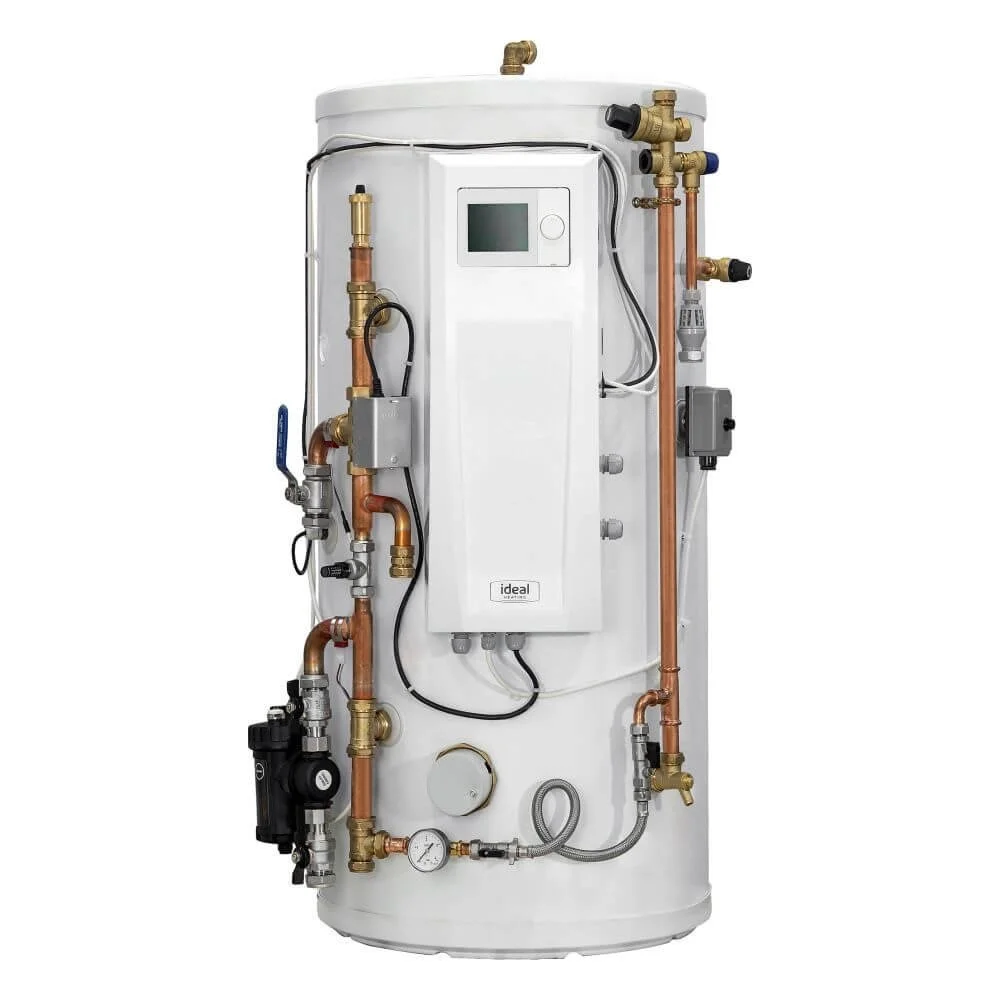
Cylinder replacement is often necessary to handle lower flow temperatures; Ideal's pre-plumbed stainless steel cylinders (150-300 litres) feature multi-coil heat exchangers for fast reheat times (under 25 minutes) and are sized based on household hot water needs – smaller for couples, larger for families – reducing energy waste.
Benefits
Benefits of the Ideal Heating range of heat pump products include reduced carbon emissions, grant eligibility, quiet operation (Quiet Mark approved), easy monobloc installation, and up to 10-year warranties, delivering reliable, cost-effective renewable heating tailored to your home.
Choosing Your System
We assess your heat loss, hot water demand, budget, available space, and preferred features. We then recommend the most suitable system, explaining differences so you can make an informed choice. We won't push particular brands and models – we recommend what’s best for your property.
Warranty and Support
Manufacturer warranties: usually 5 years for the main outdoor unit. We also a provide 2-year workmanship warranty. We stock spare parts and have direct manufacturer relationships, ensuring a fast response if aftercare is required.
FAQS
questions we’re often asked
How much does a heat pump installation cost?
Heat pump installation costs typically range from £11,000 to £14,000 before applying for government support. The Boiler Upgrade Scheme grant of £7,500 reduces this to £3,500 to £6,500. Final costs depend on your property size, existing heating system, required upgrades (such as radiators or insulation), and the heat pump capacity needed to meet your heating demands.
Will I save money?
If you’re replacing oil, LPG, or direct electric heating, you'll typically save 30-70% annually on heating costs. That’s £500 to £1,500 or more per year. Gas replacement has similar running costs initially, but delivers significant carbon reduction and future-proofs your home against rising fossil fuel prices and potential gas boiler bans.
How long does installation take?
Most heat pump installations take 2-5 days to complete, depending on the complexity of your system and any necessary modifications to radiators, pipework, or hot water cylinders. We'll provide a more precise timeframe after surveying your property and understanding your specific requirements, ensuring you know exactly what to expect throughout the installation process.
Are heat pumps noisy?
Modern heat pumps are very quiet, typically producing just 40-55 decibels at 1 metre distance – similar to a refrigerator or quiet conversation. During your installation, we carefully position the outdoor unit away from bedrooms and neighbouring properties to minimise any noise impact, and can add acoustic barriers if needed for particularly noise-sensitive locations.
Do they work in cold weather?
Yes, absolutely. Modern heat pumps operate efficiently at temperatures down to minus 15°C or even lower, maintaining full heating output in freezing conditions. Devon’s mild climate is actually ideal for heat pump performance – they become more efficient in moderate temperatures, meaning your system will operate at peak efficiency throughout most of the year.
Will I need new radiators?
Not necessarily. Well-insulated properties with adequate radiator sizes often work perfectly with existing radiators, as heat pumps operate at lower flow temperatures (45-55°C versus 60-80°C for gas boilers). During our detailed survey, we'll calculate your property’s exact heat loss and radiator output requirements, only recommending upgrades where genuinely necessary for comfort.
Can I get hot water?
Yes. Heat pumps provide both space heating and domestic hot water via an insulated hot water cylinder. Recovery times are slightly longer than gas boilers – typically 1-2 hours to reheat a full cylinder – but with correct sizing based on your household’s usage patterns, you'll never run out of hot water, even with larger families.
Do I need planning permission?
Usually not. Most heat pump installations qualify as permitted development and don’t require planning permission. However, listed buildings, conservation areas, or properties in National Parks (common in Devon) may need consent. If your property requires an application, we can guide you through the process and provide the necessary technical documentation.
What maintenance is needed?
Heat pumps require annual servicing by qualified engineers like Simple Solar to maintain efficiency, performance, and warranty validity. Regular maintenance includes checking refrigerant levels, cleaning filters, inspecting electrical connections, and verifying system pressures. With proper annual servicing, heat pumps reliably last 15-20 years; comparable to or longer than gas boilers.
Can I get the grant?
Most Devon homeowners qualify for the £7,500 Boiler Upgrade Scheme grant if you’re replacing fossil fuel heating (oil, LPG, gas) or direct electric heating with a heat pump. Your property must have a valid EPC (we can arrange this), and the installation must meet MCS standards. We handle the entire application process for you.
What if something goes wrong?
You’re fully protected. Heat pumps typically come with manufacturer warranties covering 5 years, plus our 2-year installation warranty covering all workmanship. We provide ongoing support after installation, with rapid response times for any issues. Our experienced team is always available to ensure your system operates reliably and efficiently throughout its lifetime.
Do heat pumps work with solar panels?
Yes, combining heat pumps with solar panels is an excellent strategy for maximum savings and carbon reduction. Solar electricity can reduce your heat pump running costs by 40-60% during daylight hours, especially valuable in Devon’s sunny climate. We design fully integrated renewable energy systems, sizing solar arrays and battery storage to maximise self-consumption.
How long do heat pumps last?
Heat pumps typically last 15-20 years with proper annual servicing and maintenance. This lifespan is comparable to or exceeds gas boilers, which usually last 10-15 years. The outdoor unit experiences the most wear from weather exposure, whilst indoor components often last even longer. Quality installation and regular professional servicing are essential for achieving maximum longevity and maintaining efficiency.
Will it heat my whole house?
Yes, absolutely. Properly sized heat pumps provide 100% of your heating and hot water needs, maintaining comfortable temperatures throughout your entire property. During our survey, we calculate your home’s exact heat loss for each room, ensuring the system delivers sufficient output even on the coldest winter days. You won’t need any backup heating system.
I don't have mains gas – is a heat pump suitable?
Absolutely ideal. Properties using oil, LPG, or direct electric heating see the largest financial savings when switching to heat pumps – typically 40-70% reduction in annual heating costs. You'll also eliminate the inconvenience and cost of fuel deliveries, reduce price volatility, and significantly lower your carbon emissions, whilst future-proofing your home against fossil fuel phase-outs.
Ready to Reduce Your Heating Costs? Get Your Free Survey
If you’re considering a heat pump for your Devon home, the next step is a comprehensive property survey. Simple Solar provides free, no-obligation surveys throughout Devon. During your survey, our MCS-certified engineers assess your property’s heat loss, evaluate your existing heating system and radiators, recommend the most suitable heat pump capacity, and provide a detailed quotation. We'll explain exactly what's involved, answer all your questions, and help you understand your potential savings – with no pressure to proceed.
We handle every aspect of your heat pump installation, from initial survey through to Boiler Upgrade Scheme grant application, professional installation, commissioning, and aftercare. Our team has extensive experience installing heat pumps across Devon’s diverse property types – from modern new builds to listed cottages in conservation areas. We understand local planning considerations, work to the highest MCS standards, and provide ongoing support long after installation is complete.
Contact Simple Solar today to arrange your free survey. Our team will visit your property at a time that suits you, typically within 7-14 days of your enquiry. With heating costs continuing to rise and the £7,500 BUS grant available now, there’s never been a better time to switch to renewable heating. Call us on 01752 916 013 or complete our online enquiry form to take the first step towards lower bills, improved comfort, and a reduced carbon footprint.
AUTHOR