
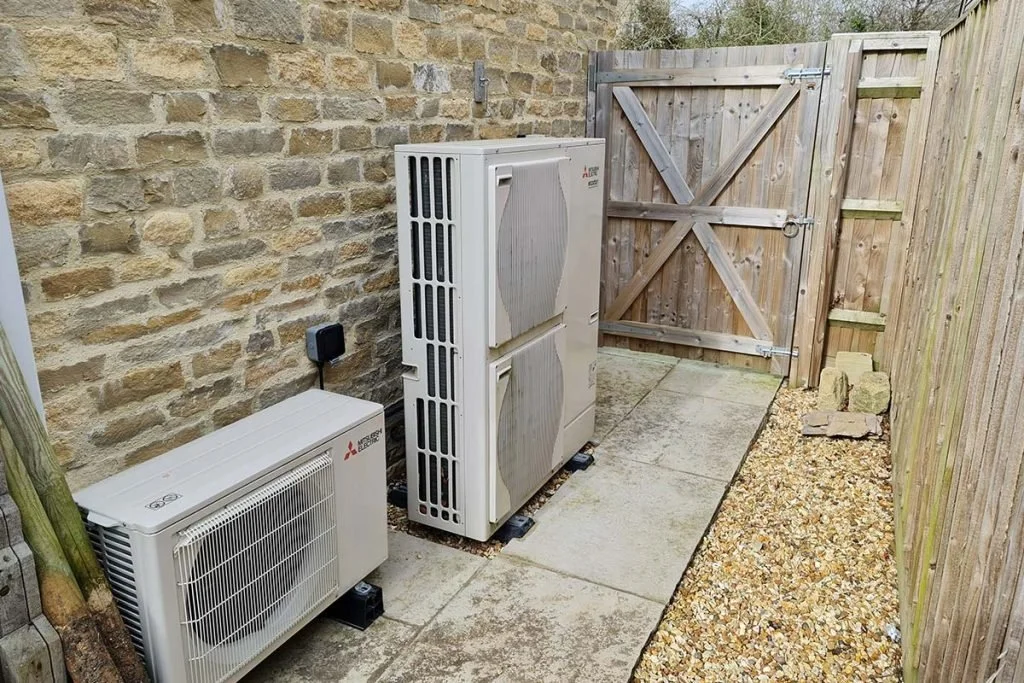
Do heat pumps work in older homes in the UK?
Yes. Heat pumps can work well in older UK homes (including many solid-wall properties) as long as the system is designed around your home’s heat loss and your heating is set up for lower flow temperatures. In practice, that can mean upsizing some radiators or making small upgrades so the house stays comfortable without running the system too hot. An air source heat pump (ASHP) can be very efficient compared with a boiler, but results depend on good design, sensible controls and how much heat the property loses. For a straightforward overview, see the Energy Saving Trust guidance.
The short version is simple: older homes are not a ‘no’. They just need the right survey and proper sizing. A good installer will design the system for your property, explain whether any radiator changes are needed and confirm whether you may be able to claim the Boiler Upgrade Scheme.

What people mean by “older home”
In the UK, people usually mean a home built before modern insulation standards became common. In day-to-day terms, that is often a property built before the 1980s. Many homeowners use “older” to mean pre-1945, and sometimes specifically pre-1919.
Older home by build era (common UK shorthand)
One clear way to describe age is by build era. A set of age bands commonly used in housing statistics is: pre-1919, 1919 to 1944, 1945 to 1964, 1965 to 1980, and post-1980. Source: English Housing Survey (stock profile, Chapter 1)
- Pre-1919 (Victorian or Edwardian): solid walls are common, draught risk can be higher, and there is often a lot of variation from room to room.
- 1919 to 1944 (interwar): wall types vary, insulation is often limited, and layouts can sometimes make upgrades more straightforward.
- 1945 to 1980 (post-war to 1970s): construction varies widely, cavity walls are more common, and many homes are still under-insulated by today’s standards.
The real question: will it keep up on cold days?
In most cases, yes. An air source heat pump can heat an older UK home in cold weather, as long as it is sized to your property’s heat loss and designed to run at sensible flow temperatures. The important detail is the heat loss calculation and the design temperature used for your area (this is what the installer should be working to). The relevant UK standard is MCS MIS 3005 (heat pump installation standard).
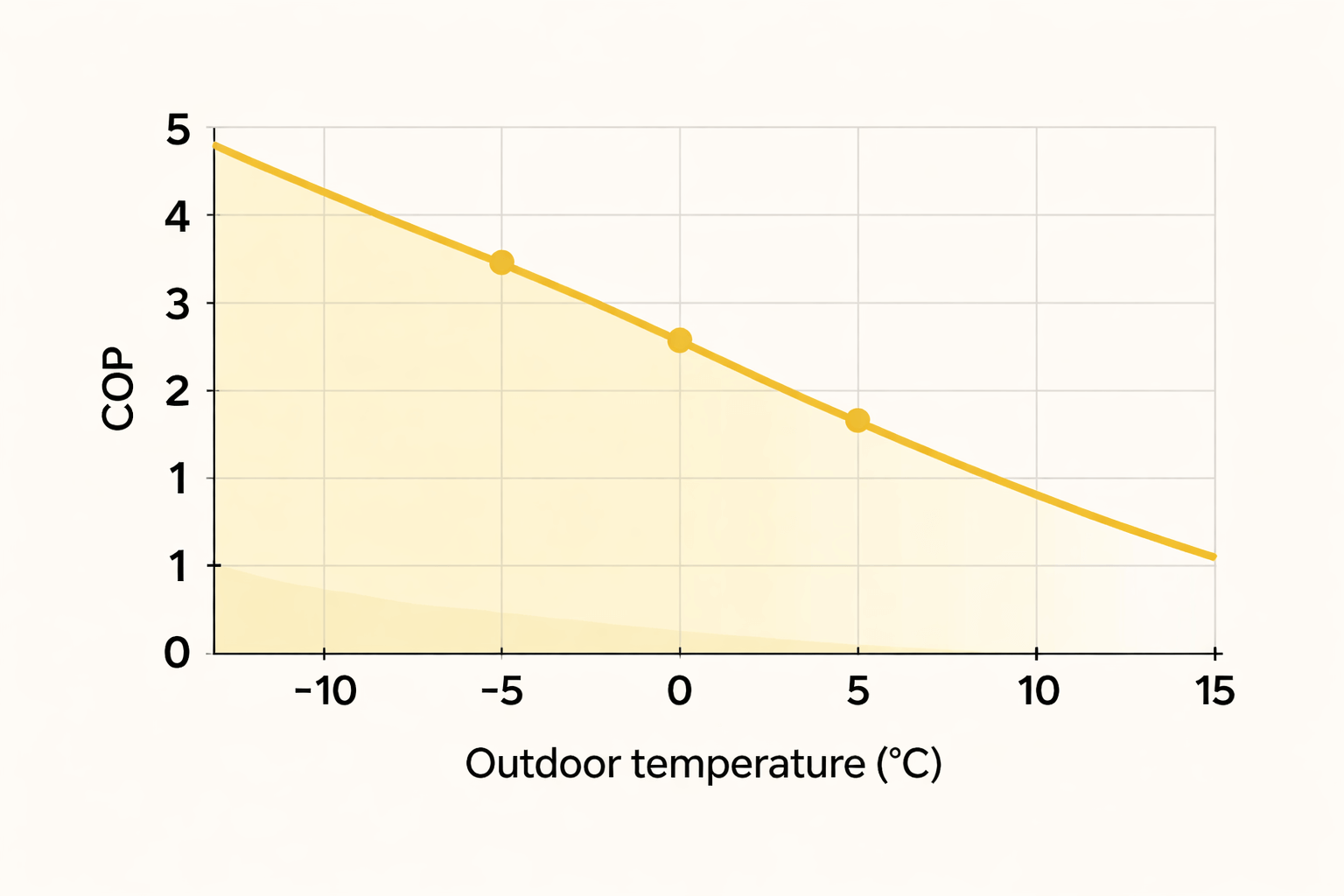
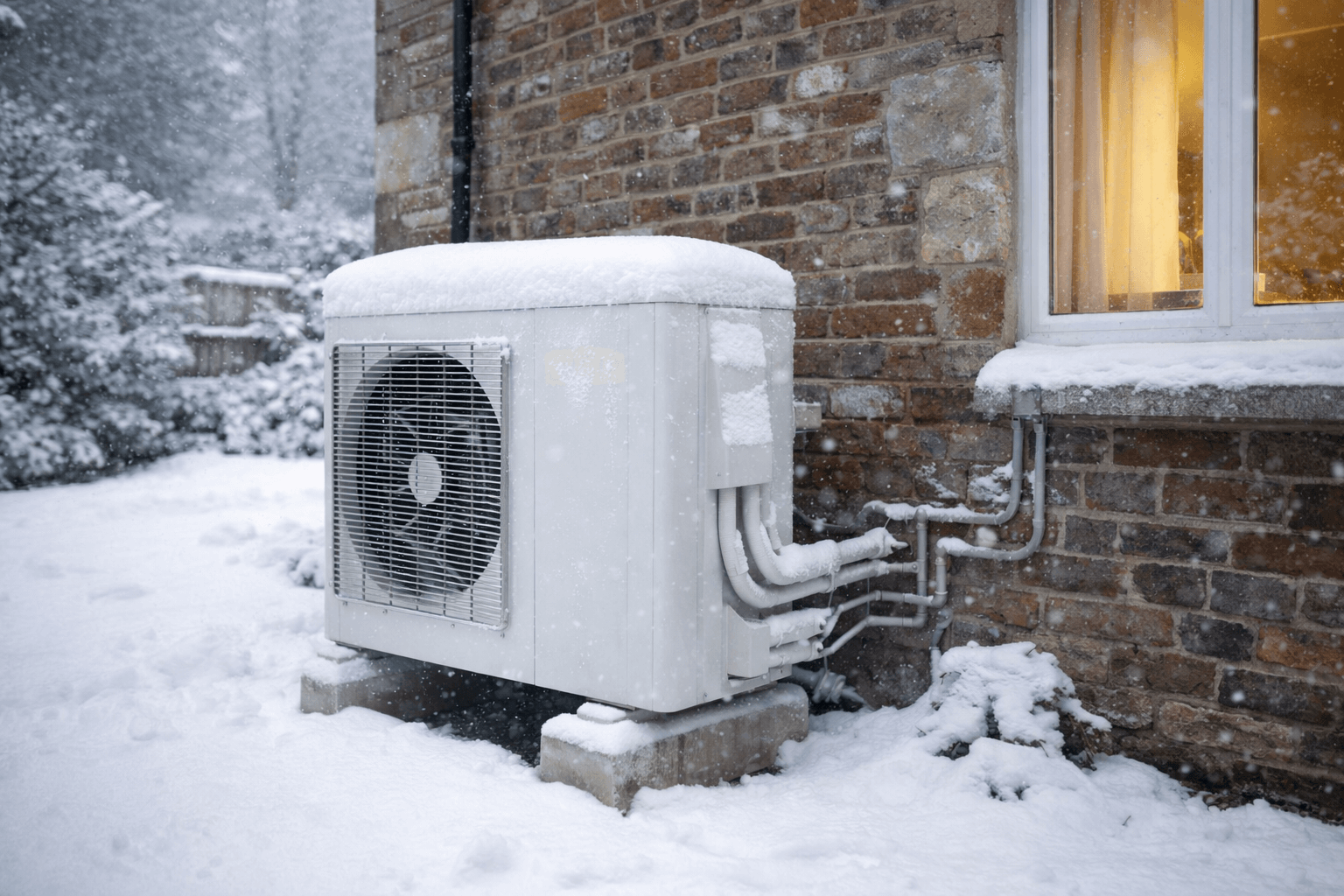

What changes on cold days (and why people worry)
When the outdoor temperature drops, the heat pump has to work harder. Efficiency usually falls and the system may run for longer to hold the indoor temperature. That is normal, and it is only a problem if the system was not sized correctly or the emitters (radiators or underfloor heating) are not matched to the design. Energy Saving Trust (air source heat pumps)
The best question to ask is simple: was it sized to the house?
A good installer carries out a room by room heat loss calculation, selects a heat pump with enough output at the design conditions, and designs the system around those numbers. This is also the basis of the MCS approach to design and installation. MCS MIS 3005 (design and sizing)
Does efficiency drop in cold weather?
Yes, but that does not mean it stops working. Like any air source system, performance is better when it is milder, and lower when it is colder. The point is to design for winter conditions and keep flow temperatures sensible, so the system can deliver steady heat without constantly chasing the setpoint. Energy Saving Trust (performance overview)
Practical signs it will cope on cold days
You should see a clear heat loss calculation, the design temperature assumption written down, and emitters sized for lower flow temperatures. When everything is matched properly, the system tends to run steadily rather than constantly cycling on and off. Comfort on cold days becomes uneventful, which is exactly what you want. Energy Saving Trust (installation basics)
3 things that decide success in older homes
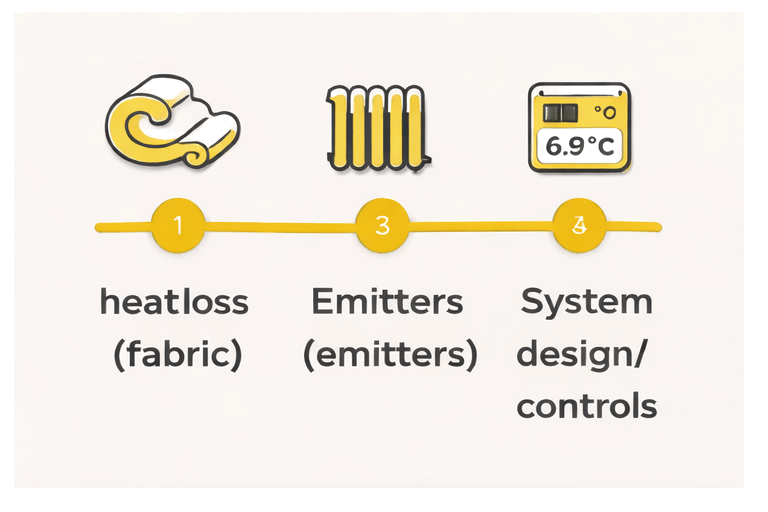
In older UK homes, heat pumps work best when three fundamentals line up: heat loss (fabric), heat delivery (emitters), and system design (controls). Get these right and cold-day comfort is steady. Miss one and you can end up with lukewarm rooms, higher bills, or a system that runs harder than it needs to. MCS MIS 3005 (design, sizing and commissioning requirements)
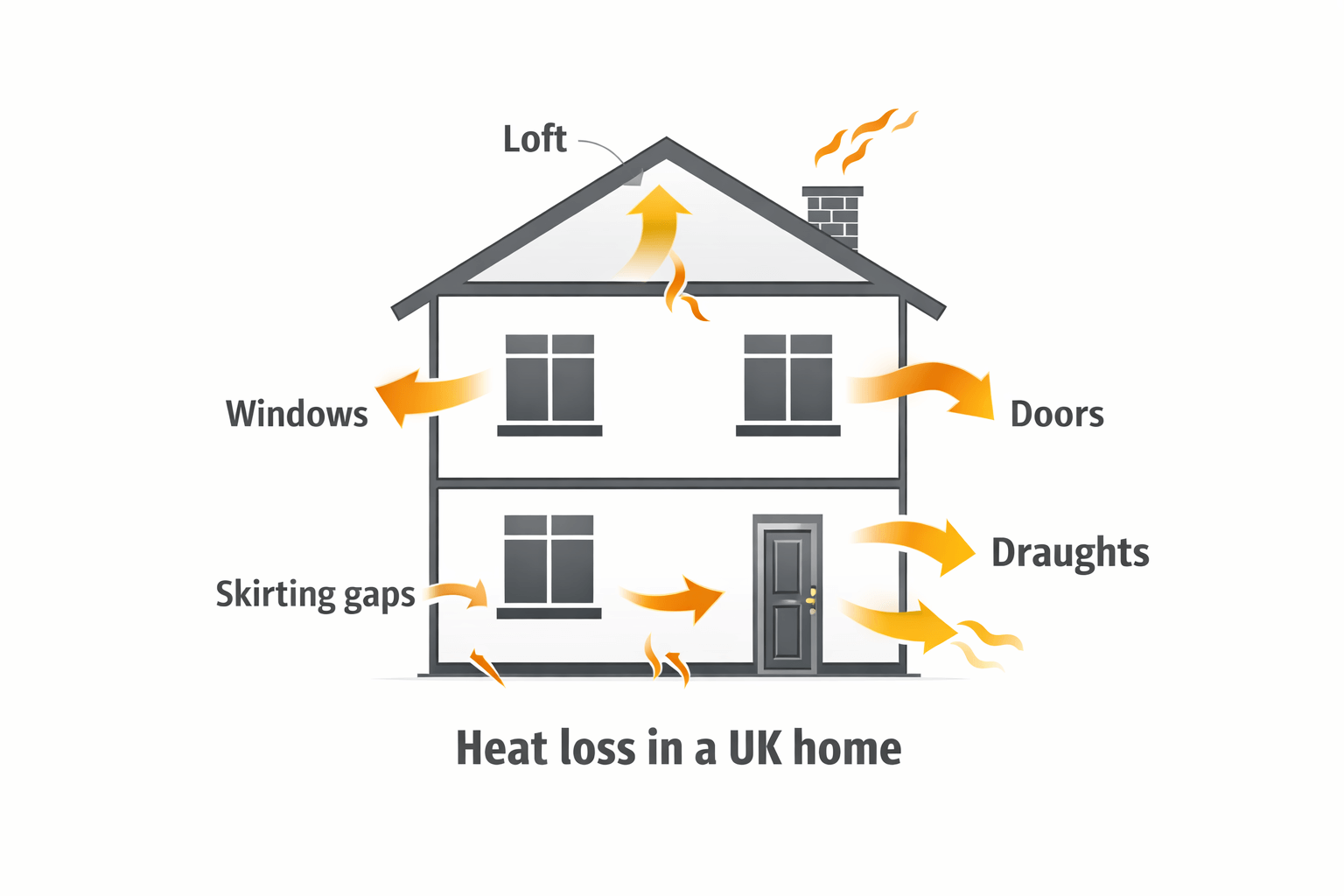
Heat loss of the building (insulation and draughts)
Older homes often lose heat faster due to solid walls, suspended floors, single glazing, and draughts. A heat pump can still cope, but the system must be sized to that reality. Any cost-effective fabric improvements (loft insulation, draught-proofing, and some glazing upgrades) reduce the required heat output and typically improve running cost and comfort.
Energy Saving Trust (insulation and draught-proofing) Simple Energy Advice (insulation overview)
Heat emitters (radiators or underfloor) sized for lower temperatures
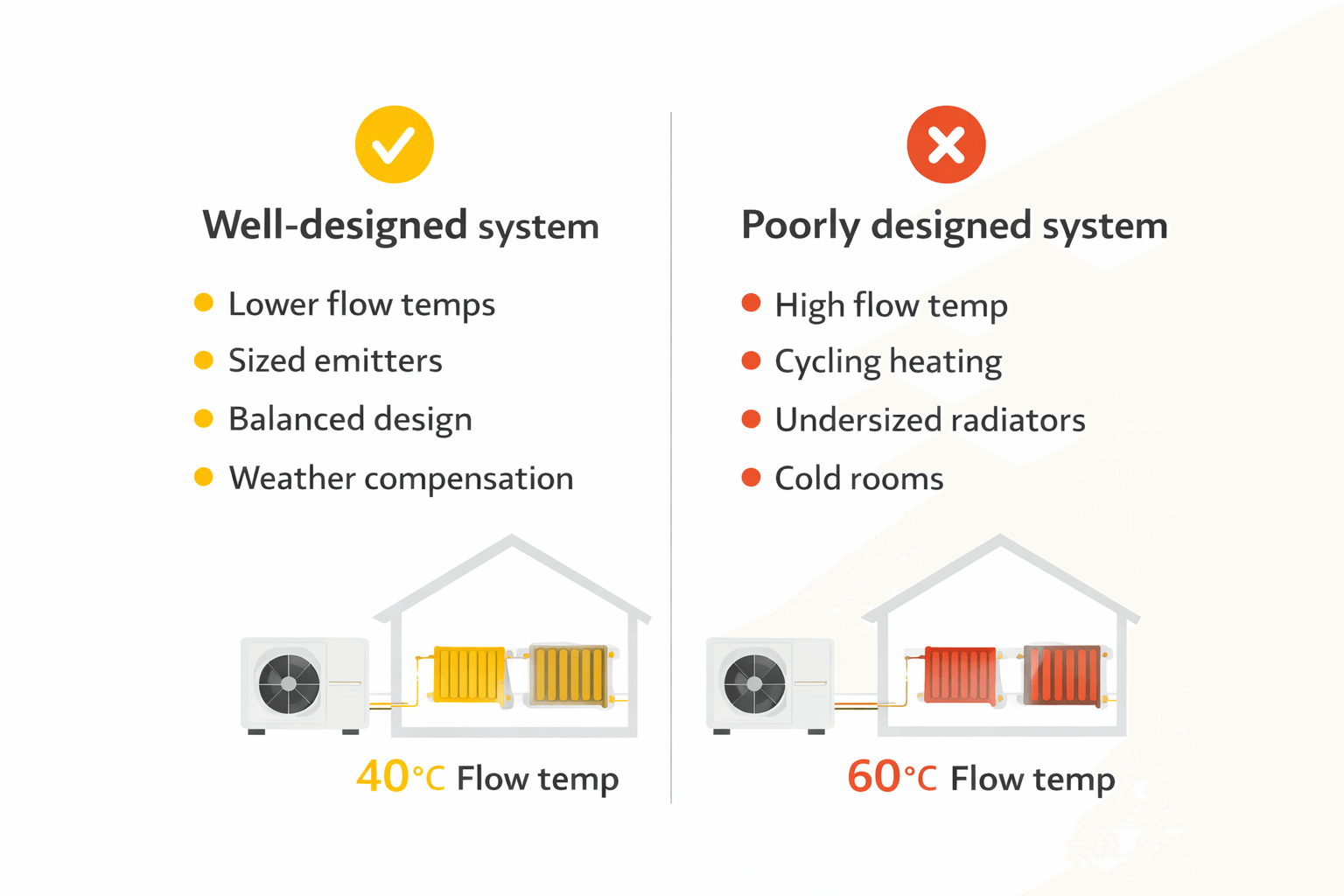
Heat pumps are happiest at lower flow temperatures than many older boiler systems. That means you often need bigger radiators (or sometimes additional radiators) so the home can be heated comfortably without pushing the flow temperature too high. It is not always new radiators everywhere, but emitter sizing is a make-or-break part of the design.
Energy Saving Trust (low temperature heating and emitters) MCS MIS 3005 (system and emitter design)
Correct system design and controls (heat loss calc, flow temp, weather compensation)
Success usually comes down to doing the engineering properly: room-by-room heat loss, correct pipework and hydraulics, balanced flow rates, and sensible controls like weather compensation so the system automatically adjusts flow temperature as outdoor temperatures change. This reduces cycling, improves efficiency, and keeps indoor temperatures stable.
MCS MIS 3005 (design, installation and commissioning) UK Government (weather compensation overview)
Quick rule of thumb
If an older home feels hard to heat on a boiler, a heat pump can still work, but you usually need to treat it like a whole heating system upgrade: reduce heat loss where sensible, size emitters for lower temperatures, then design the system around heat loss (not guesswork). Energy Saving Trust (air source heat pump overview)
UK loft insulation installation (visual for fabric)

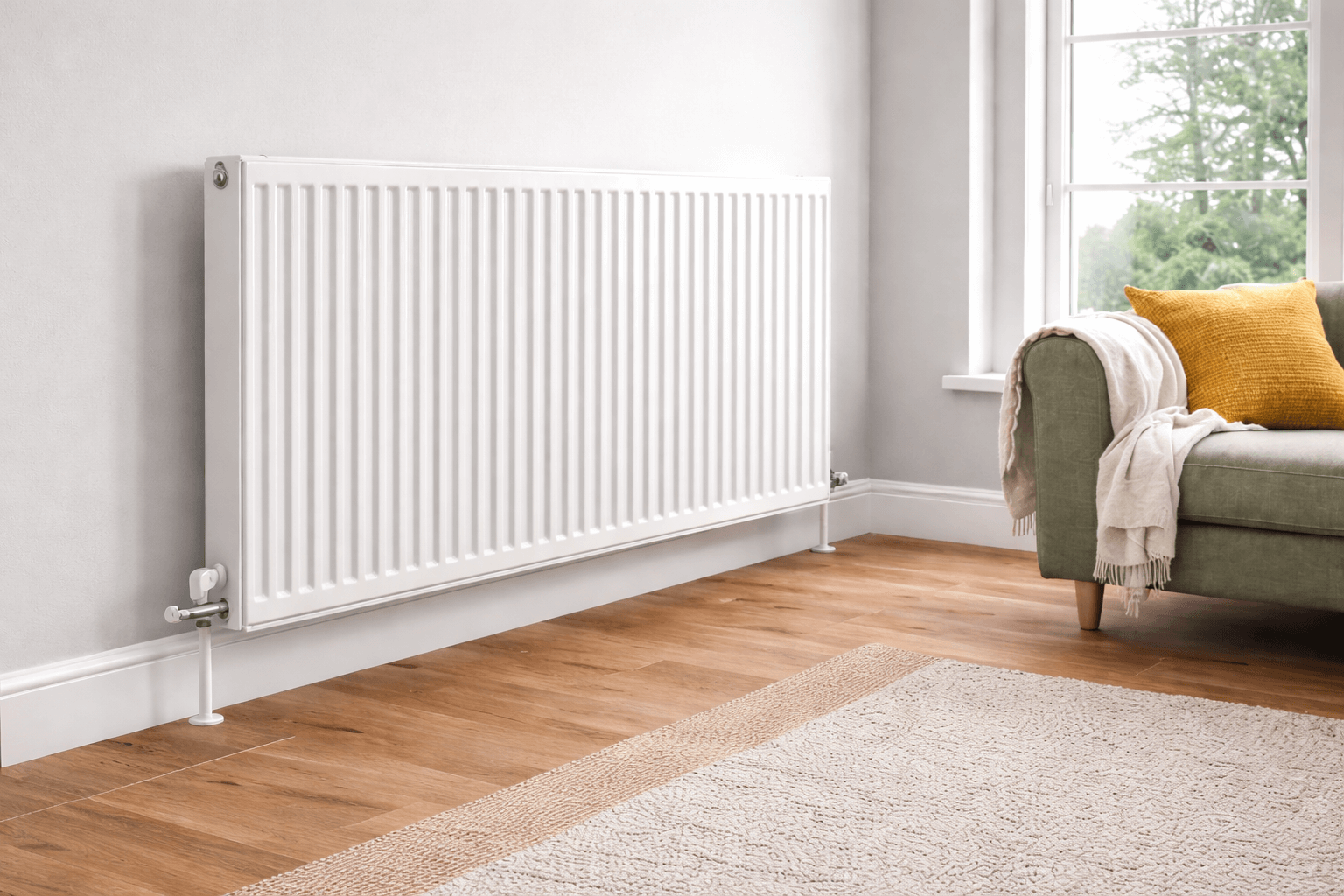
Modern large radiator in a living room (emitters)
Heat pump controller screen (controls and commissioning)

Simple summary graphic (Fabric, Emitters, Design)
Start with the fastest heat loss blockers
Older homes can absolutely be improved, but the best results come from doing the high impact, low disruption steps first. The order below helps you cut heat loss quickly, reduce draughts and make heating (including heat pumps) feel more consistent from room to room.
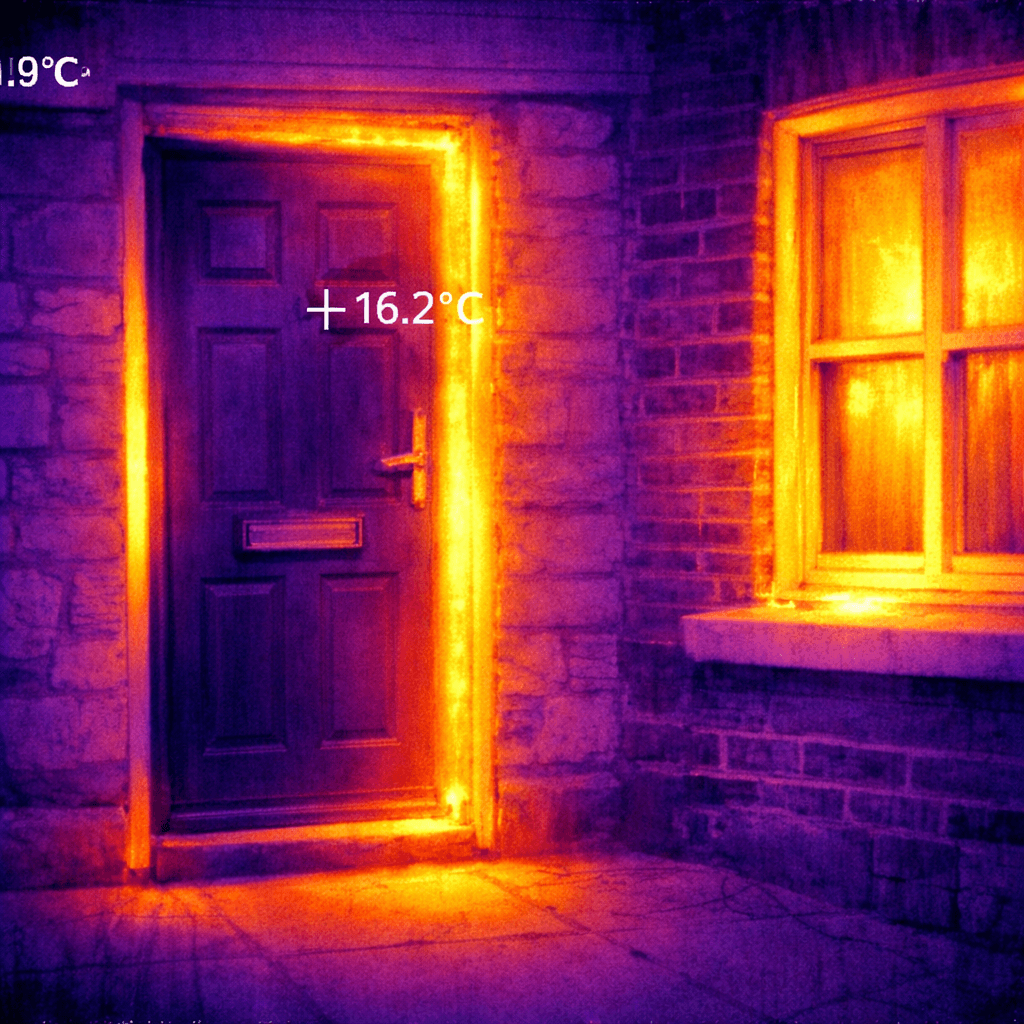
1) Draught-proof the obvious gaps first
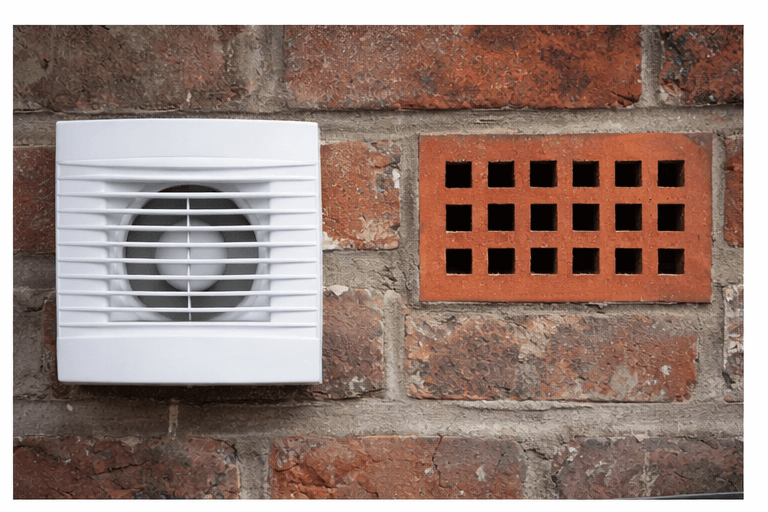
Start with doors, windows, letterboxes, keyholes and any visible gaps around skirting boards, floorboards and service penetrations. This is often the cheapest comfort win. The aim is to reduce uncontrolled cold air coming in, without blocking the ventilation you still need (such as airbricks and extractor fans).
Good draught fixes to prioritise in older homes:
- Door brush and perimeter seals
- Letterbox brush
- Keyhole cover
- Window seals and repairs (especially sash gaps)
- Sealing around pipes and cable penetrations
- Chimney draught solutions if the fireplace is unused (and done safely)
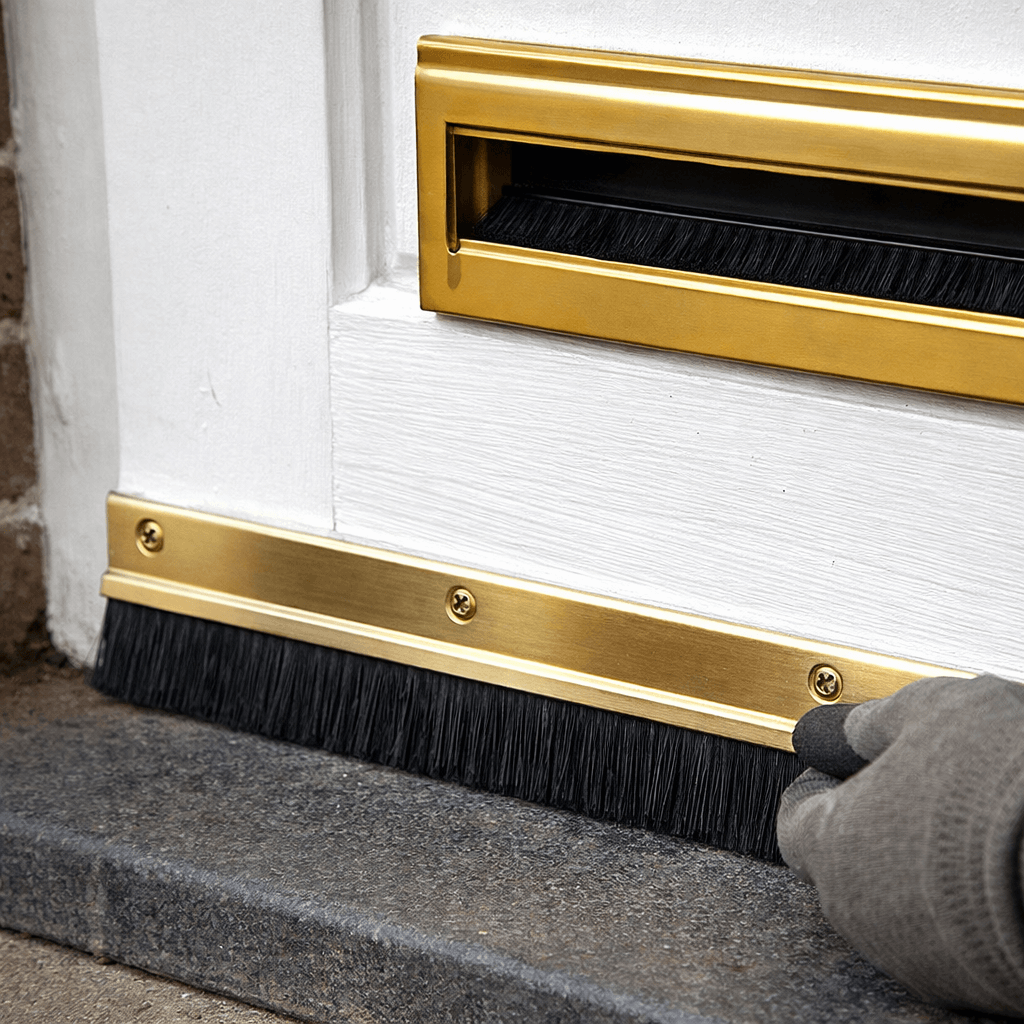
Sources: Energy Saving Trust (draught-proofing) GOV.UK campaign (find and fix draughts)
2) Loft insulation (often the biggest easy insulation win)
If your loft is accessible and safe to work in, insulating it is usually one of the highest return steps. If you already have insulation, topping it up can still make a meaningful difference. Energy Saving Trust commonly references around 270mm as a typical depth target for modern loft insulation.
3) Improve airtightness, but keep ventilation in mind
A tighter home is good for comfort and efficiency, but you still need controlled ventilation to avoid condensation and damp. As you draught-proof and insulate, keep an eye on moisture management (especially in kitchens, bathrooms and bedrooms).
4) Then consider bigger insulation measures (based on your build type)
After draught-proofing and loft insulation, the next best step depends on how your home is built (cavity walls or solid walls, suspended timber floors, and so on). This is where a proper survey helps you avoid trapping moisture in older properties.
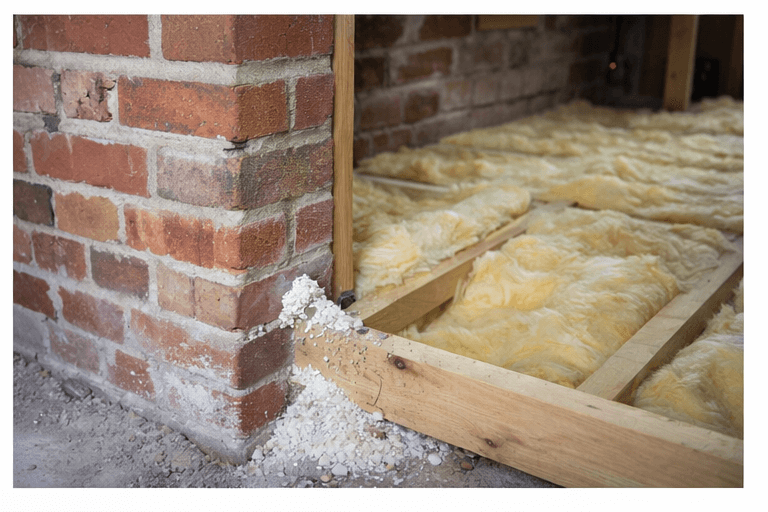
Source (general insulation guidance): Energy Saving Trust (insulation overview)
Radiators: do you always need new ones?
No. You do not always need new radiators for an air source heat pump.
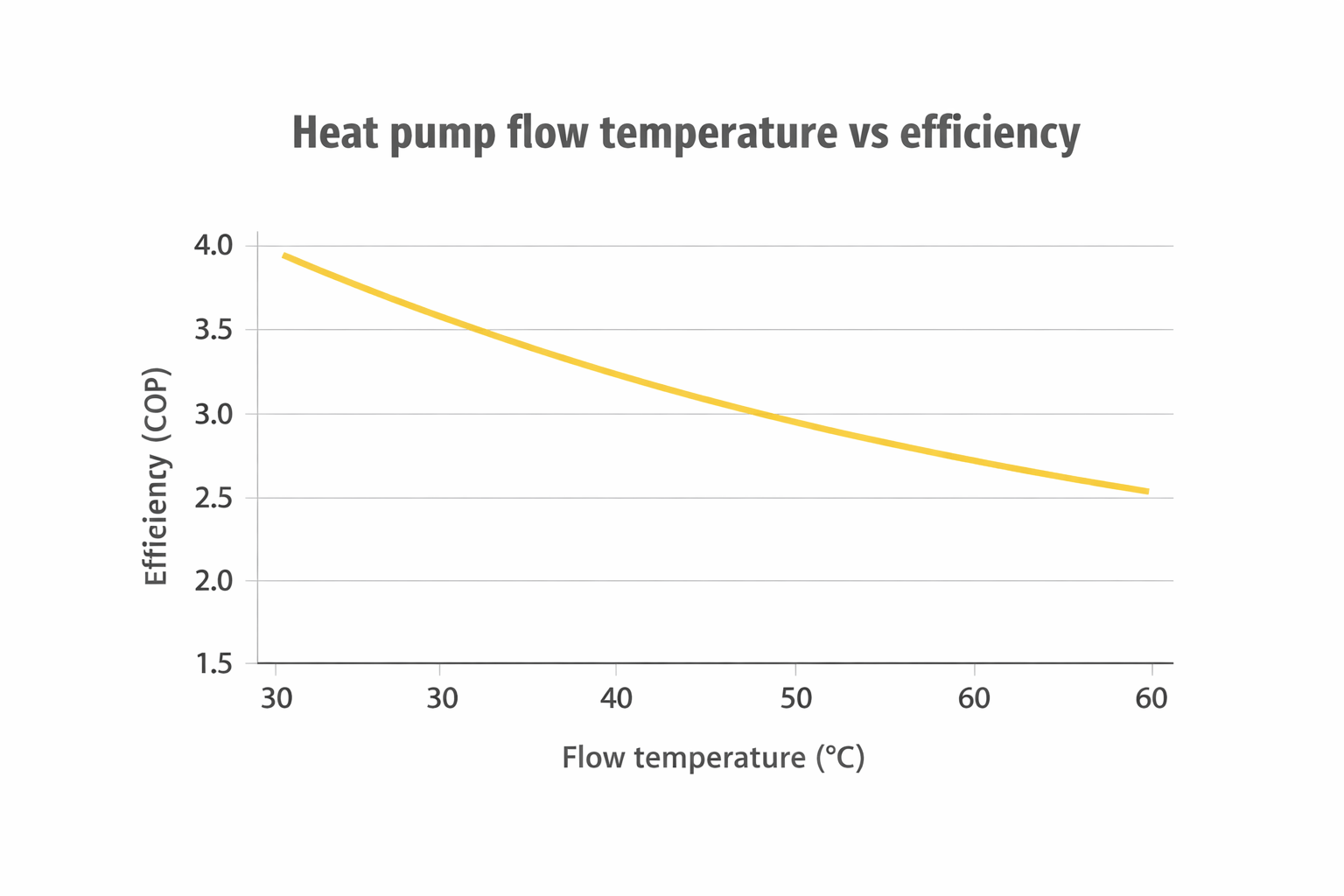
Larger radiators often help because heat pumps run best with lower flow temperatures than a typical gas boiler. Lower flow temperatures usually mean better efficiency and lower running costs. Larger radiators can deliver the same room heat using cooler water. Energy Saving Trust fact check

Why radiators sometimes need changing
Many older radiator systems were designed around a boiler running higher flow temperatures. When switching to a heat pump, an installer will usually aim for a lower flow temperature. In some rooms, the existing radiators may not provide enough heat output unless they are upsized or upgraded. Energy Saving Trust
It is not always about taking up more wall space. “Bigger” can mean more surface area (for example, swapping to a double or triple panel radiator). Heat Pump Fact Check
When you can usually keep your existing radiators
You are more likely to keep most radiators if:
- your home is already reasonably insulated and draught-proofed
- your existing radiators are already generously sized
- you are happy with the installer setting a slightly higher flow temperature (this can reduce efficiency, but it can reduce how much emitter work you need)
Real installations vary. Some households do not need radiator changes, while others need a few changes depending on room sizes, insulation levels and how the system is set up. Owner stories
What you might change instead of replacing everything
If a few rooms are short on heat output, the fix is usually targeted:
- swap only the undersized radiators to double or triple panel
- add an extra radiator in colder rooms
- use fan-assisted radiators (fan convectors) in tricky spaces
- consider underfloor heating only where it makes sense (extensions, remodels)
Heat pumps tend to be most cost-effective in homes that are well insulated and have larger radiators (or radiators designed for lower flow temperatures). Some changes can be worthwhile, but the work is often less extensive than people expect. Benefits of heat pumps
One common issue in older homes: pipework
Sometimes the bigger constraint is not the radiator itself, but the pipework. Some older systems use microbore piping, which can limit flow rates and may increase the amount of upgrade work needed in certain homes. Life with a Heat Pump
Hot water in older homes
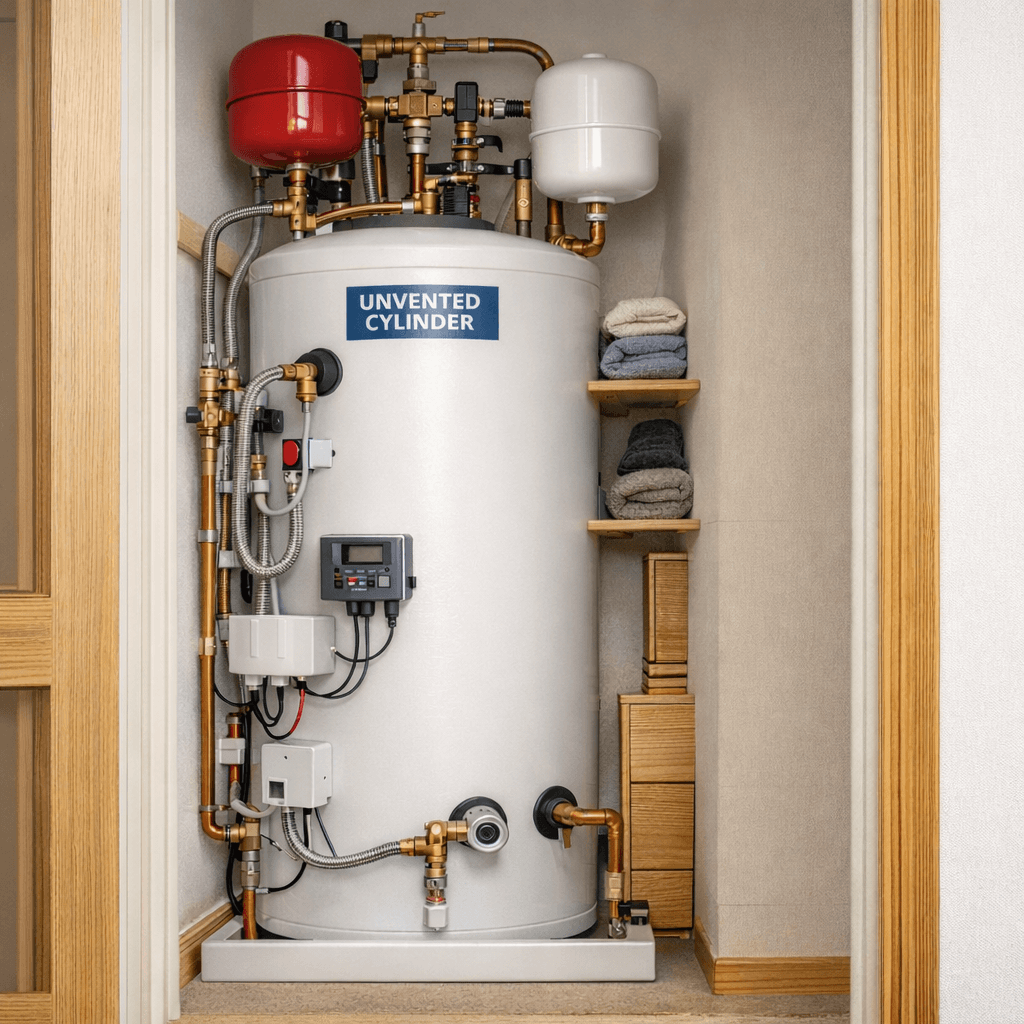
In most older UK homes, an air source heat pump can heat your hot water just fine. The main difference versus a boiler is how it does it. Heat pumps typically heat water more steadily and efficiently, which usually means a hot water cylinder becomes part of the system.
Do you need a hot water cylinder?
In many installations, yes. Older homes often already have a cylinder, so the question becomes whether it is the right type and size for a heat pump. Sometimes the existing cylinder can stay. Sometimes it needs upgrading, often because heat pumps work best with cylinders designed for larger coils and steady heat input. A new cylinder is a common part of a heat pump installation. Citizens Advice
What hot water temperatures should you expect?
A heat pump can deliver normal day-to-day hot water for taps, showers, and baths. The system design matters, because hot water demand is about flow rate and reheat speed, not just “temperature on paper”. Your cylinder size, your household size, your shower type, and your heating settings all change the experience.
Hygiene and Legionella (what actually happens)
Domestic hot water systems are commonly managed so temperatures are high enough to reduce Legionella risk. Guidance often references distributing hot water so outlets reach around 50°C within a short time, and keeping parts of the system hot enough to avoid the growth range. HSE hot water pipework testing guidance HSE publication example
Practically, many heat pump setups handle this using a scheduled hot water boost (sometimes using an immersion heater), depending on the cylinder controls and the installer’s design choices. The goal is simple: safe hot water, without you having to think about it.
Showers in older homes (the one detail people miss)
If you have an older home with a power shower, mixer shower, or multiple bathrooms, the limiter is usually not “can a heat pump make hot water”. It is whether your cylinder volume and recharge rate match your showering habits. That is why cylinder sizing is a big deal for older properties.
Space and plumbing considerations
Older homes can have tighter airing cupboards, odd pipe routes, and older vented cylinders. None of that is a deal-breaker. It just affects what cylinder type fits, whether it is vented or unvented, and how much plumbing tidy-up is needed.
Practical rule of thumb
If your current hot water runs out fast, your heat pump will not magically fix that without the right cylinder size and settings. If your current hot water is solid, you are usually in a good place.

Noise, planning permission, and the best place to put the outdoor unit
Noise (what to expect, what’s normal, how to keep it neighbour friendly)
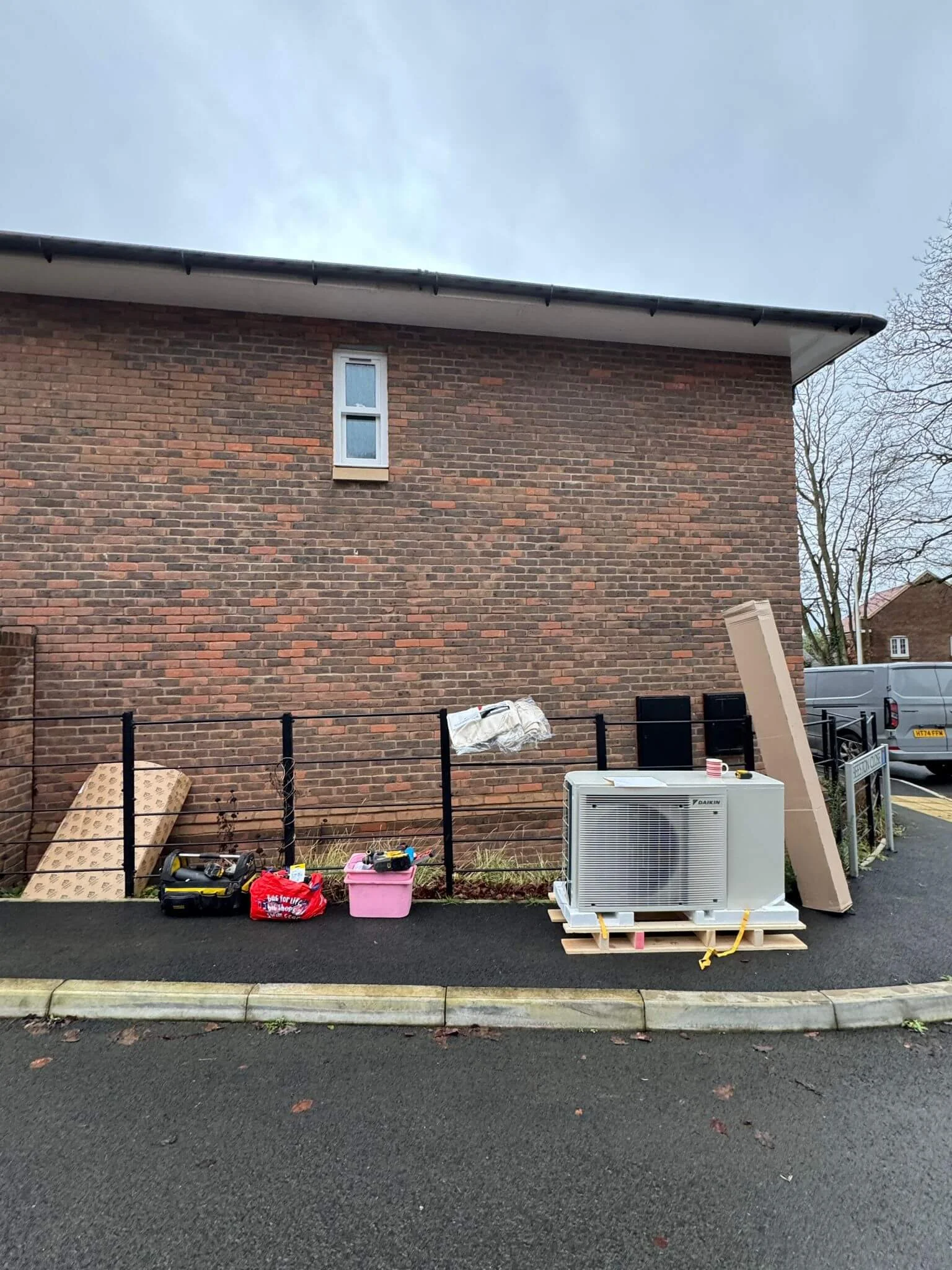
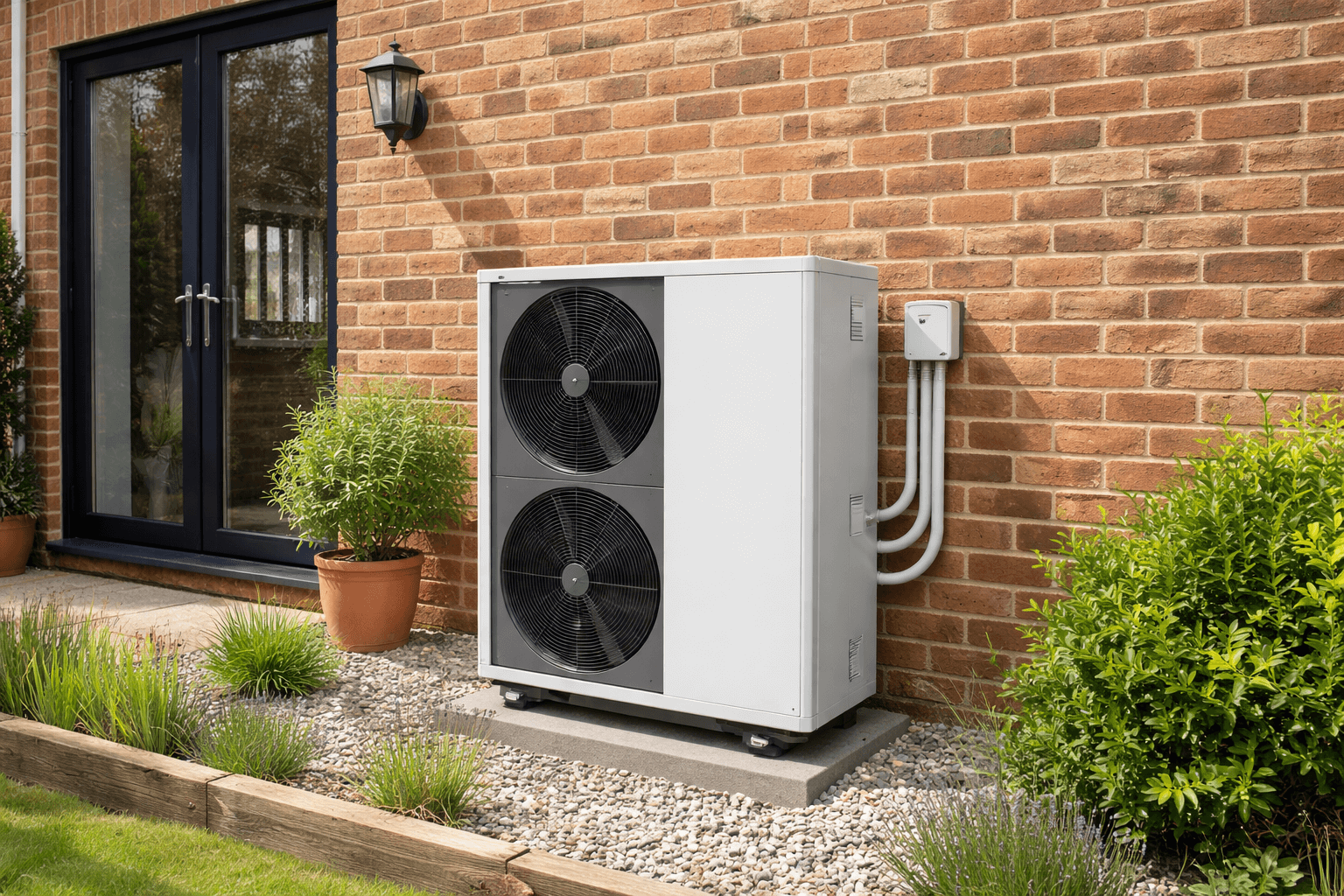
Modern outdoor units are designed to be quiet, but you will still hear a steady fan sound when you are close to them. In practice, good results come from sensible placement (so sound is not directed towards bedrooms, boundaries, or hard corners that can reflect noise).
If you are installing under permitted development in England, noise is one of the key constraints. A benchmark often referenced in the planning context is 42 dB(A) during the day and 38 dB(A) at night at the nearest neighbouring window or door (as part of an MCS 020 style noise assessment approach). Source
Simple steps reduce the risk. Use a solid base or proper brackets, avoid flimsy panels, consider anti vibration feet, and avoid tight corners where sound can bounce. Where needed, an acoustic screen can help (it must not block airflow).
Planning permission (when it is straightforward, when you must check)
In many homes in England, an air source heat pump can be installed under permitted development rules. Planning becomes more likely if the building is listed, the property is in a conservation area, the home is a flat or maisonette, or there are site specific restrictions. In these cases, assume you will need checks before you install.
It is also worth being aware that government guidance and consultations sometimes reference heat pump permitted development rules and the role of the MCS noise methodology in that context. Source
Where the outdoor unit should go (best practice for older UK homes)
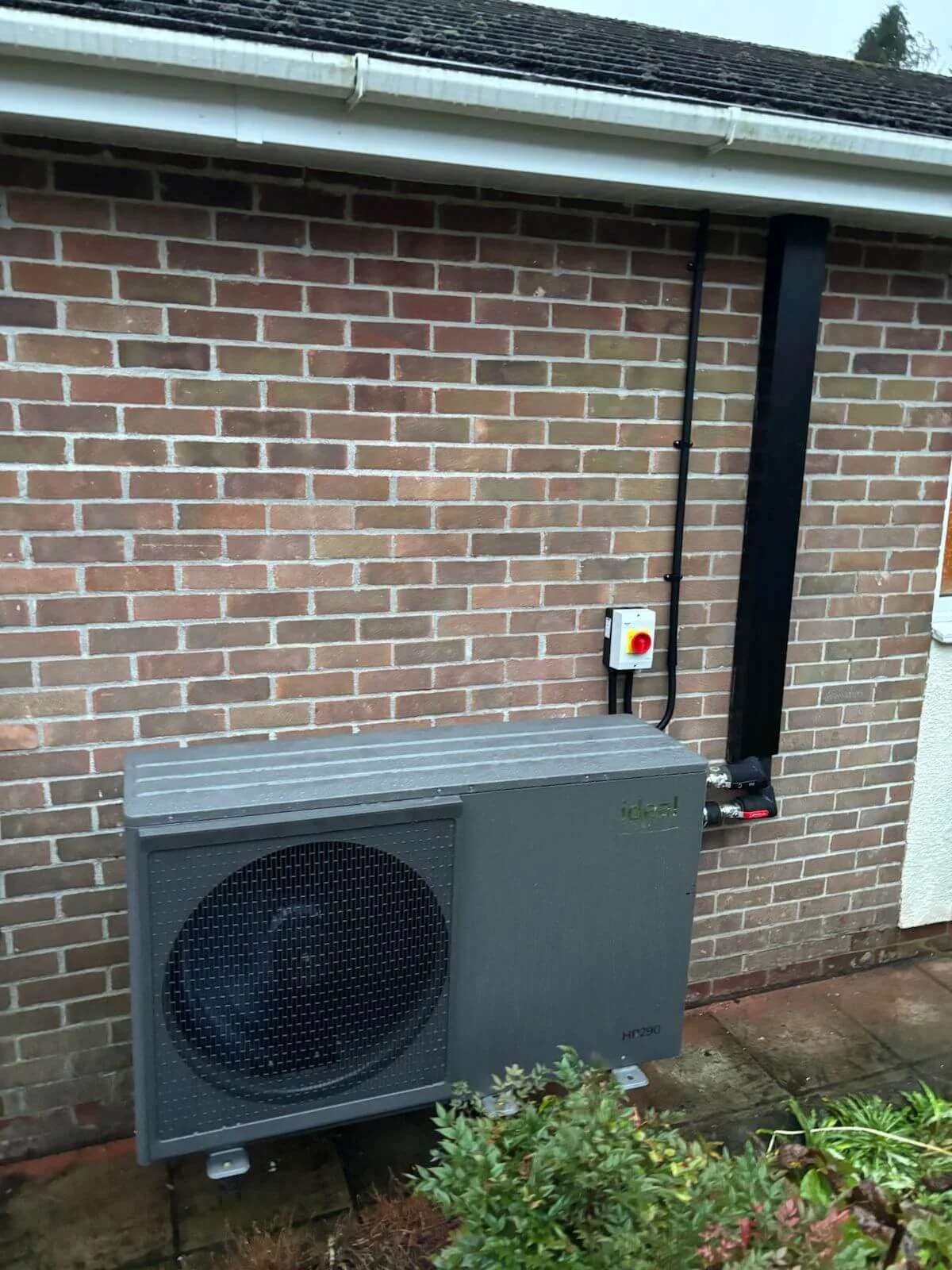
A good location is one where the unit has clear airflow, a sensible route for condensate drainage, and space for servicing. In most homes this means a spot with decent clearance around the fan, a stable base (or solid brackets), and a short, tidy pipe run back to the indoor equipment.
Avoid tight alleyways, boxed in corners, or placing the unit directly under a bedroom window where you can. These locations can make sound more noticeable and can also make servicing harder. Plan the condensate route carefully (in winter it needs to drain safely so it does not create ice on walkways).
If you want a tidy result, the common approach is a side or rear elevation with low visual impact, neat trunking, and enough clearance for maintenance access.
Running costs: what makes a heat pump cheap or expensive to run
A heat pump can be inexpensive to run in an older UK home. It can also be costly. In most cases, it comes down to three things: how much heat the house loses, how efficiently the system delivers that heat, and what you pay per kWh of electricity.
9.1 The big lever: efficiency (COP and seasonal efficiency)
Heat pumps are typically around three to four times more efficient than direct electric heating. That is because 1 kWh of electricity can produce roughly 3 to 4 kWh of heat in the right conditions. This efficiency is what keeps running costs sensible, even though electricity costs more per kWh than gas. RICS consumer guide

9.2 Flow temperature: the silent bill-killer
The hotter you force the system to run, the more electricity it uses. Lower flow temperatures usually mean better efficiency and lower bills. This is why radiator sizing, heat loss and controls matter so much. If the system is designed around your home’s peak heat loss so it stays comfortable in cold weather without needing very high flow temperatures, it is far more likely to be economical to run. DESNZ analytical annex
9.3 Heat loss: insulation and draughts decide how hard it has to work
Running cost is basically: heat demand multiplied by electricity price, divided by system efficiency. So if the house loses heat quickly, the heat pump has to run longer and harder. That pushes up cost. Even basic improvements can change the maths because they reduce the heat the system must deliver each day.
9.4 Electricity price and tariffs: you can win or lose here
Electricity prices per kWh can be much higher than gas, so tariffs matter. If you can use a smart tariff or shift some usage, you may reduce what you pay for electricity. Some households also pair heat pumps with solar and batteries, but those add extra cost and should be assessed on payback. RICS notes

9.5 Controls and setup: the operator behaviour part of the bill
Heat pumps usually run best with steady settings, weather compensation and sensible zoning. Big temperature swings and constant on and off behaviour can reduce efficiency. A proper handover matters because the system often feels different from a boiler, and running it like a boiler can increase costs. RICS discusses

9.6 A simple, honest rule of thumb for older homes
If your home can be kept warm on cold days with a sensible design (proper heat loss calculation, flow temperatures kept reasonable, and emitters sized correctly), then running costs are often reasonable. If the design relies on high temperatures to force heat into a leaky house, bills can climb.
Checklist: are you a good candidate for a heat pump in an older UK home?
Most older homes can run a heat pump. The question is whether your home can run one efficiently without major upheaval. Use this checklist to get a quick, realistic “yes / maybe / not yet”.
Quick pass checklist (good candidate)
- Heat loss is reasonable for your size of home (a proper heat-loss survey confirms this).
- You can run low flow temperatures most of the time (many homes do this with the right radiator sizing).
- Your radiators are big enough already, or you’re happy to upgrade a few key ones.
- You have space outside for the unit with sensible airflow and neighbour-friendly placement.
- You have (or can fit) a hot water cylinder if you’re switching to an air-to-water heat pump.
- You’re open to basic insulation + draught-proofing improvements if needed.
“Maybe” checklist (still works, but needs planning)
- Solid walls, suspended timber floors, or lots of draughts (but you’re willing to do targeted upgrades first).
- Smaller rooms with compact radiators (you might need a few larger rads or a couple of extra emitters).
- Limited outdoor space (placement may rely on the newer planning rules and careful positioning).
- Higher heat demand lifestyle (very warm setpoints, windows open, lots of hot water use) (you’ll need a design that matches reality).
“Not yet” checklist (fix these first)
- You can’t fit an outdoor unit anywhere practical (or it would create unavoidable nuisance).
- You have no space for a cylinder and no acceptable alternative layout.
- The home has very high uncontrolled heat loss (single glazing everywhere, heavy draughts, no loft insulation) and you’re not planning any improvements.
Two things that make this checklist reliable (not guesswork)
- A proper design starts with a heat-loss calculation and emitter sizing, not a rough rule of thumb.
- Planning constraints have eased for many homes, so “older terrace” is less of a blocker than it used to be.
If you want the fastest route to a confident answer, ask for a survey that includes a heat-loss assessment and a simple “what needs changing” list. That avoids over-selling, and it avoids nasty surprises later.
MCS heat pump design standard (heat-loss + system design principles): MCS MIS 3005
UK government announcement raising Boiler Upgrade Scheme grants to £7,500 (context for candidacy + next steps): GOV.UK update
Planning rule relaxation removing the 1 metre boundary rule (helps many older terraces): Reuters report
FAQ: Heat pumps in older UK homes
Do heat pumps work in winter and on freezing days in the UK?
Yes. A properly sized air source heat pump will still heat your home on cold days. The key is the design work up front, heat loss calculation, correct emitter sizing, and sensible flow temperatures. Cold snaps usually expose shortcuts in design, not “heat pumps don’t work”.
Do I need to fully insulate my house before I can install a heat pump?
No. Insulation helps, but it is not a strict requirement. The real requirement is that the system is designed for your home’s heat loss and your comfort target. Insulation and draught-proofing often make the system cheaper to run and more comfortable, so they are usually worth doing when practical.
Do I always need new radiators in an older home?
Not always. Many homes keep some radiators. Some homes need larger radiators in a few rooms, because heat pumps usually run best at lower flow temperatures. You only change what you need to hit comfort on the coldest days.
source: Energy Saving Trust — Heat pump fact check (radiators)
Will a heat pump be noisy for me or my neighbours?
Modern units are designed to be quiet, but placement matters. For many installs, the installer should check noise and positioning rules. If you are aiming for permitted development, there are specific siting and noise requirements you need to meet.
Do I need planning permission for an air source heat pump?
Often no, because many homes can install under permitted development. The rules depend on where the unit is placed, distance and visibility constraints, and noise limits. If your home is listed, in a conservation area, or has tricky placement, you may need permission.
source: Central Bedfordshire Council — Air source heat pumps (permitted development guidance)
source: Planning Inspectorate (UK Gov) — permitted development changes and context (May 2025)
Can I get the Boiler Upgrade Scheme grant for an older home?
Many homeowners can. The scheme offers support toward the cost of an air source heat pump, subject to eligibility rules. The practical next step is a survey to confirm suitability and what upgrades (if any) are needed.
source: UK Government news release referencing the Boiler Upgrade Scheme value (April 2025)
source: Ofgem — Boiler Upgrade Scheme overview for consumers
What makes a heat pump cheap or expensive to run?
Three big levers decide this: your home’s heat loss, the system design and flow temperature, and how you use heating controls day to day. Better insulation and reduced draughts usually lower running costs. Oversized flow temperatures and poor controls usually raise them.
Will I still have hot showers and enough hot water?
Yes, when the cylinder and controls are designed properly. Older homes often benefit from a correctly sized hot water cylinder and a setup that prioritises hot water at the right times. If your hot water demand is high, that gets designed in from day one.
source: Energy Saving Trust — Heat pump fact check (general performance + system design realities)
What if my home is “leaky” and I hate the idea of major renovation?
You do not need a full renovation. Most older-home wins come from targeted draught-proofing and a few insulation upgrades that give the biggest comfort return. Then the heat pump can be designed around the reality of your house, not an idealised version of it.
Can I keep my existing boiler as backup?
Some homes choose a hybrid approach, but it depends on goals, controls, and how you want the system to operate. For most people, the decision comes down to comfort targets, upgrade appetite, and cost planning. A survey will tell you what makes sense.
source: UK Government — Home upgrades and heat pump rollout context (includes policy direction + support)
How long does installation usually take?
It varies based on whether you need radiator changes, cylinder work, and electrical upgrades. Many installs are a few days, but older homes can take longer if upgrades are bundled in. The best way to know is a proper survey and scope.
source: Energy Saving Trust — Heat pump fact check (emphasises home-specific design and variations)
What should I ask an installer before saying yes?
Ask for heat loss calculations, emitter (radiator/UFH) checks, expected flow temperatures, noise and placement considerations, and what paperwork you get at handover. If they cannot explain those clearly, that is a red flag.

Ready to see if a heat pump will work in your older home?
If you want clear answers, the fastest route is a proper home survey and a heat-loss-led design. We’ll tell you what will work, what won’t, and what upgrades are actually worth doing first.
Get a same-day initial quote based on your home basics. Then we’ll book a survey if it looks like a good fit. Do heat pumps work in older homes UK? The right heat pump survey and design makes the answer clear, including heat pump running costs and what an air source heat pump for older houses actually needs. Devon heat pump installer.
- No pressure. Straight numbers. Clear next steps.
- Older homes welcome. We design around real heat loss and real comfort.
- Practical upgrades first. We prioritise the changes that move the needle.
Prefer to talk it through?
Call 01752 916 013