
- Last updated
- 20 November 2026
Is your oil boiler getting on a bit? Perhaps the engineer has started muttering about spare parts, or the last delivery bill made you wince.
Sooner or later, every oil-heated home faces the same decision. Do you fit another oil boiler, or switch to an air source heat pump?
A few years ago that was an easy call, because a boiler cost far less to buy. Today there’s a £9,000 grant for oil-heated homes, 0% VAT on heat pumps and heating oil prices that swing from month to month. The sums have changed.
This guide compares the two options: what each costs to buy, what each costs to run, and which homes they suit. It’s written for homeowners in Devon, Cornwall and Somerset, where we survey and install.
At a glance
The Short Answer
A new oil boiler is usually cheaper to buy and simpler to fit. A heat pump generally costs less to run, comes with a £9,000 grant, and ends your reliance on oil deliveries.
For many off-gas homes, the grant now brings the two purchase prices close together. That makes the heat pump worth a proper look before you commit to another 15-20 years of oil.
| New oil boiler | Air source heat pump | |
|---|---|---|
| Typical installed price | £2,000-£8,000 | From around £12,000 before the grant |
| Grant available | None | £9,000 for oil and LPG homes without mains gas, until March 2027 |
| What you typically pay | £2,000-£8,000 | £3,000-£7,000 after the grant |
| Cost of heat today | About 11.6p per kWh | About 8.8p per kWh |
| Fuel | Oil, delivered and stored in a tank | Electricity |
| Changes to your home | Few: usually a like-for-like swap | Hot water cylinder, outdoor unit, possibly some larger radiators |
Please note: every figure above is explained, with its source, further down this page. Prices for your own home are confirmed at a free survey.
Timing
When Should You Replace an Oil Boiler?
Oil boilers typically last 15-20 years, and sometimes longer when they are serviced regularly. If yours is in that range, start planning now.
These are the usual warning signs:
- It breaks down more often, and repairs are getting dearer.
- You’re burning more oil than you used to for the same warmth.
- Your engineer struggles to find parts.
- The storage tank is also showing its age.
Like for like
Option 1: A New Oil Boiler
Replacing like for like is the familiar route. A modern condensing oil boiler connects to your existing pipes, radiators and tank, and you carry on as before.
How much does a new oil boiler cost?
Boiler manufacturer Worcester Bosch puts the boiler itself at £1,000-£5,000, depending on brand and type, with installation typically adding £1,000-£3,000. That gives a total of £2,000-£8,000.
Two things to bear in mind. There is no grant for a new oil boiler, and the work carries VAT at 20%. If your tank is near the end of its life, a replacement adds to the bill.
What are the advantages?
- A lower purchase price in most cases.
- A quick, familiar installation with little disruption.
- Better efficiency than the boiler it replaces. Many modern oil boilers convert about 90% of their fuel into heat.
- No changes to your radiators or hot water.
What are the drawbacks?
- You stay tied to heating oil, and to a price nobody can predict. Over the three months to mid-November, the UK average ranged from about 86p to 121p a litre, according to Fueltool (opens in a new tab).
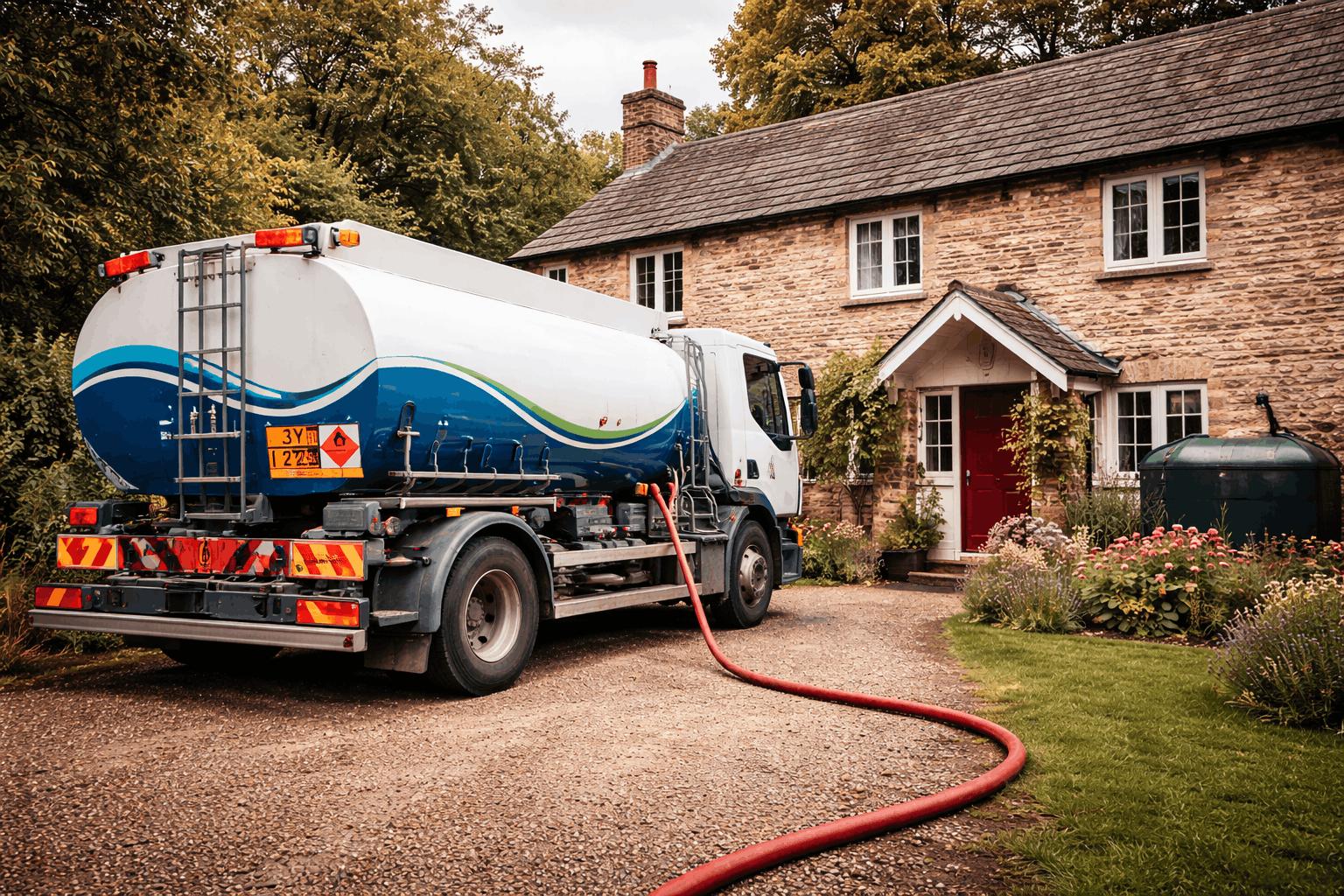
- You still have deliveries to order, a tank to look after and the risk of running out.
- Oil is a fossil fuel, and government policy is moving away from it.
Are oil boilers being banned?
No. It’s a common concern, so it’s worth being clear.
According to Which? (opens in a new tab), a proposed ban on replacing oil boilers in existing homes will not go ahead, and homeowners won’t be forced to remove a working system. The government’s approach is to encourage low-carbon heating when a boiler reaches the end of its life, which is what the £9,000 grant is for.
What about HVO?
HVO (hydrotreated vegetable oil) is a lower-carbon liquid fuel that most oil boilers could be converted to burn. It’s being trialled, but Which? reports that supply is limited. For now it’s something to watch, not a reason to delay a decision.
The low-carbon option
Option 2: An Air Source Heat Pump
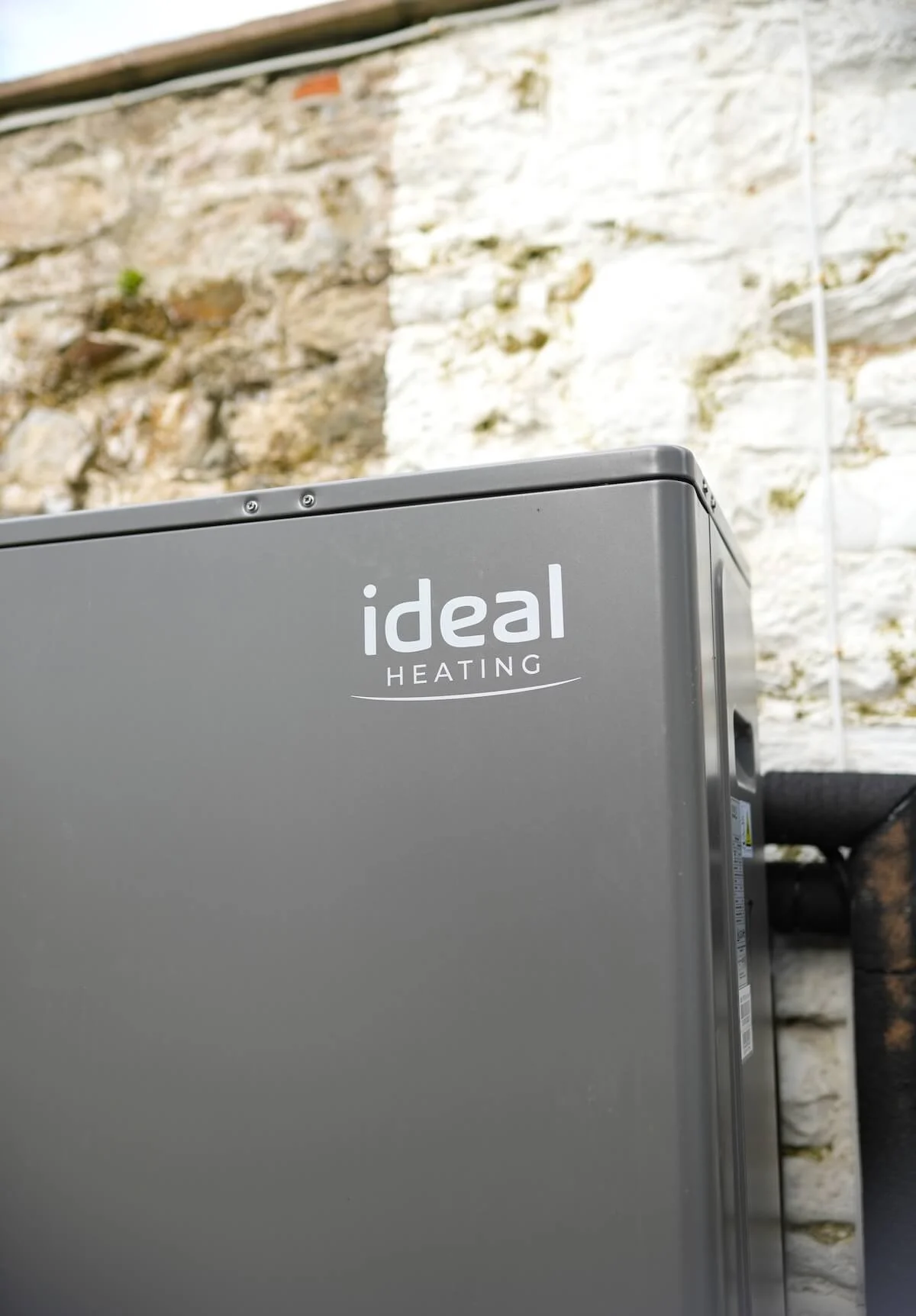
An air source heat pump takes warmth from the outside air and uses it to heat your radiators and hot water. It runs on electricity.
The clever part is efficiency. An oil boiler turns one unit of fuel into slightly less than one unit of heat. A heat pump delivers roughly three or four times the electricity it consumes.
How much does a heat pump cost?
A typical installation starts from around £12,000 before the grant. For an oil-heated home with no mains gas, the Boiler Upgrade Scheme then takes off £9,000.
After the grant, our customers typically pay £3,000-£7,000. Where you fall in that range depends on the size of your home, its insulation, and whether you need a new cylinder or radiators.
Heat pumps are also installed at 0% VAT until 31 March 2027.
How does the £9,000 grant work?
The Boiler Upgrade Scheme pays £7,500 towards an air source heat pump (opens in a new tab) in England and Wales. Until March 2027, you get a further £1,500 if both of these apply:
- Your property is heated by oil or LPG.
- You do not have a mains gas connection.
What changes in your home?
- An outdoor unit is fitted against an outside wall or in the garden. In most cases planning permission isn’t needed.
- A hot water cylinder is fitted indoors if you don’t already have a suitable one.
- Some radiators may be swapped for larger ones.
- The oil boiler and tank are no longer required. No more deliveries.
Will a heat pump keep my home warm?
Yes, when it’s designed properly. That’s the whole point of the survey: we calculate the heat loss of every room, then size the heat pump and radiators to match.
It does feel different. A heat pump runs for longer at a gentler temperature, keeping the house steadily warm instead of blasting heat for an hour.
Owners seem to like it. In the government’s 2026 evaluation of the Boiler Upgrade Scheme (opens in a new tab), 91% said they were satisfied with their heat pump, and 93% described their indoor temperature as about right.
Living in a cottage or farmhouse? Read our guide to heat pumps in older homes.
Upfront cost
Upfront Cost: New Oil Boiler vs Heat Pump
Here is how the purchase prices stack up for an oil-heated home with no mains gas.
| New oil boiler | Air source heat pump | |
|---|---|---|
| Price before grant | £2,000-£8,000 | From around £12,000 |
| VAT | 20% | 0% until 31 March 2027 |
| Grant | None | £9,000 |
| What you typically pay | £2,000-£8,000 | £3,000-£7,000 |
The ranges overlap. A straightforward heat pump installation can now cost about the same as a mid-range oil boiler, and less than a top-end model with a new tank.

“People are often surprised when they see the two quotes side by side. Once the £9,000 grant comes off, a heat pump is frequently in the same territory as a new oil boiler, and it usually costs less to run.”
Running costs
Running Costs: What 1,000 Litres of Oil Tells You
Purchase price is only half the story. What will each option cost you every winter?
The easiest way to compare is to start with something you already know: how much oil you buy. So let’s take 1,000 litres burned in an older boiler, and see what the same warmth would cost from the alternatives.
| Heating system | Energy needed for the same heat | Cost |
|---|---|---|
| Your current oil boiler (85% efficient) | 1,000 litres of oil | About £1,080 |
| New oil boiler (90% efficient) | About 945 litres | About £1,020 |
| Heat pump (300% efficient) | About 2,930 kWh of electricity | About £770 |
| Heat pump (350% efficient) | About 2,510 kWh | About £660 |
On these figures, a new oil boiler saves you about £60 for every 1,000 litres you currently burn. A heat pump cuts the bill by £310-£420.
Get through 2,000 litres a year? Double the numbers.
Can solar panels cut the running cost further?
Yes. A heat pump runs on electricity, and solar panels generate electricity for free from the sun. Our guide to heat pumps and solar panels explains how the two work together.
Deadline
The importance of 31 March 2027
Two things end on the same day: the extra £1,500 for oil and LPG homes, and 0% VAT on heat pump installations. From 1 April 2027, the grant returns to £7,500 and VAT is charged at 5%.
Here’s what that does to a £12,000 installation.
| Installed by 31 March 2027 | Installed from 1 April 2027 | |
|---|---|---|
| Price before VAT | £12,000 | £12,000 |
| VAT | £0 | £600 |
| Grant | -£9,000 | -£7,500 |
| You pay | £3,000 | £5,100 |
That’s £2,100 more for the same heat pump. The VAT rate is set by the date the installation is completed, so it’s worth booking a survey well before the spring. More detail is in our articles on the 0% VAT deadline and the Budget’s decision on heat pump grants.
Your choice
Which Is Right for Your Home?
Neither option suits everybody. Here’s a logical way to think about it.
A heat pump is likely to suit you if:
- Your boiler is ageing but still working, so you have time to plan.
- You intend to stay in the house for a few years.
- You have space outside for the unit and indoors for a cylinder.
- Your home is reasonably well insulated, or you’re willing to improve it.
- You’d like to stop ordering oil for good.
A new oil boiler may suit you if:
- Your boiler has failed and you need heating back this week.
- You expect to sell the house soon.
- A survey shows the property would need major work before a heat pump could perform well.
What if you heat with LPG?
The same choice applies, and so does the £9,000 grant, provided you have no mains gas connection.
Local picture
Oil Heating in Devon, Cornwall and Somerset
Many villages, farms and coastal properties in the South West sit beyond the gas network, which is why oil heating is so common here. In Cornwall alone, about 14% of households (roughly 35,000 homes) are off the gas grid.
Oil can cost a little more here, too. On 17 November, the lowest quoted price for 1,000 litres in Devon and Cornwall was about 111p a litre including VAT, against a UK average of 108p (Fueltool).
Simple Solar is an MCS-certified installer based in Plymouth. We fit heat pumps across Devon, Cornwall and Somerset, from Exeter, Torquay and Barnstaple to Truro, Bodmin and Taunton. See our page on air source heat pumps in Devon for more local detail.
Five steps
How Replacing Your Oil Boiler With a Heat Pump Works
- A quick call. We ask about your home, your current heating and how much oil you use.
- A free survey. We measure the heat loss of each room and check your radiators, hot water and electrics.
- A fixed price in writing. It shows the cost before and after the grant. There’s no obligation.
- The grant application. We handle it for you.
- Installation and commissioning. We fit the system, commission it and provide aftercare.
Your questions answered
Frequently Asked Questions
How much does it cost to replace an oil boiler?
Worcester Bosch puts a new oil boiler at £1,000-£5,000, plus £1,000-£3,000 for installation, so £2,000-£8,000 in total. An air source heat pump costs from around £12,000 before the grant. With the £9,000 Boiler Upgrade Scheme grant for oil-heated homes, our customers typically pay £3,000-£7,000.
Is it worth buying a new oil boiler?
It can be, if your boiler has failed in mid-winter, you plan to move soon, or a survey shows your home isn’t ready for a heat pump. For most other oil-heated homes, a heat pump is worth pricing first: the grant can bring the cost close to that of a boiler, and it usually costs less to run at today’s prices.
What is the average lifespan of an oil boiler?
Oil boilers typically last 15-20 years, and sometimes longer with regular servicing. Once yours reaches that age, it makes sense to plan the replacement before a breakdown forces a rushed decision.
Can I get a grant to replace my oil boiler?
Not for another oil boiler. The Boiler Upgrade Scheme pays £7,500 towards an air source heat pump in England and Wales, plus an extra £1,500 until March 2027 if your home is heated by oil or LPG and has no mains gas connection. That makes £9,000 in total.
Are oil boilers being banned?
No. According to Which?, a proposed ban on replacing oil boilers in existing homes will not go ahead, and nobody will be forced to remove a working heating system. You can still fit a new oil boiler in a home you already own.
Can a heat pump use my existing radiators?
Often, yes. Heat pumps run at lower water temperatures than oil boilers, so some radiators may need to be larger. A room-by-room heat loss survey shows which ones, if any, should be changed.
Free survey
Get a Fixed Price for Your Home
Still weighing it up? The quickest way to settle the question is to see real numbers for your own property.
Book a free, no-obligation survey and we’ll give you a fixed price in writing, with the £9,000 grant already taken off. If your boiler is on its last legs, the sooner we visit, the more choice you’ll have.
Request a heat pump quote or call us on 01752 916 013.