
UK Solar Panel Recycle Rules Are Getting Tighter — Here’s What It Means for Devon & Cornwall
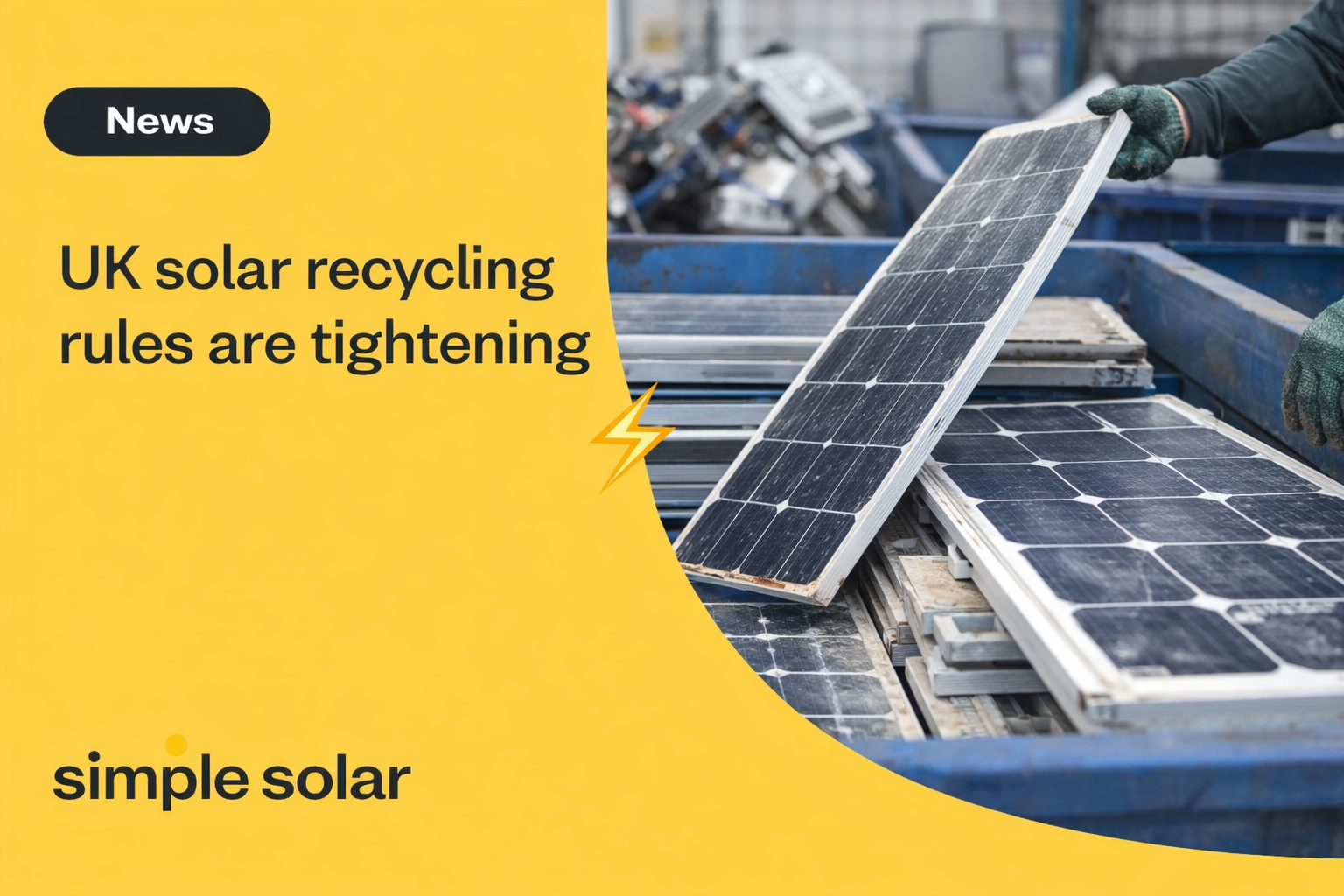
Simple Solar news graphic stating “UK solar recycling rules are tightening,” with a photo of used solar panels being handled at a recycling facility.
UK solar recycling is getting tighter — here’s what it means for homeowners
Solar panels are built to last. Most systems will run for 25+ years, and premium panels can go even longer. But there’s a shift happening behind the scenes: UK recycling expectations and compliance are getting stricter, and it’s worth understanding what that means before you choose an installer.
If you’re in Devon or Cornwall and considering solar in 2026, here’s the simple version.

New regulations aim to improve end-of-life solar panel recycling and reduce waste – find out how these changes affect homeowners and installers in the South West.
Solar panels aren’t “throwaway tech”
Solar panels are classed as electrical equipment, and they’re covered by WEEE regulations (Waste Electrical and Electronic Equipment). In plain English: panels need to be handled responsibly at end of life, not dumped like general waste.
This matters because the solar industry is growing quickly. More installs today means more panels reaching end-of-life later. The UK is preparing for that reality.
What you should expect from a professional installer
A good installer should be able to answer these questions clearly:
1) Are the panels supplied via a compliant producer scheme?
If a manufacturer is operating properly in the UK market, they should have a route for WEEE compliance.
2) Do you get product documentation and serial records?
This helps with warranty claims, insurance, and future recycling paperwork.
3) What happens if panels need replacing early?
Sometimes panels are swapped due to damage, faults, or upgrades. A responsible installer should arrange safe removal and correct disposal pathways.
The “hidden win” for homeowners
When recycling and compliance is handled properly, it protects you in a few ways:
Less risk if you ever sell the property and buyers ask about system provenance
Clearer warranty trail if a panel needs replacing years later
Better long-term value, because your system is documented and future-proofed
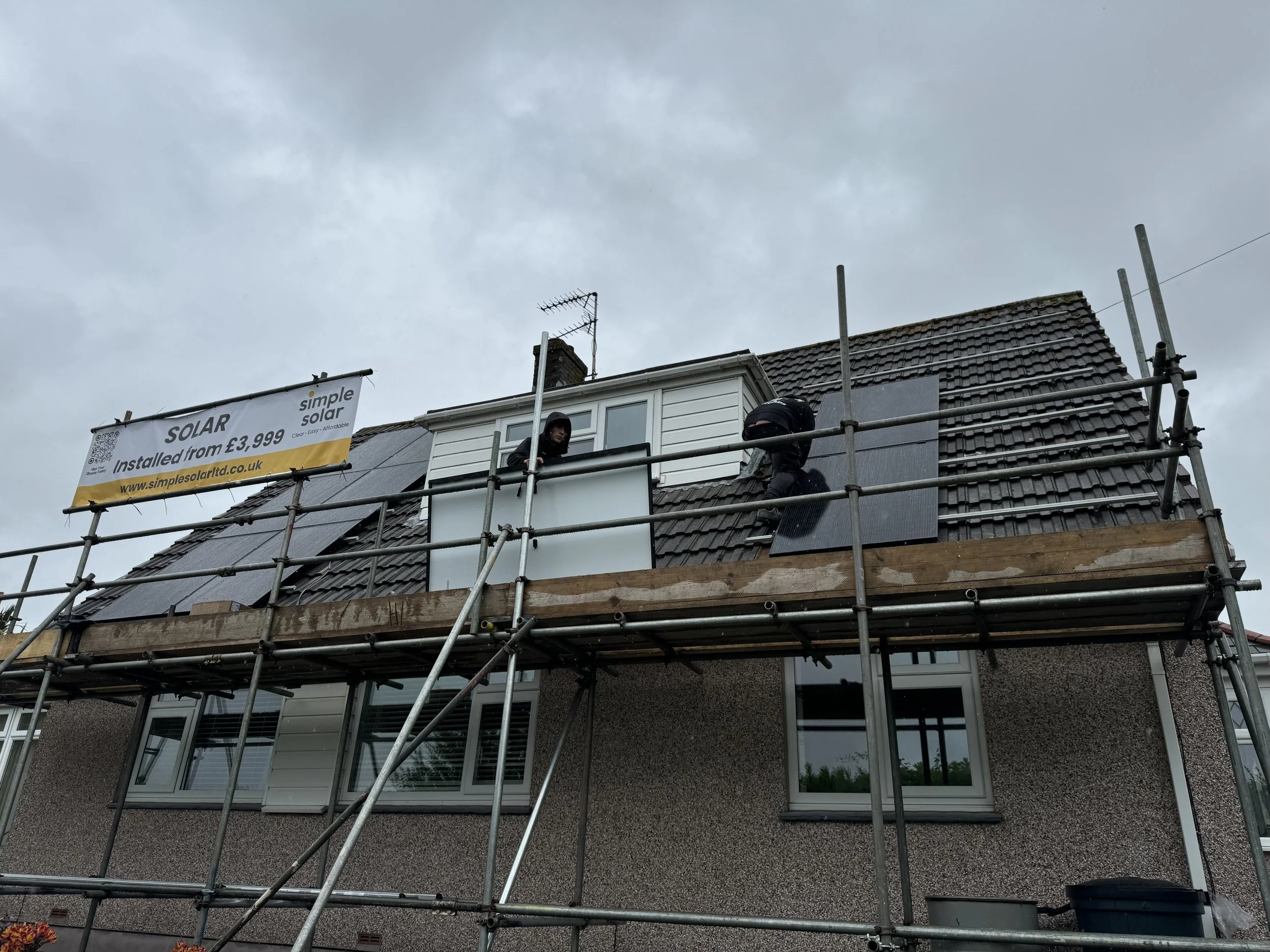
Safe, professional installs with full scaffolding — done right, whatever the weather.
The Simple Solar approach
We install systems with long-term ownership in mind. That means we focus on:
Clear documentation and handover packs
Quality-first kit and sensible system design
Straight answers about what happens if something needs replacing
Solar should be a long-term asset, not a short-term headache.
Want to talk it through?
If you’re planning a solar install in 2026 and want a quote that’s clear, jargon-free, and built around your roof and usage, get in touch.
Call 01752 916 013 or click Get a quote.
